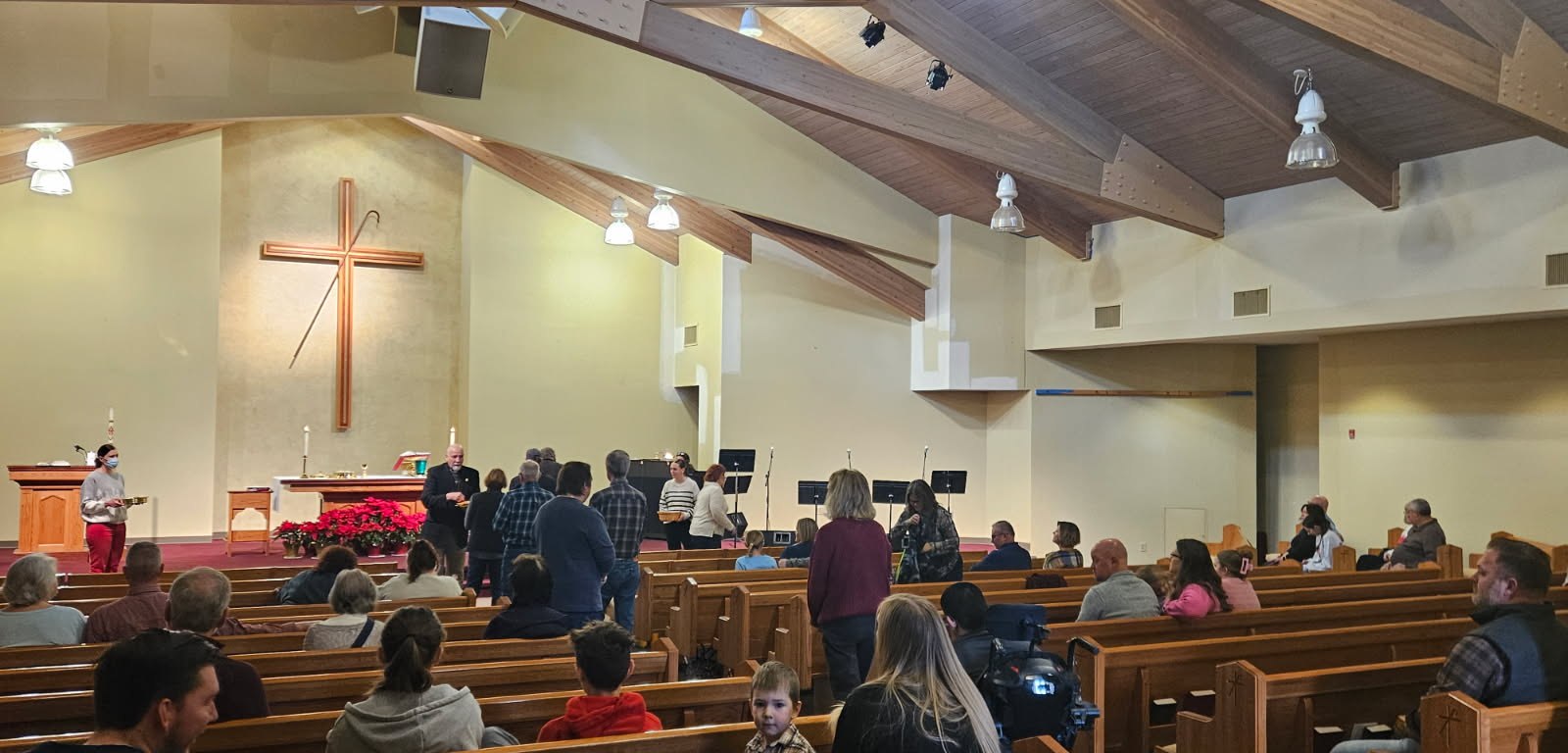
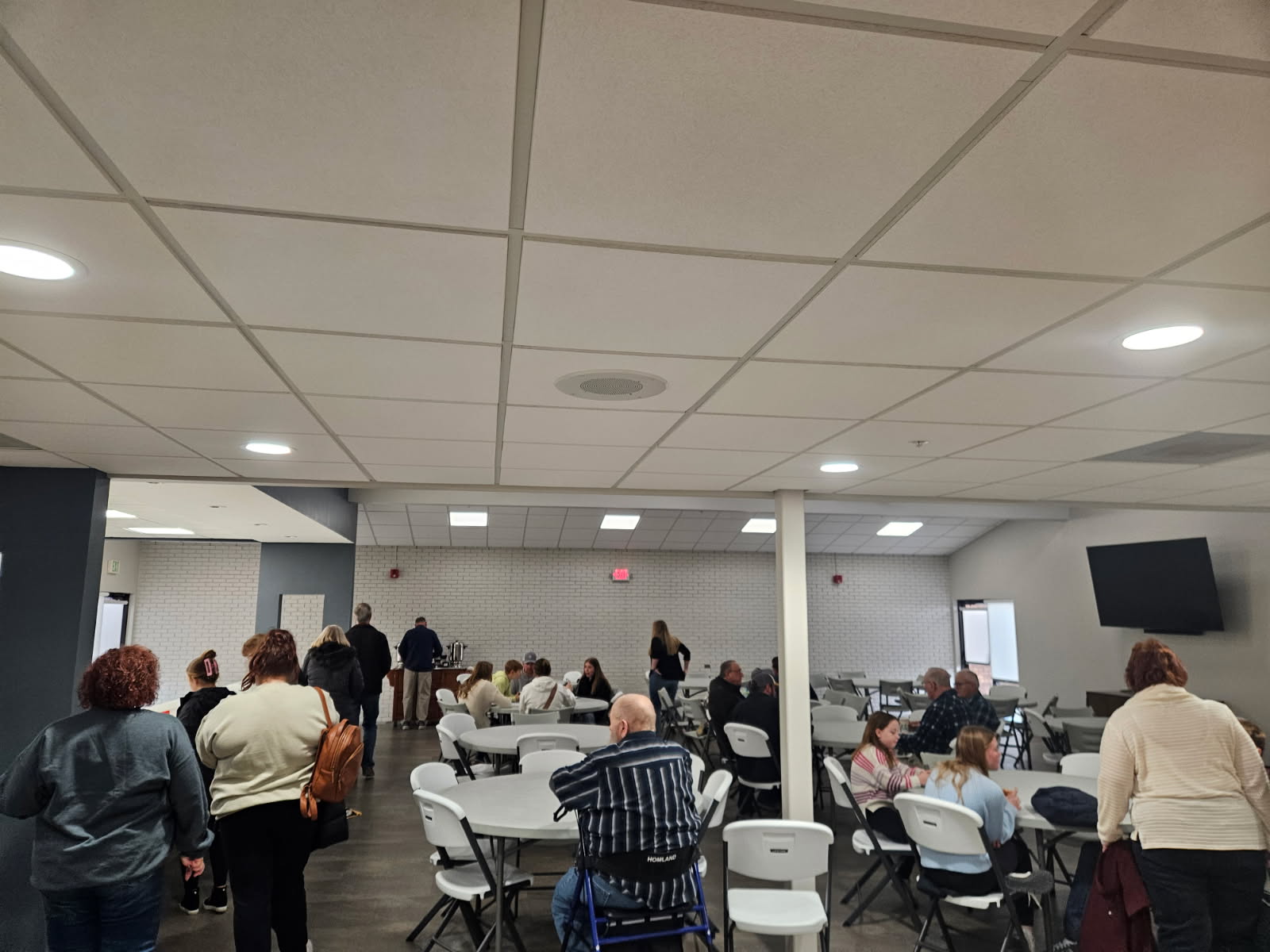
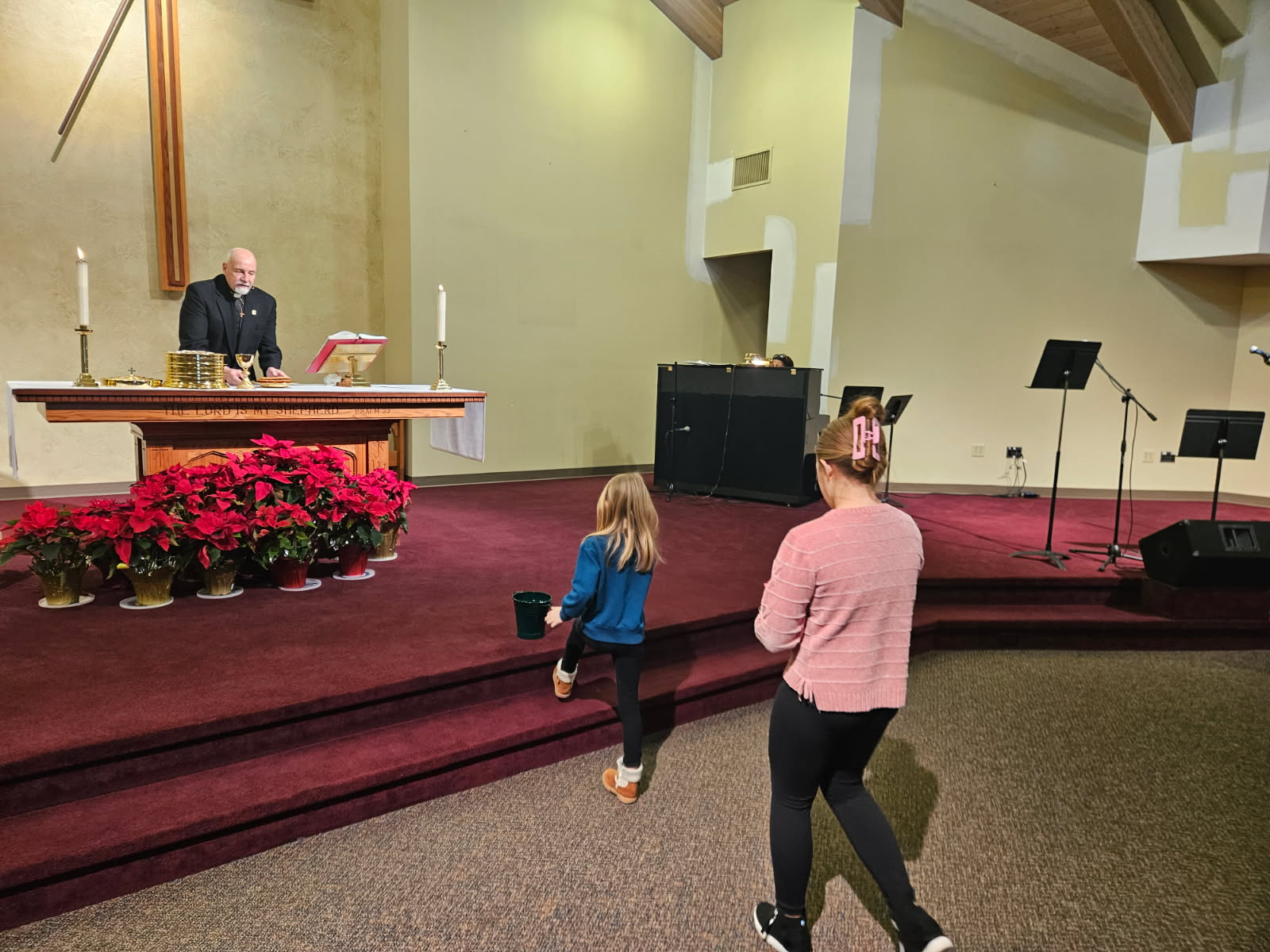
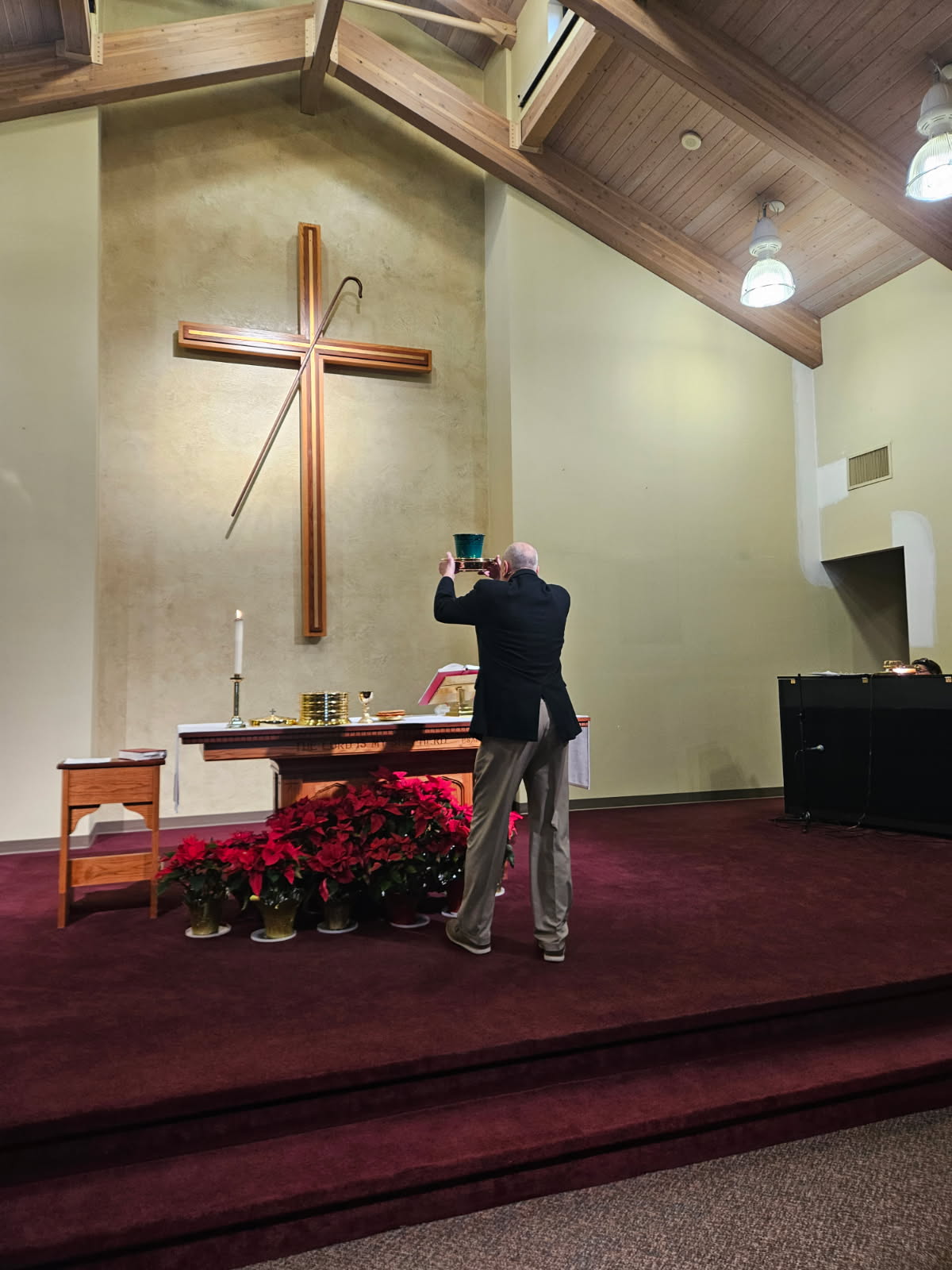
I had the gift to be with God’s people gathered as Shepherd of the Hills Lutheran Church in Hickman, Nebraska on Sunday January 18, 2026. Thank you to Pastor Ron Drury for the invitation and to the whole congregation for the warm welcome. In being with the congregation, I was invited to bring a word of greeting from Bishop Scott Johnson and share a word of gratitude for all of the ministry that the congregation does and makes possible, especially through its mission share as a part of the Nebraska Synod and the larger ELCA. I was also invited to lead the Children’s Sermon and preach a stewardship sermon based in worship, as well as lead a conversation over cookies after worship. That conversation digging into the questions: “Where do you see God at work? How is God at work through Shepherd of the Hills? How are you part of this as a Steward of God’s love? What does this mean for you? And, what are your wonderings and other questions?” led to nearly an hour of rich and deep sharing and conversation with about 30 adults and young adults. It was a beautiful time of going deeper, which flowed right from the sermon time too. Thank you all for being the faithful disciples and generous stewards of God’s love that you are in Hickman!
What follows is the majority of the manuscript that I used for both the Children’s Sermon and the Sermon itself, which were based on the readings appointed by the Narrative Lectionary for the Second Sunday after Epiphany (Year 4- Narrative Lectionary, NL422), “Jesus Cleanses the Temple” based on John 2:13-25 and Psalm 127:1-2. If you would rather watch the service or listen to the sermon you can do so via the YouTube recording provided by the congregation’s livestream below.
Children’s Sermon
Hi Friends! My name is Timothy, and I have two girls who are about some of your ages. How are you doing today?
Did you just hear the story about Jesus? Yeah. How would you describe Jesus’ emotion? Was he happy? Sad? Mad?
I think he was pretty mad too. Why do you think he was mad?
Yeah. I think that’s true. I think it’s because he saw that stuff, animals, and money were getting in the way of worship. But I also think he saw them getting in the way of welcoming people. So that not everyone was welcome. How would that make you feel, if I said you and you, can come up here, the rest of you need to go over there? Yeah. It wouldn’t be good.
Jesus knows that God’s love is for everyone. And when not everyone is being welcomed or taken care of, that makes him sad, but it also makes him mad. So mad that he turns over the tables and yells about it.
Sometimes we get mad too, don’t we. Maybe at our brother or sister, or mom or dad, or friend or classmate. We hopefully don’t stay mad. But there are times, when we see people being treated wrongly, not shown God’s love, when injustice happens, that it’s our job as followers of Jesus to say something and to do something about it. Maybe we won’t turn over tables like Jesus in the temple, but we have a role to play in working for God’s love for everyone. What’s something you can do to show God’s love for everyone?
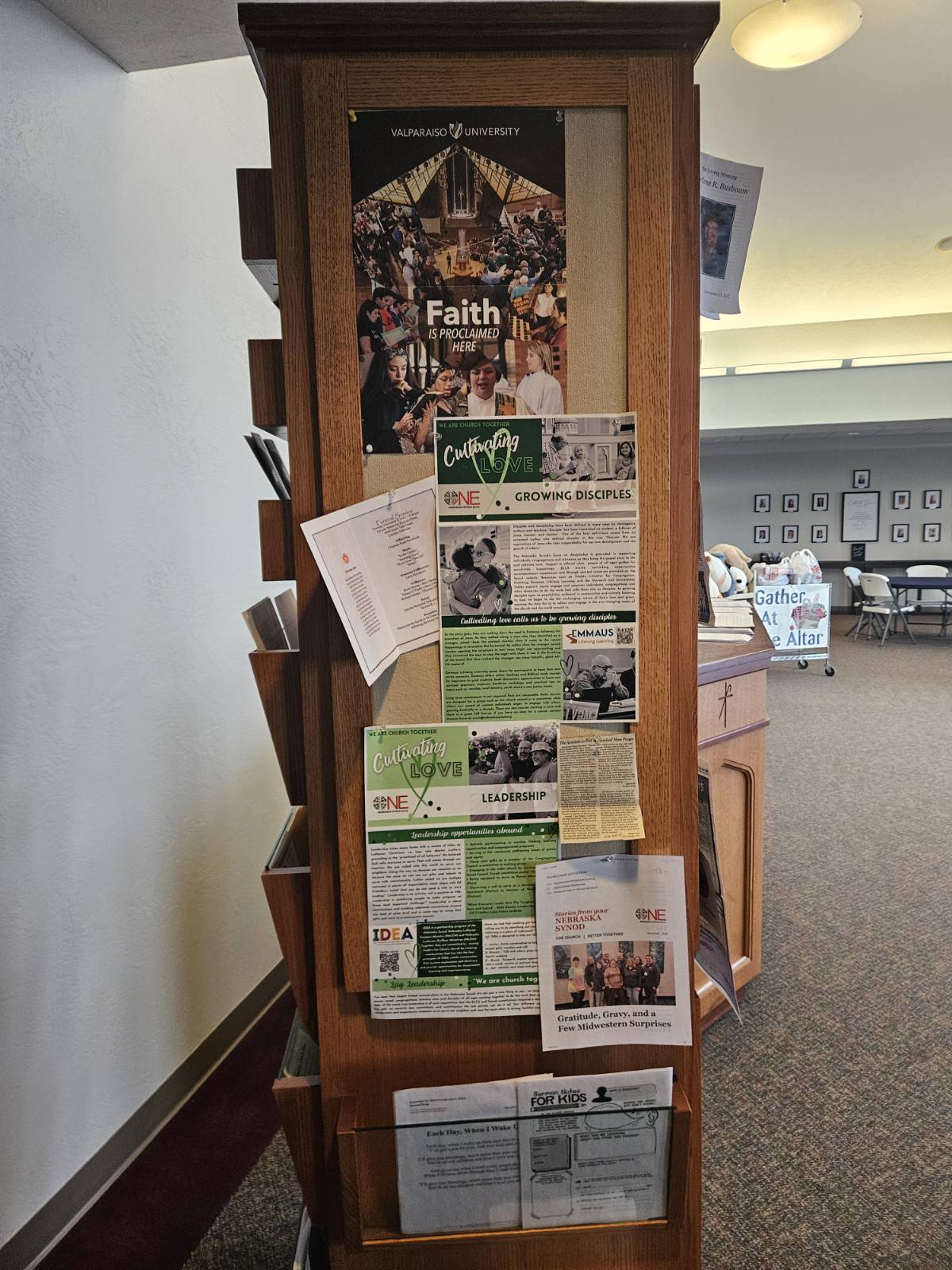
Wonderful. In my sermon I’ll talk about something called stewardship. But you have just shown what that is. To do something with what God entrusts and provides for the sake of our neighbors. To share God’s love.
Let’s pray.
Dear God
Thank you for today.
Thank you for your love.
Please help us to always share that love.
And when we see people hurting
Or in need of your care
Help us to be your hands and feet
For all our neighbors
In your name we pray.
Amen.
Sermon: “We are Stewards of God’s Love! So, what does this mean?”
Grace and peace from God in Christ, who is with you, for you, and who loves you. Amen.
Well, the younger saints just did the harder work in thinking about the gospel story this week. I do wonder what might make Jesus turn over tables today? But whether or not tables are turned, there’s a truth we cannot shake. You are a Steward of God’s Love. I am a Steward of God’s love. We are stewards of God’s love together, for the sake of our neighbors near and far. That’s a gift and a responsibility, and we’re going to spend some time wrestling with that a bit. But first, let’s think a bit more about what God might have us see and sense in the narrative today.
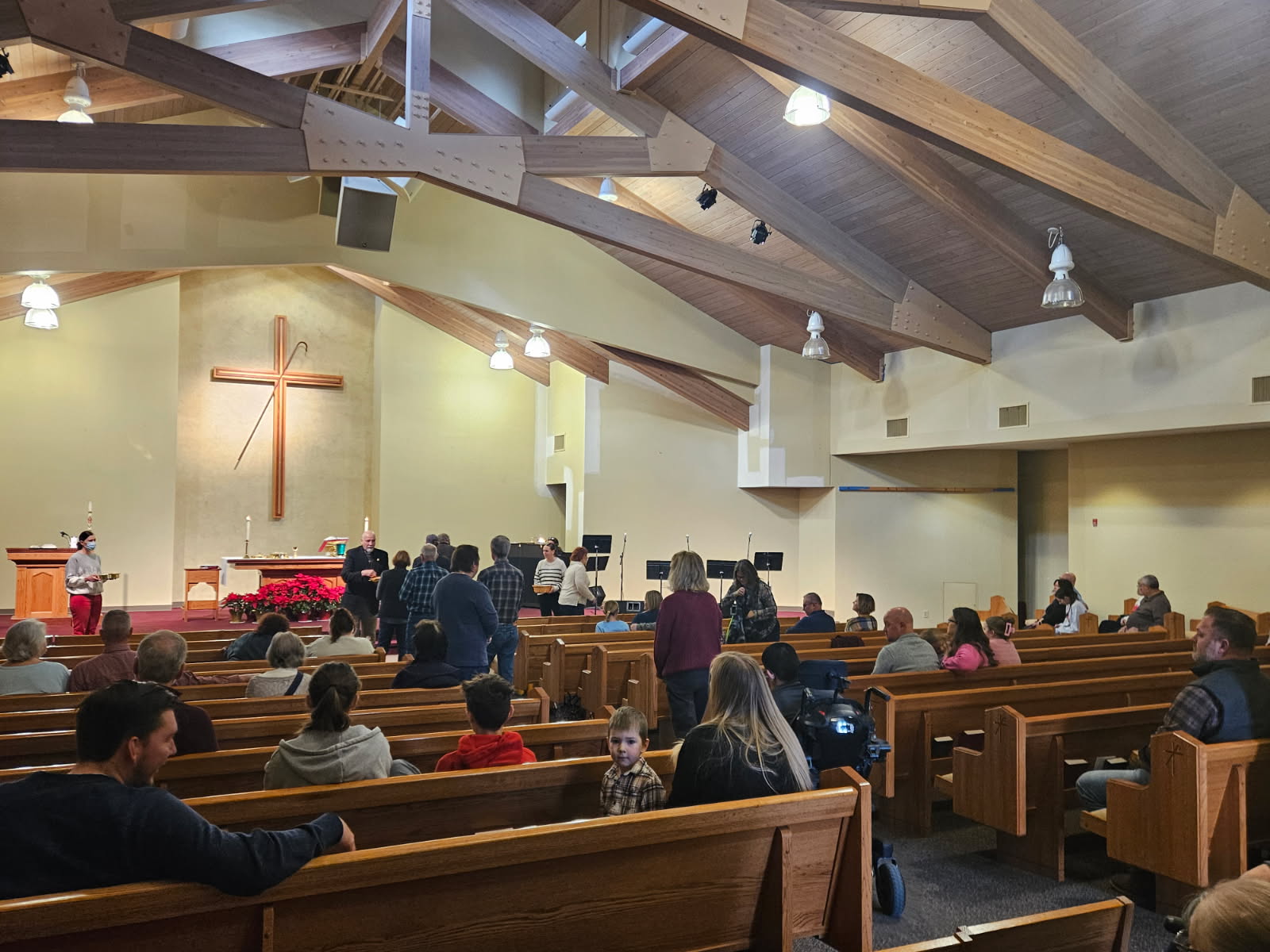
Situating Ourselves in the Narrative
We find Jesus shortly after doing his first miracle sign of turning water into wine at the Wedding in Cana. He’s in the Temple in Jerusalem turning over tables around Passover. Jesus’ prophetic nature is being introduced in the Gospel of John, calling people, disciples and leaders to wake up and pay attention. To put things back in right order for the sake of those most in need of love, compassion, and mercy. In all honesty, I can’t think of a more fitting scripture for this weekend, for all that is going on in the world, and especially given that we are also remembering the heavenly saint, Rev. Dr. Martin Luther King Jr. this weekend too. In thinking about stewardship, how we are called to love our neighbor, and the message of the gospel, I am drawn to the Rev. Dr. King’s words. Rev. Dr. King wrote, “Our world is a neighborhood… We are tied together in the single garment of destiny, caught in an inescapable network of mutuality. And whatever affects one directly, affects all indirectly.”[1] It seems Jesus had this in mind when he showed up at the temple that day. Perhaps Jesus wondered if the people in leadership in the faith, had somewhere missed the point, and intentionally or unintentionally made it harder for some of God’s people to participate in worship and to be welcome. Jesus got mad, and the prophetic nature of Jesus led him that one infamous day around the Passover to overturn the tables.
I wonder, what might drive us to turn over tables today too?
What Might God Be Up to?
We have to wonder about what God might be up to here in this week’s story. We are very early in Jesus’ ministry in the gospel according to John. We hear that Jesus finds people “selling cattle, sheep, and doves and the money changers seated at their tables.”[2] There was a reason for this. As had become the custom, “Animals were sold for sacrifice. Different currencies used by worshipers had to be changed to the official half-shekel of Tyre for the Temple tax, and Roman money was changed into Jewish money to pay that Temple tax.”[3] To participate in worship a person might have had to go through two or three transactions. Perhaps Jesus saw this reality as structural sin getting in the way of the people’s ability to worship. Perhaps Jesus saw all of this as distraction. Where the economics of daily life were getting in the way of people’s ability to fully gather as God’s people. Where materialism was running rampant much like it does today. If this was the case, it’s hard to argue with Jesus’ anger and indignation. We know what happens next. Jesus makes a whip of cords. He pours out the coins from the money changers and overturns the tables. And I imagine he loudly and directly shouts, “Take these things out of here! Stop making my Father’s house a marketplace!”[4] Jesus is concerned also in this story about “how the keepers of the temple use economics unjustly and exclude women, disabled people, and gentiles, from the presence of God.”[5] In my braver moments, I’d be turning tables over too at the sight of this. But I wonder, how are we doing? Are we missing others or getting in the way and excluding others from fully experiencing God’s loving embrace?
After the tables were overturned Jesus was asked by the religious authorities in the Temple, “What sign can you show us for doing this?”[6] Perhaps this was an honest question. But given the nature of such questions by the authorities in the gospels, it was probably more an attempt at a “gotcha moment.” It was probably honestly “less a question than an assertion by the religious authorities that they only have the authority to make pronouncements” and declarations.[7] Ultimately such a dispute will lead Jesus to the cross. So in John at least, this is an early indication of what is to come. Jesus in response offers an early passion prediction, “Destroy this temple, and in three days I will raise it up.”[8] Jesus wasn’t talking about the physical temple, but in reality, as would become known after his resurrection, he was talking about himself.
I imagine Jesus left the temple that day a bit upset. I imagine the authorities did too. But what the story for us this week tells us, is that, when Jesus was in Jerusalem over that Passover, “many believed in his name because they saw the signs that he was doing.”[9] Many believed. The good news was starting to spread. People were starting to talk, share, wonder, and imagine. God’s work and mission are well underway. Because God is active and up to something.
God is For You, With You, and Loves You!
This is good news. It’s good news upon good news, in that God is with you, for you, and loves you. We are reminded of this in Psalm 127. We are reminded that it is God who is at work and who builds, guards, and provides. It’s not us. For if it’s just up to us, all that we do would be in vain. But because God is at work, God can and does make all things, knows all things, and is in all things.[10] God is at work, for you and for me. God is at work through promise and presence. Through grace upon grace. Through providing life and love. God alone provides the gifts of life, forgiveness, mercy, and the hope and promise of salvation. These are all things we could never earn or do for ourselves. God provides them as gifts. Which makes them pure grace. And for this we get to respond. Because of what God has done and who God is and whose we are, as God’s beloved people, we get to respond for all that God has done, will do, and promises to do for you and for me, for one and for all.
If we agree with this, the question then becomes how do we and how will we respond? Will we just go through the motions of daily life, seemingly unchanged? Will we respond gratefully and joyfully? Or will we be so moved that we not only say thanks, but we are so swept up in the Spirit’s movement that we also join in with God in some of God’s on-going work here and now? This isn’t a simple question. It’s one we all must ponder from time to time as we reflect on who we are, whose we are, and where we sense God might be leading. It’s this sort of discernment which helps us to remember that as Children of God, we are both called to be disciples and stewards. We follow and grow where God leads as disciples, and we respond and serve as stewards of God’s love.
We are Stewards of God’s Love!
As disciples and stewards we make promises because God makes promises. God promises to be with us and invites us into relationship with God and neighbor. As such, promises are made through our baptisms that we then also affirm as a congregation of God’s people. Together, right out of the hymnal in the liturgy for baptism, we promise “to live among God’s faithful people, to hear the word of God and share in the Lord’s supper, to proclaim the good news of God in Christ through word and deed, to serve all people, following the example of Jesus, and to strive for justice and peace in all the earth.”[11] We each promise to do this. And a big way that we live this out is through living our lives as stewards of God’s love.
You might be wondering though what do I actually mean when thinking about the old churchy word of “stewardship.” Consider Psalm 24, where the psalmist sings, “The earth is the Lord’s and all that is in it, the world, and those who live in it.”[12] The earth is God’s. And all who are part of the earth, are God’s too. Everything is God’s. You are God’s own. I am God’s own. And all that we have, and all that we are, is God’s also. Everything that makes you the unique person and beloved Child of God that you are, is God’s. Your time, talent, treasure, assets, possessions, and finances of all kinds. Your life, health, body, heart, soul, and mind. Your passions, strengths, vocations, gifts, relationships, ideas, dreams, stories, imaginations, and even your questions. All that is yours, is really God’s. And all of creation and the earth itself that surrounds us, which God entrusts into our care in the beginning of Genesis, is God’s too. All of this and more, is God’s. And God chooses to entrust some of it into our care.
God does this because God loves you and God wants life to go well for you. God does this, because God does new things, and invites us each to be part of it. God does this too because God wants life to be meaningful. So God invites you to follow and to use what God entrusts to meet your neighbor’s needs in some ways in daily life- here, now, today. Knowing that when we do this, we don’t do it alone. We do it with our God with whom there is always enough, and really more than enough. With our God who can take a few fish and a couple loaves of bread, and feed thousands. With our God who can turn water into wine. With our God who shows up and overturns tables to wake us up when things are not as they ought to be. With our God who can share a simple commandment to “love one another,” and in so doing, change the world forever. With our God who shows that abundance is real, and the lies, sins and fear of scarcity are not. With our God who brings life out of death and shows that the resurrection is real, and who will go to and through the point of death on a cross for you and for me, and for one and for all.
How shall we live and respond?
This is what God does and will do. Which brings us back to stewardship. How shall we live and respond as stewards of God’s love? How will we ensure that all are truly welcome? How will we work and live so that neighbors near and far know that they are loved, just for who they and whose they are?
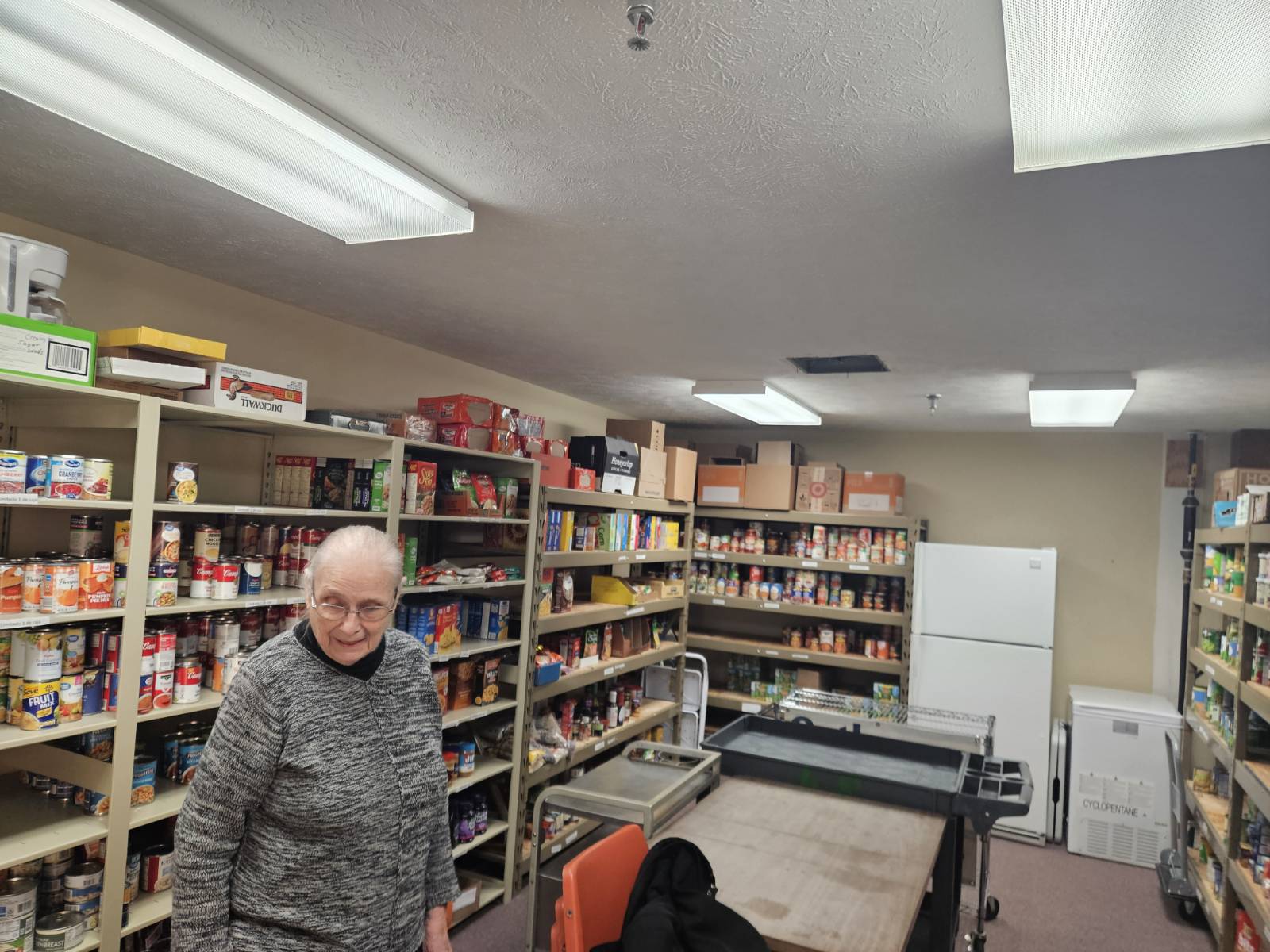
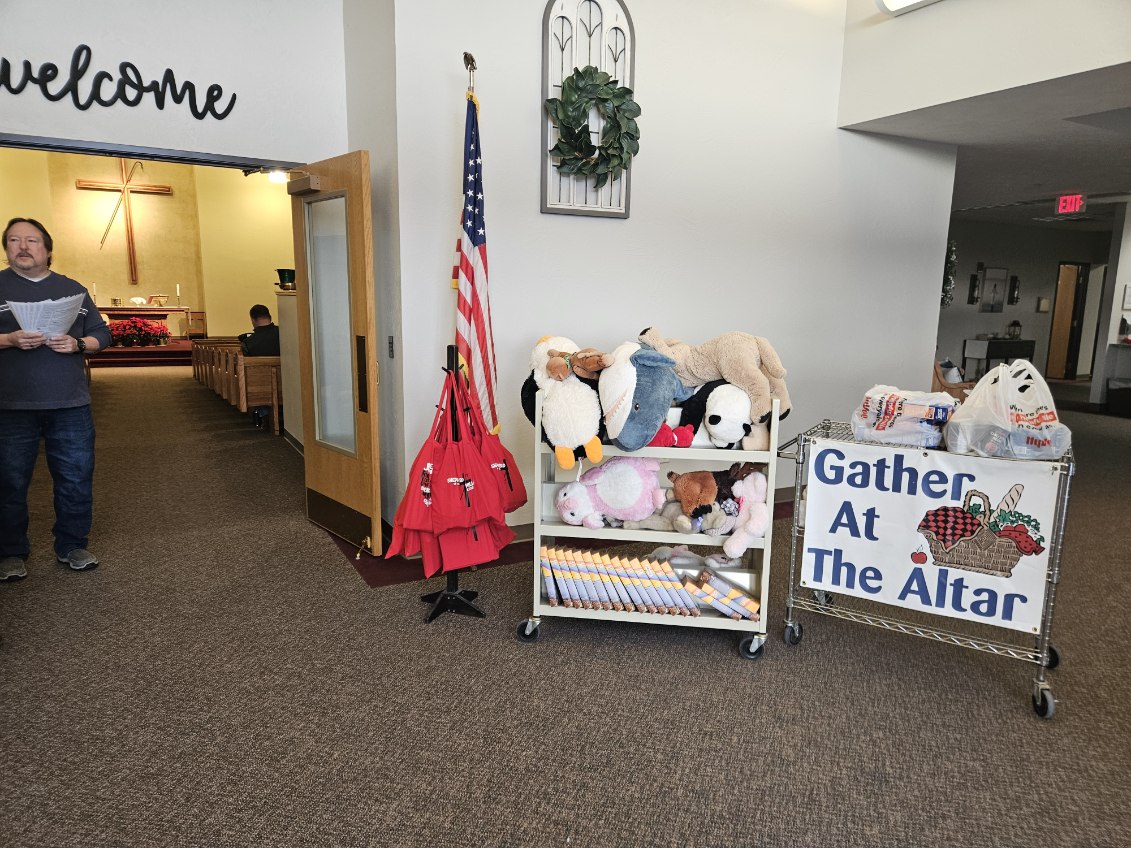
Shepherd of the Hills, I am asking these questions, but I also believe that I am literally preaching to the choir. You are a congregation that is “Spirit Driven to Serve Christ.”[13] You live this reality out so generously through feeding the hungry here through the Norris Area Food Pantry meeting your neighbor’s needs. You live this out through your Shepherd’s Run where you raise money for the backpack program , and through caring for creation locally by cleaning the roadside along the highway. You live this out through equipping and empowering disciples of all ages through Sunday School, EPIC, and Vacation Bible School, and by sending college care packages. You live this out as stewards of this place, caring for the church property not for the sake of itself, but as a means of providing space for God’s work to be done and to welcome other community partners in, together meeting the needs of your neighbors locally and globally, like especially through housing the Treehouse Childcare Center. And you live this out too through all that you do as part of the Nebraska Synod and ELCA. Thank you for all that you do and for all that you are as stewards of God’s love.
Putting it Altogether
You are indeed “Spirit Driven to Serve Christ,” but more so, you are Spirit Driven as Christ’s hands and feet here in Hickman, called and sent to serve your neighbors as signs of God’s love made real. This and more, you do as you truly are stewards of God’s love. As you do this, know that being a steward of God’s love is not a one-time thing. This a life-long response and part of being a follower of Jesus. No matter what life might bring, we are called to love and to serve. Just as we promised in baptism. And sometimes that might even mean turning over some tables.
When Jesus turns the tables over, he is trying to help God’s beloved people to wake up, to see, wonder, notice, and pay attention. As disciples we are called to follow, and as stewards we get to respond and join in with God in some of God’s on-going work today. So, join in fully. For you are a beloved Child of God, and a steward of God’s abundant and extravagant love which has no limits. Shepherd of the Hills, share that love, through all that you say and do knowing that God is at work in you, through you, and with you, through Jesus’ love and grace for one and for all. Thanks be to God. Amen.
Citations and References:
[1] Martin Luther King, Jr., Letter from a Birmingham Jail, 16 April 1963.
[2] John 2:13, NRSVue.
[3] The New Oxford Annotated Bible, ed. Michael D. Coogan, (New York, NY: Oxford University Press, 2001), 150 New Testament, with contributions on the Gospel of John by Obery M. Hendricks, Jr.
[4] John 2:16, NRSVue.
[5] Allison deForest, “Jesus Cleanses the Temple: Commentary on John 2:13-25” https://www.workingpreacher.org/commentaries/narrative-lectionary/jesus-cleanses-the-temple/commentary-on-john-213-25-4.
[6] John 2:18, NRSVue.
[7] The New Oxford Annotated Bible, 150 New Testament.
[8] John 2:19, NRSVue.
[9] John 2:23, NRSVue.
[10] Based on Psalm 127:1-2, NRSVue.
[11] As found in Evangelical Lutheran Worship, (Minneapolis, MN: Augsburg Fortress, 2006), 236.
[12] Psalm 24:1, NRSVue.
[13] According to the congregation’s website: https://www.sothneb.org/
 Timothy Siburg