
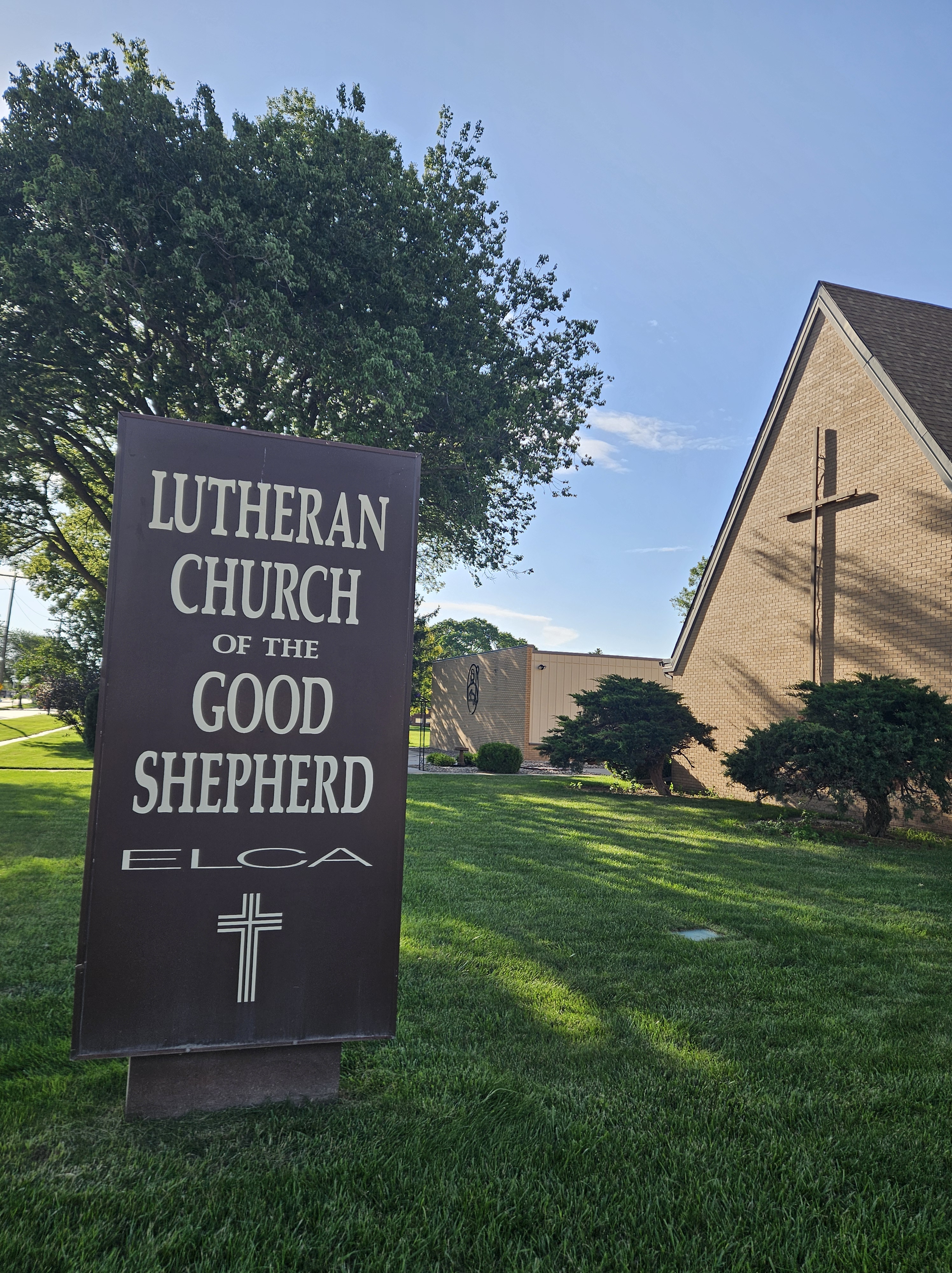
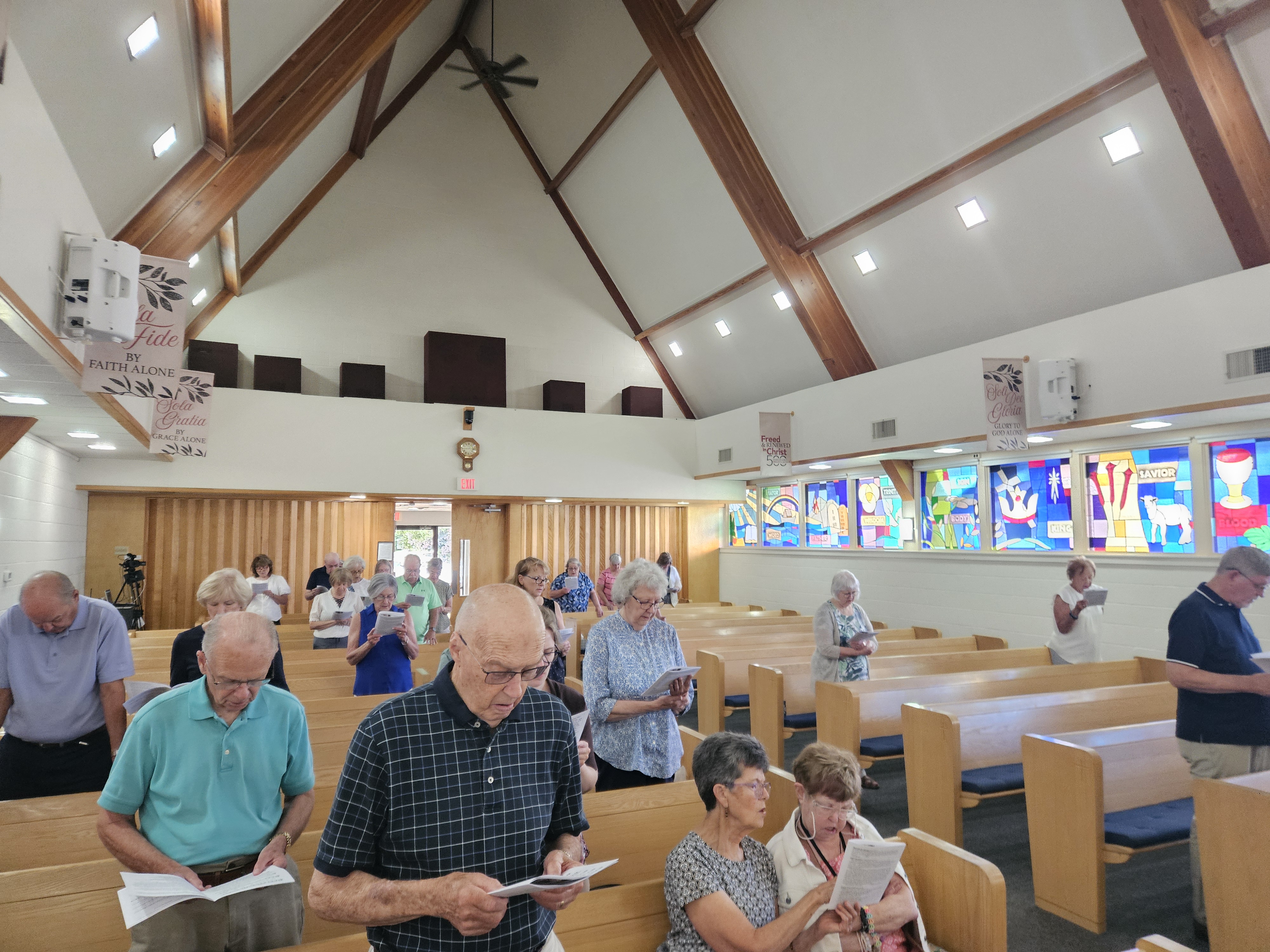
It was a joy to join God’s people in Hastings, Nebraska gathered as Lutheran Church of the Good Shepherd, on Sunday July 29, 2025. Thank you to Pastor Paul Ozbun for the invitation and to the whole congregation for the warm welcome. The Nebraska Synod staff was on the road again during the course of the weekend, gathered for story sharing, learning, and wondering together with area congregations in Carleton, and then out among congregations of the region for worship on Sunday morning. It was really a gift to be able to visit Lutheran Church of the Good Shepherd as part of this weekend. In being with the congregation I was invited to bring greetings and share a word of gratitude following the gospel, and then to preach on the lessons appointed for the day. What follows is the majority of the manuscript I preached from, based particularly on the day’s gospel lesson from Luke 9:51-62, and the second lesson, Galatians 5:1, 13-25.
Greetings and Gratitude
Friends, before diving into the message for the day, I want to share a deep word of greeting and gratitude, so if you will allow me:
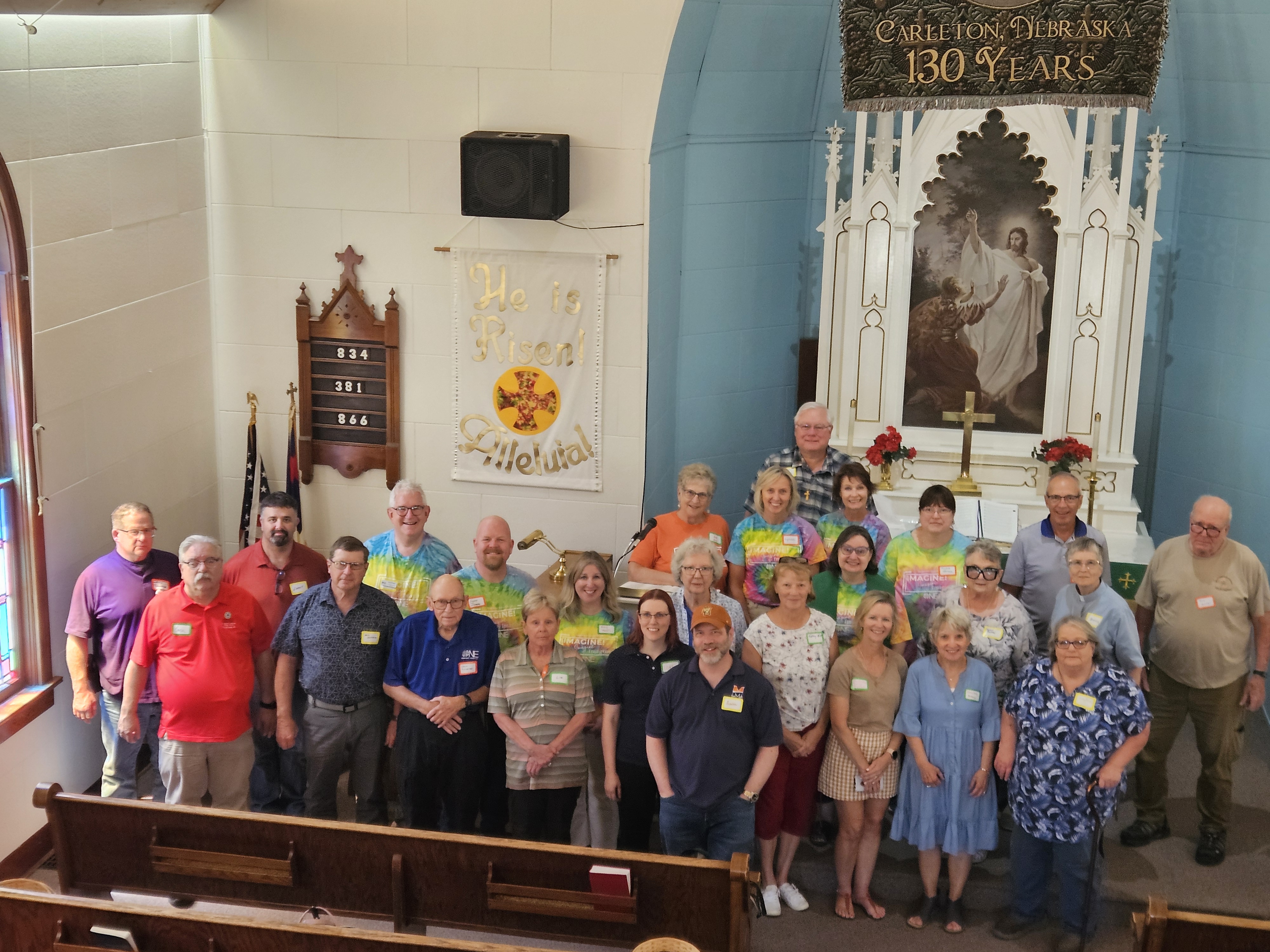
Good Morning, Lutheran Church of the Good Shepherd! It’s so great to be with you today. Thank you to Pastor Paul for the invitation, and to all of you for the warm welcome! I am Deacon Timothy Siburg, your partner in ministry on the Nebraska Synod staff for mission, innovation, and stewardship. In being with you today I bring greetings from Bishop Scott Johnson, from all of my colleagues and your partners in ministry on the synod staff, as well as from your 90,000 siblings in Christ who with you are the Nebraska Synod. We really are one church, better together. It’s a joy to be with you today, and especially on this weekend as all of my synod staff colleagues are also in the area around here for this Synod “On the Road Again” time where we gathered with you and many of your partner congregations yesterday in Carleton, and today we’re overjoyed to join many area congregations in worship this morning. Also, just have to say, I think your congregation had the most people present yesterday in Carleton, so way to go! To all of you who were there, please raise your hand. Friends, talk with your neighbors and hear what they learned and are wondering after yesterday. Now of your synod staff team, I’m the lucky one who gets to be with you all here in Hastings. Thank you for having me!
Through you, God’s love is made real. Thank you for being the bearers of Good News of Jesus’ love that you are here in Hastings. Thank you for all of the ministry that you do and make possible here, all across Nebraska, and around the world. One of the ways that I know this most clearly is through your continued participation in mission share. Mission Share is the undesignated offering that your congregation shares with the larger Nebraska Synod and ELCA, through which you do ministry that spans the globe and changes lives. And today it is my privilege to say thank you for all that you do and make possible.
Through your mission share you help raise up new leaders, pastors, deacons, and parish ministry associates, all who are trained to follow Jesus and help others to join in and follow Jesus too. Through it you help youth and young adults know of God’s deep love for them, in part through supporting Nebraska Lutheran Campus Ministry, and through Nebraska Lutheran Outdoor Ministry. Through your mission share you support new and renewing ministries like Emmaus: Lifelong Learning and the Vitality Initiative for Congregations, and through telling the story and sharing the Good News by accompanying God’s people all across the globe. And through your mission share you see your neighbors and meet them where they are at through the many serving arm partners of the church, like Lutheran Family Services, Mosaic, Lutheran Disaster Response and so many more.
There is so much that you do and make possible by being part of this church together. You matter and make a difference, Lutheran Church of the Good Shepherd! If you hear nothing else from me today, please hear this, on behalf of your siblings in Christ near and far: Thank you, thank you, thank you! Now…
Grace and peace from God in Christ, who is with you, for you, and who loves you. Amen.
Diving into the Gospel
Today we find ourselves towards the end of chapter 9 in the Gospel of Luke. We’ve skipped just about a full chapter in Luke’s version of the story since last week when we heard of Jesus and the disciples’ visit to the Gerasenes, and the healing of the one who then “went away, proclaiming throughout the city how much Jesus had done for him.”[1] Since that trip across the lake, Jesus has healed a woman, restored a girl to life, entrusted the disciples with their mission, fed thousands, foretold his death and resurrection a couple times, has been transfigured on the mountaintop, healed a few others, and been teaching through word and deed to his disciples who have been traveling with him too. That’s a lot that has happened since where we found ourselves in the story, last week.
Today we find Jesus on the road. His face is clearly set to Jerusalem.[2] He knows what lies ahead. He’s already been to the mountaintop, and the disciples who were with him, witnessed things they couldn’t begin to describe. But as his face is set towards Jerusalem, there is an urgency now. And it shows up in the way Jesus responds and acts towards those he meets on the road. Everything from this point on in the Gospel of Luke will be about both pointing to the Kingdom of God, and to the “Good” but hard news of death and resurrection, the foretelling of Good Friday and Easter. God is about to do something that far exceeds anything the disciples have seen yet, and Jesus knows that he has to make the most of his time for the disciples to witness and learn.
So along the road, they first enter a village of Samaritans. This is the same community from whom Jesus will a little later tell the story to a lawyer and the disciples about a “Good Samaritan.”[3] But in today’s story we hear that the village did not welcome the disciples and Jesus. To this lack of hospitality the disciples asked, “Lord, do you want us to command fire to come down from heaven and consume them?”[4] That would be in line with what their ancestors would talk about in the story of the destruction of the towns of Sodom and Gomorrah, because of their lack of hospitality to neighbors and strangers. But Jesus offers another way. He knows the history of these communities. He knows that “Jews and Samaritans had a strained relationship” which goes back to the time when the people of Israel were attacked and conquered by the Assyrians and Babylonians.[5] But instead of the disciples’ impulse and question, Jesus shows another way. He leaves the village in peace and continues on the road.
As Jesus and the disciples travel on the road, they find themselves struggling to have others join them. Unlike the man who wanted to go with Jesus last week, whom Jesus gave another command to “go and tell” too,[6] these people he meets seem to have things they need to do first or attend to. They might have some priorities in the way, or at least they might have some work to do, to get their priorities straightened out.

In meeting the neighbors along the road, we hear one say to Jesus, “I will follow you wherever you go.”[7] Jesus again has his face squarely set towards Jerusalem now and is a bit less patient than he might have been earlier. In fact, one might even say that his pastoral care is a little lacking in his responses. Because to this first person, Jesus retorts about foxes, holes, and a lack of a bed. To another person Jesus called, “Follow me.”[8] But because of needing to bury his father, Jesus said, “Let the dead bury their own dead; but as for you, go and proclaim the kingdom of God.”[9] And another tells Jesus, “I will follow you, Lord; but let me first say farewell to those at my home.”[10] And to this, our reading for this week ends with Jesus saying a phrase which I am sure makes sense in an agricultural state like ours, “No one who puts a hand to the plow and looks back is fit for the kingdom of God.”[11] This is all kind of harsh. But perhaps the point here in Jesus’ call to follow, is that time is of the essence. Part of that call is to proclaim the good news of the kingdom of God, but also to point to God’s presence and promise here and now, signs of the kingdom breaking-in for one and for all. So what might this mean?
Call and Work of Discipleship
Today we hear Jesus say as clearly as he ever does, “Follow me.”[12] Follow me. Two words. Words of calling. Words of sending. Words of commissioning. These are words Jesus says to those he comes across on the way with his face set towards Jerusalem and the events that we know which lie ahead. They are also words we each hear, daily, from the Good Shepherd. Words we hear and are invited into through the waters and Word in Baptism. Words which in them have a promise. A promise of abundant life. A promise of presence.
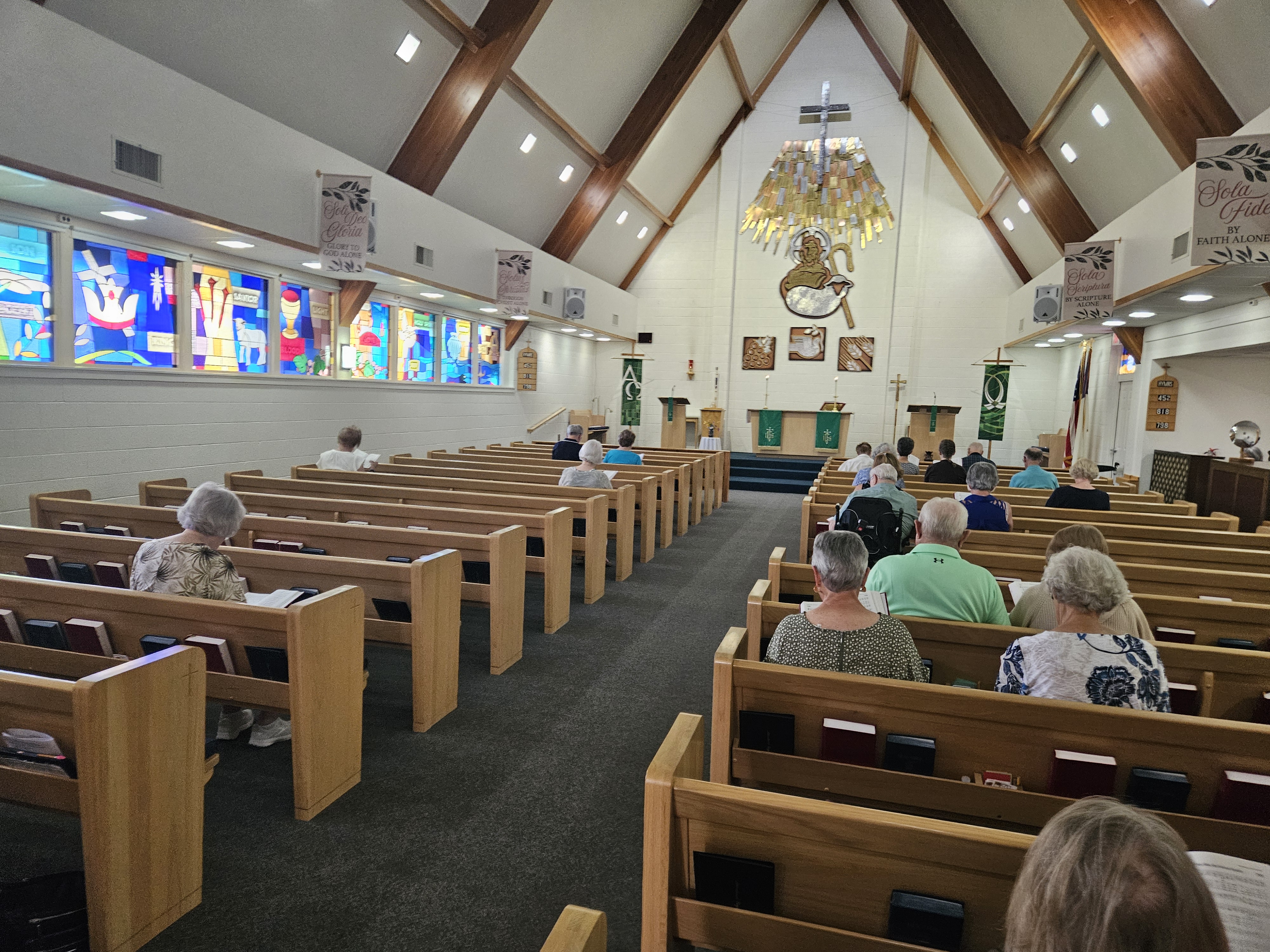
We know this. We also know that this life won’t always be easy. This life we share as followers of Jesus, this life as disciples and stewards of God’s love, will have its ups and downs. It will be hard at times. We know this. Because at its center is the cross. But we also know, that through this life comes deep meaning and purpose. It’s a life we commit to together through baptism where God makes promises, and together as God’s people we make promises. When Jesus says, “Follow me,” he’s not just talking to the neighbors on the road. He’s talking to you and me, and to all disciples. Imagine he says, “Follow me,” to us, and together we confess our faith. He might just ask the question that we find in our hymnals, “You have made public profession of your faith. Do you intend to continue in the covenant God made with you in holy baptism?”[13] With this covenant, together we make promises as God’s people.
We promise, “to live among God’s faithful people, to hear the word of God and share in the Lord’s supper, to proclaim the good news of God in Christ through word and deed, to serve all people following the example of Jesus, and to strive for justice and peace in all the earth.”[14] So in answering the question, we respond, “I do, and I ask God to help and guide me.”[15] “I do and I ask God to help and guide me.” For without God, none of this life as disciples and stewards would be possible. But because of God’s love and grace which we know most clearly through Jesus, we are freed up to live fully and to serve and share God’s love with our neighbors as Jesus calls and commands.
Living Out the Fruits of the Spirit
The Apostle Paul makes this clear. He writes that, “For freedom Christ has set us free.”[16] It’s a freedom that Martin Luther would unpack during the Reformation writing about in his The Freedom of a Christian, that, “A follower of Christ is perfectly free and subject to none. And a follower of Christ is servant of all, and subject to everyone.”[17] Through Christ we are set free. And we are set free to serve, living out the law as Jesus sums it up, that “You shall love your neighbor as yourself.”[18] To help with this, Paul points to the fruits of the Spirit. Gifts given by the Spirit and entrusted to each of us as God’s beloved people of all times and places. Fruits that include: “love, joy, peace, patience, kindness, generosity, faithfulness, gentleness, and self-control.”[19] The Spirit provides these and more. And together we follow as Jesus calls and invites.
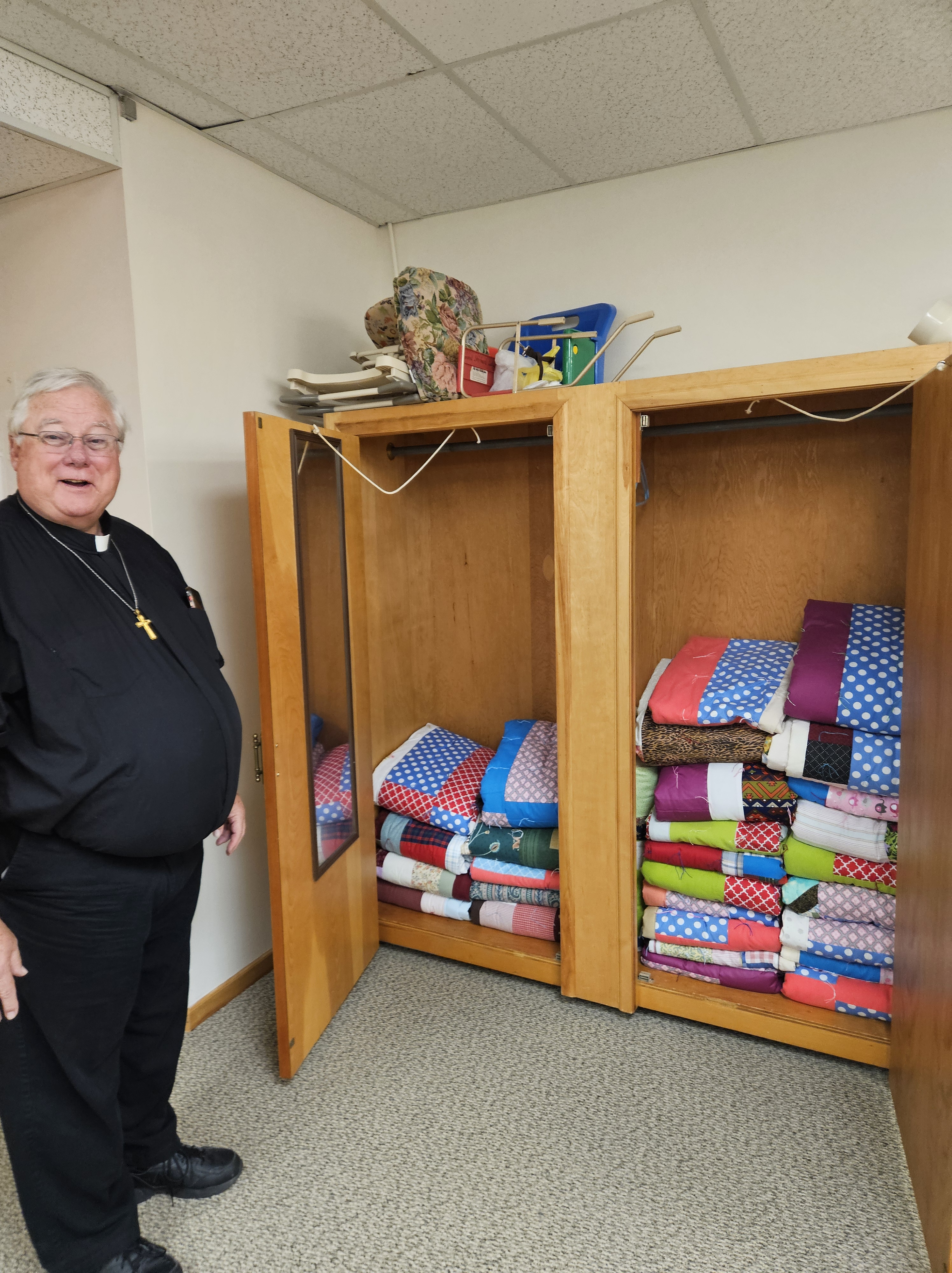
Friends, you live out these fruits of the spirit. You show Christ’s love by being the church of welcome that you are here in Hastings, and through every quilt you’ve stitched together, and kit that you have compiled for your neighbors. I saw a whole bunch of kits packed and ready to go before worship. Wow, thank you! You share joy and generosity in so many ways, none more prevalent today than in the energy that is palpable for a noisy offering to support Tanzanian students. You show peace and patience through remembering so many in prayer and coming alongside your neighbors near and far and meeting them where they are at. I have felt your kindness and gentleness by being so warmly welcomed by all of you. And I know your faithfulness, because I know some of your story as a congregation. Lutheran Church of the Good Shepherd, you are a living community filled with the fruits of the Spirit, actively following the Good Sheperd who is the one who calls you to follow. Thank you for all that you do and make possible as God’s people.
What might God be up to and inviting?
That does bring a question to mind though. Knowing all of this to be true, I wonder. What might God be up to and inviting you to be a part of next? As Jesus says, “Follow me,” I wonder what following might look like today, tomorrow, and in the days to come. I wonder about the urgency in Jesus’ words today to those along the road. I wonder about what he might have been hoping for the people to see, sense, wonder, and learn.

I can’t help but think part of the invitation and command to follow, leads us back to the baptismal waters and those promises we make with God. As I do so, I think about when my own daughters were baptized. Hope, wonder, joy, and prayers, all of these and more were on my mind. Perhaps you might be able to relate? Hoping that God’s promises are true and that the road of life ahead will be one of love, joy, and deep relationship with God and neighbor. Trusting in all that we confess in our faith. Handing over to God, what is God’s, and knowing that we are beloved children of God. And we all do this, as we respond for all that God alone does and can do. We do this, because we know as we follow, we’re following Jesus to the cross. Through which we know that God will do, what God alone can, to bring life out of death. To bring dancing and joy out of mourning. To bring life, hope, and true freedom. All of which God does for you, and for me as gift and grace we could never earn or deserve.
Jesus says, “Follow me,” and as he says that this work we share as disciples continues. It continues as our neighbors are crying out, and God in Christ calls us to listen, pay attention, to respond and to meet them where they are at. So let us walk together. Let us follow. And let us remember that we are enough for this work and whatever might lie ahead, because we know that we aren’t alone. We know that God in Christ is with us, for us, and loves us. Always. Thanks be to God. Amen.
Citations and References:
[1] Luke 8:39, NRSV.
[2] Luke 9:51.
[3] As found in Luke 10:25-37 and will be heard and read in worship on Sunday July 13, 2025, (the 5th Sunday after Pentecost, this year, Lectionary 15- Year C).
[4] Luke 9:54, NRSV.
[5] As noted in The Lutheran Study Bible, p. 1718, by Richard W. Swanson. (Minneapolis, MN: Augsburg Fortress, 2009).
[6] As in Luke 8:39, NRSV: “Return to your home, and declare how much God has done for you.”
[7] Luke 9:57, NRSV.
[8] Luke 9:59, NRSV.
[9] Luke 9:60, NRSV.
[10] Luke 9:61, NRSV.
[11] Luke 9:62, NRSV.
[12] Luke 9:59, NRSV.
[13] As found in Evangelical Lutheran Worship, (Minneapolis, MN: Augsburg Fortress, 2006), 236.
[14] Ibid.
[15] Ibid.
[16] Galatians 5:1, NRSV.
[17] Or also translated, “A Christian is a perfectly free lord of all, subject to none. A Christian is a perfectly dutiful servant of all, subject to all,” as found in Martin Luther, The Freedom of a Christian, (1520), as published in Martin Luther’s Basic Theological Writings, second edition, ed. Timothy F. Lull, (Minneapolis, MN: Fortress Press, 2005), p. 393.
[18] As referenced by Paul in Galatians 5:14, NRSV.
[19] Galatians 5:22-23, NRSV.
 Timothy Siburg