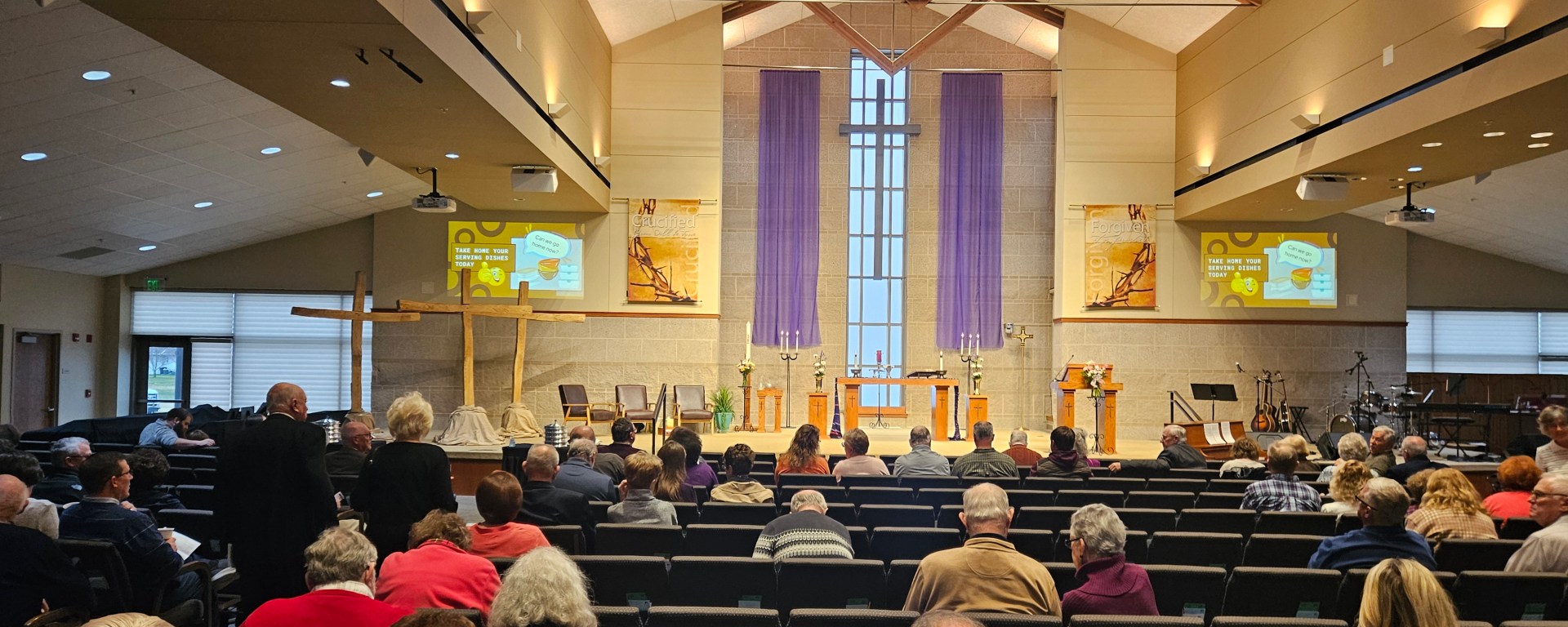
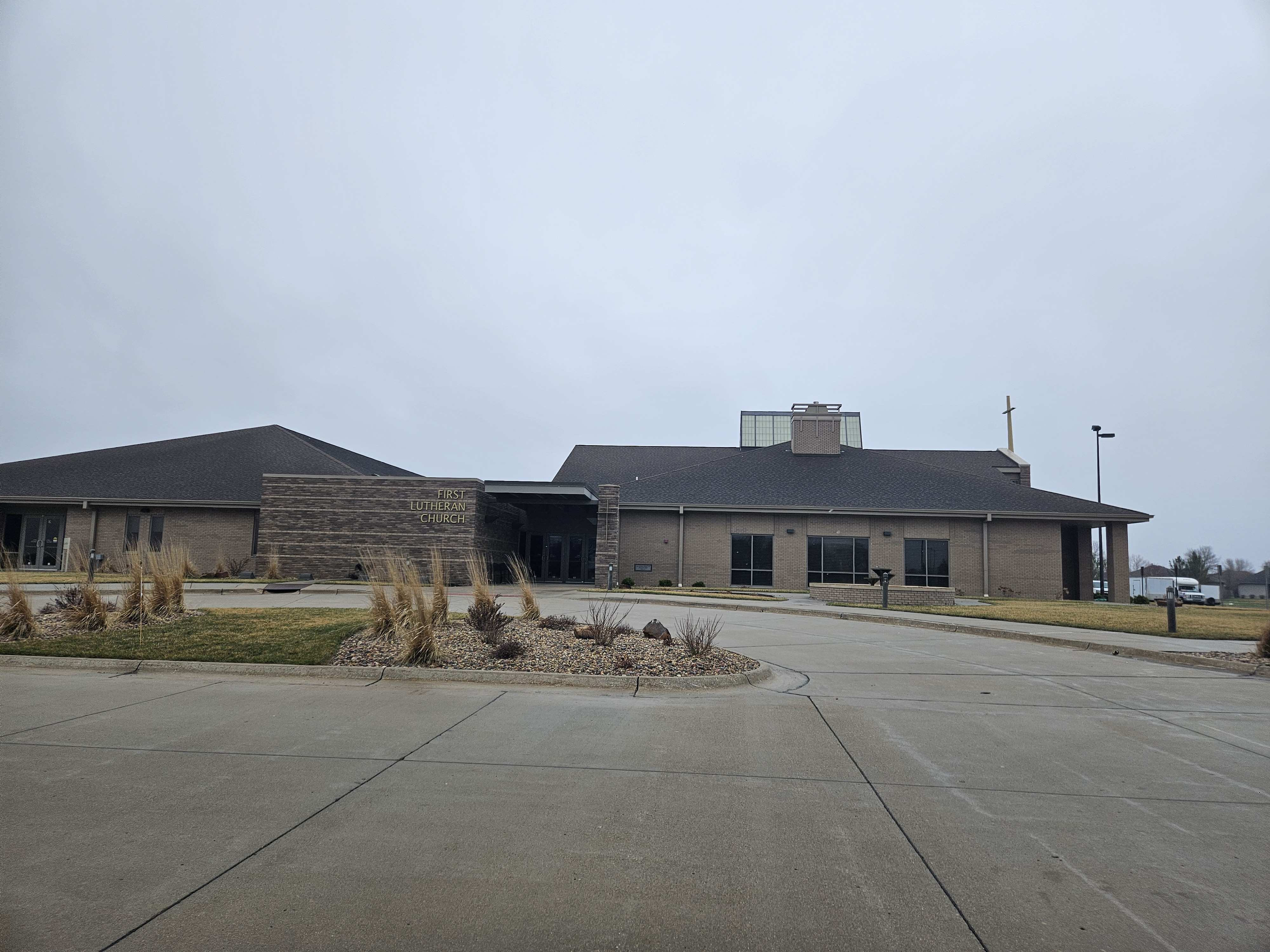
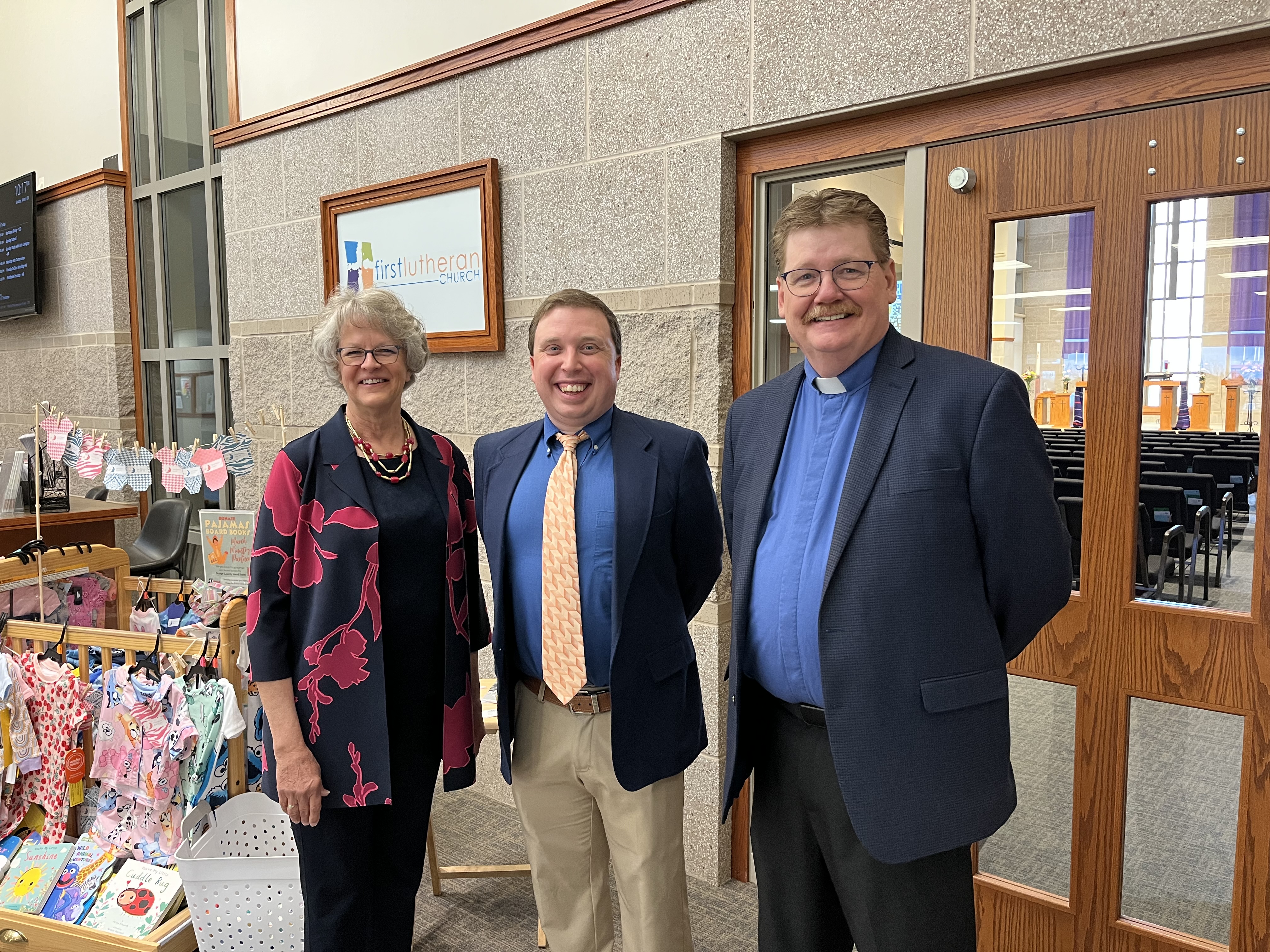
I had the privilege of being with God’s people gathered as First Lutheran Church in Fremont, Nebraska on Sunday March 30, 2025. Thank you Pastor Greg DeBoer for the invitation and to the whole congregation for the warm welcome. I was invited to come and preach as part of their Lenten series, “Worship Quest: a journey to Easter” focused on the different pieces of liturgy, as well as to share a message about the work of Lutheran Disaster Response. This week’s focus in worship was on the offering, and the selected readings for the day were John 6:1-13 and Deuteronomy 26:1-11. Needless to say, it was a fun pairing of texts and themes to think about, wrestle with, and preach on. What follows is the majority of the manuscript that I preached from.
Before the sermon, I’d like to take a moment and say first of all, Good Morning, First Lutheran! It’s so great to be back with you today. Thank you, Pastor Greg, Deacon Karen, Heidi, Amy, and the whole staff team for the invitation, and to all of you for the warm welcome! In being with you today I bring greetings from Bishop Scott Johnson, and from your own member Wendy Olson who serves on the Nebraska Synod Council. I also bring greetings from all of my colleagues and your partners in ministry on the synod staff, and from your 90,000 siblings in Christ who with you are the Nebraska Synod. Today, I also bring greetings from your Fremont Area cluster siblings in Christ, from Salem Lutheran in Fontanelle and my wife, Pastor Allison Siburg. Thank you for having me join you today, for your continued participation in mission share with the larger church, and for all of the ministry that you are a part of and make possible.
Now, grace and peace from God in Christ who is with you, for you, and who loves you. Amen.
I’m so excited to be here as part of this series you all have embarked on and for the chance to think about one of my favorite parts of worship, the offering. Now I say that not just because I have a certain passion for stewardship. But I do because when done with intentionality in worship, the offering time is truly a time of joy and gratitude. It’s a time of sharing the Good News of God and responding for all that God has done, will do, and promises to do for us. It’s a time of telling the story of how God’s love is made real here and now today, in part even, through you and through me.
What is Offering?
In thinking about the offering in worship, I have to admit something. There is nothing more powerful than watching the joy and excitement of a child participating in offering. Whether it be a “Noisy Offering,” putting in a little money that one’s friends or parents or grandparents might have given them, or even better having a child cheerfully run around the sanctuary offering people a chance to give and respond. I am thinking about the joy of children in part, because many of you know this, I am also a parent who is grateful for your Early Learning Center. Our daughters have both attended daycare and preschool here, and that is a gift and ministry that you provide. Thank you for doing that. But I wonder if in doing that, you too see that the kids and children who attend are also showing you signs of new life in Christ? Perhaps showing you signs of what it looks like to live, serve, and respond with hope, joy, and gratitude? If you want to see such excitement in action, just come during the week and watch these beautiful Children of God interact with one another, their teachers, and your church’s ministry staff team. That’s offering and ministry in action too. And it’s a reminder that we, as God’s beloved people and Jesus’ hands and feet today, are ourselves an offering.
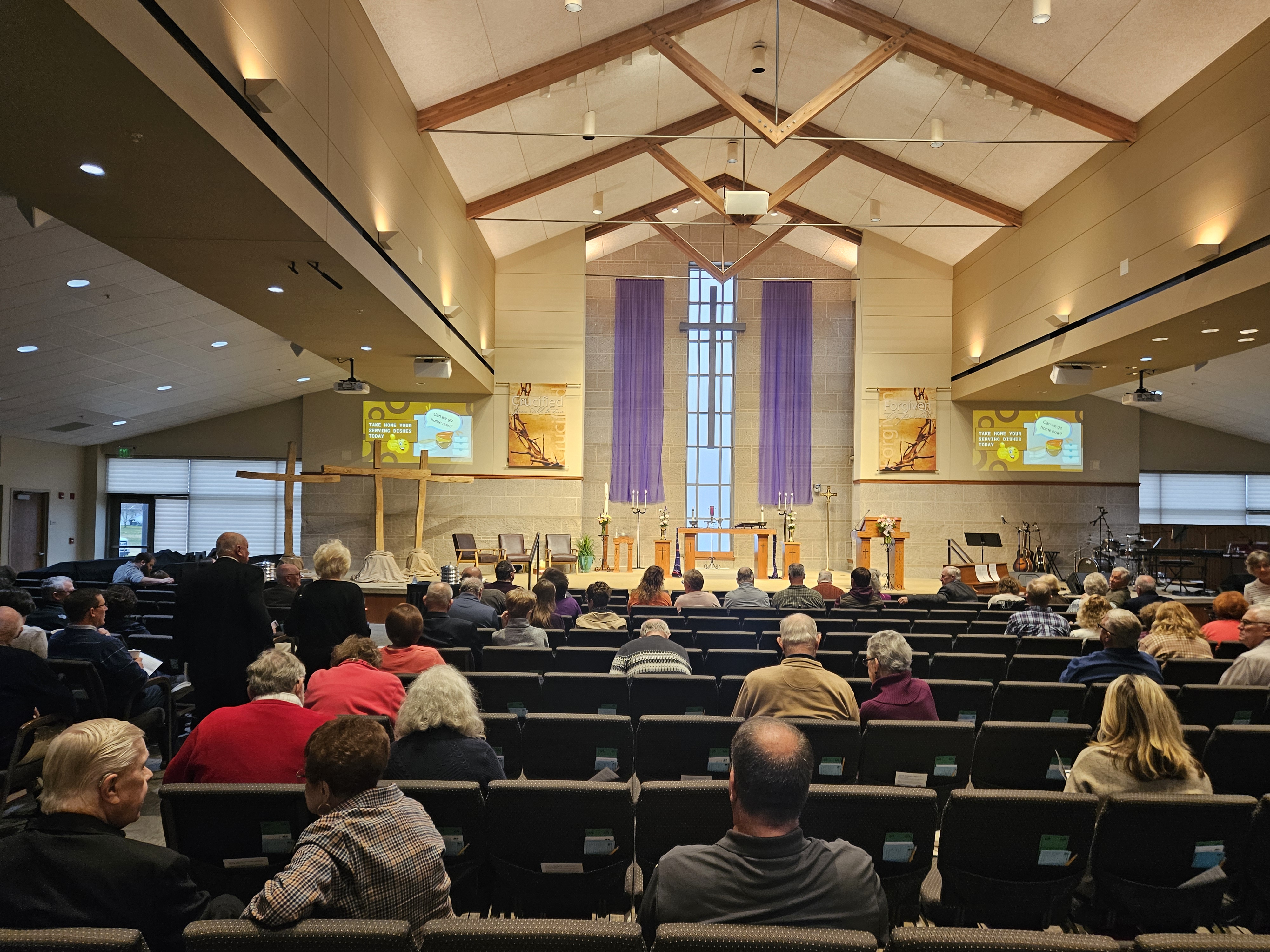
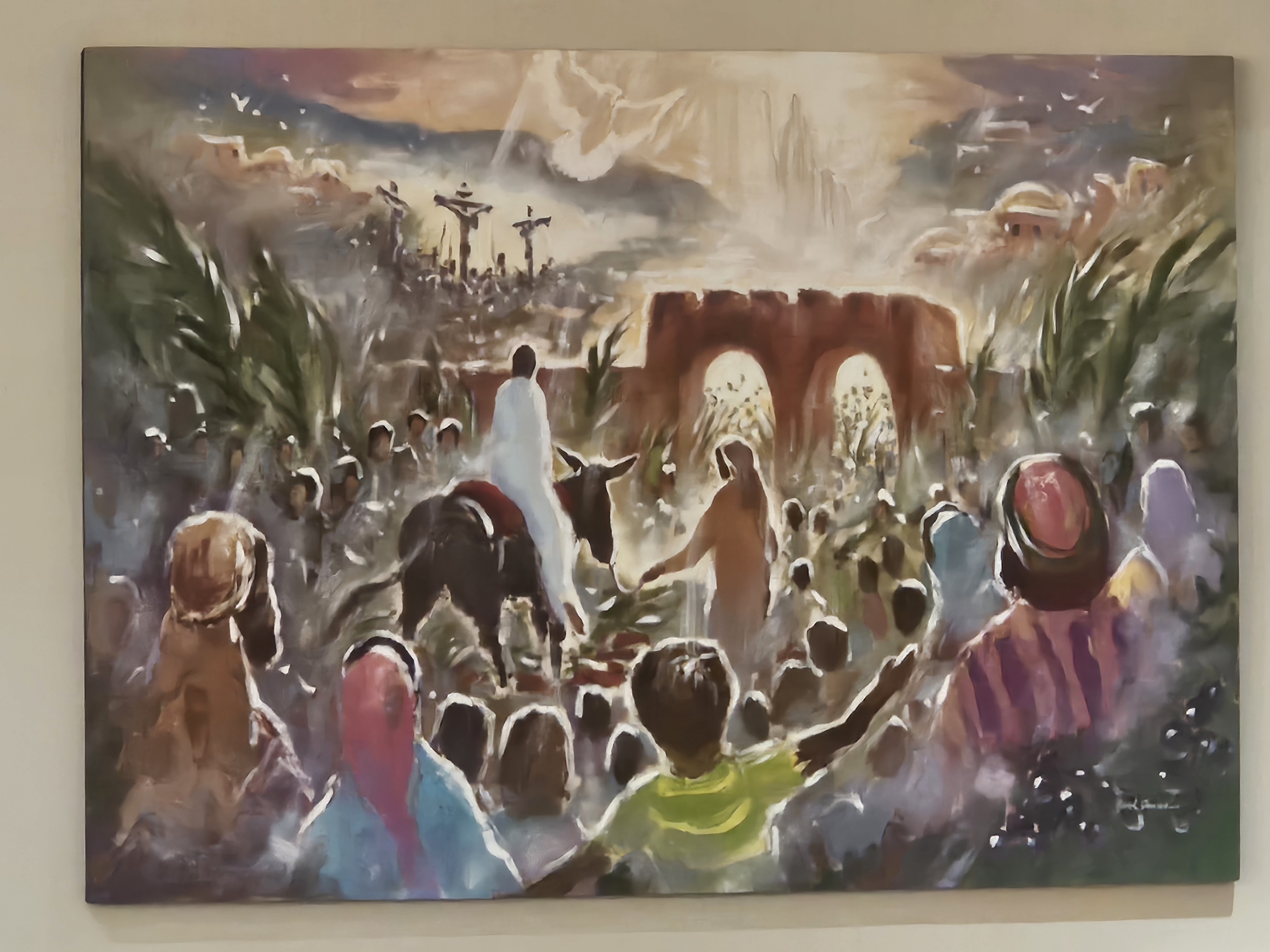
To whomever designed this worship sermon series, Pastor Greg, Amy, or whomever, thank you! Thank you especially for picking two of my favorite passages of the whole Bible. On the one hand we have the story of offering and response from Deuteronomy, one often included in worship around Thanksgiving. On the other, is John’s version of the Feeding of the 5,000. These stories remind us that God is the one who is active and up to something. They remind us that with God, there is enough and really more than enough, to share and to provide for all. With God, abundance is real. Through God’s work and promise, God in Christ comes and is born, lives among us, walks with us, dies, is resurrected and is ascended for us, so that we might have life abundant. This is God’s work we could never earn or do ourselves. But as we are reminded, in thinking a bit more intentionally about offering today, we can respond.
God’s Story and Our Story
We are reminded like the ancestors of the faith, that we “shall take some of the first of all the fruit of the ground which you harvest from the land that the Lord your God is giving you, and you shall put it in a basket.”[1] We return a first portion of what God gives and entrusts to our care. We do so as we remember what the psalmist proclaims in Psalm 24 that, “The earth is the Lord’s and all that is in it, the world and those who live in it.”[2] Put another way, all that we have and all that we are, is God’s. When we remember this, things seem to find a way to be back in right order. We care for creation. We care for our neighbors. We work for justice and peace in all the earth. We stand on the side of the marginalized and oppressed, even when it’s not popular and when it might put us in danger with the powers that be. We do so, because we again remember God’s story which is part of our story too. We remember the response we make before God in making our offering, “A wandering Aramean was my ancestor; he went down to Egypt and lived there as an alien, few in number, and there he became a great nation, mighty and populous…”[3]

We remember that “The Lord brought us out of Egypt… and brought us into a land flowing with milk and honey.”[4] And for this and for all that God has done, we respond by returning our first fruits which God provides.[5] We respond by giving thanks and praise. We respond by celebrating “together with the Levites and the aliens who reside among” us.[6] We do this together. We do this with those who look like us, and those who don’t. With those who might think and believe like us, and those who don’t. With those who may have citizenship like us, and those who don’t. This is what community looks like in God’s kin-dom. And we “celebrate with all the bounty that the Lord our God has given to us and to our house.”[7] There is grace in this. God’s provision and abundance is wide. God’s love is boundless. There is more than enough for all. And God declares that abundance is real, and the lies of the world of scarcity, are just that. Lies. Sins. Things that are used to deceive and divide. To cause people to turn against people. To prop up some at the expense of others. But with God there is another way.
That’s what the offering time in worship is all about. It’s our chance to come and to respond. To respond to the prayers of the people, by doing what we can with what God provides to meet some of the needs of our beloved siblings and neighbors. All created in the Imago Dei, God’s own image. It also calls us to turn toward the table. As we respond to the needs of others, we also return a portion of what God entrusts to feed the hungry just as God will feed us again through the blessed sacrament.
Feeding God’s Beloved People
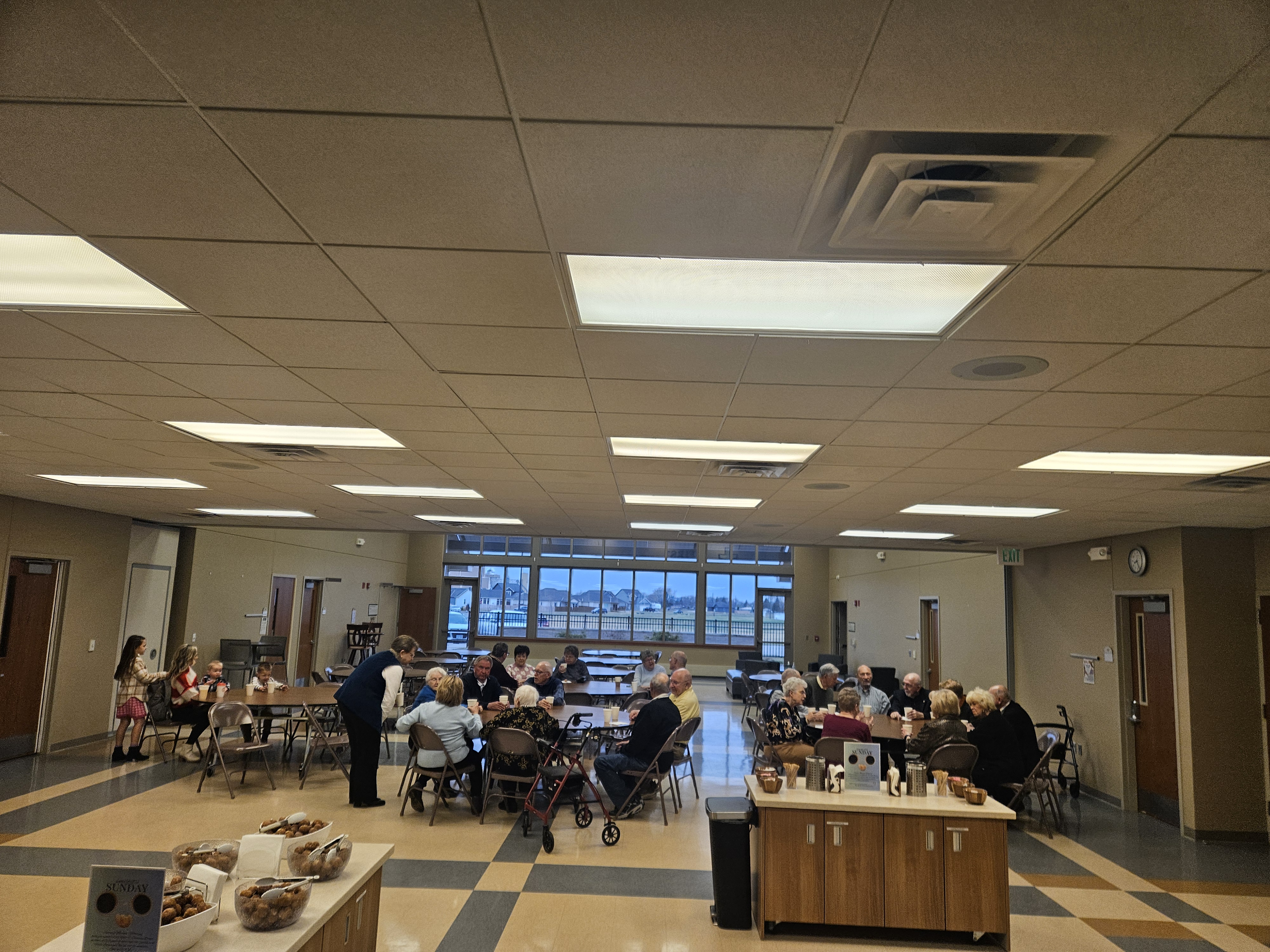
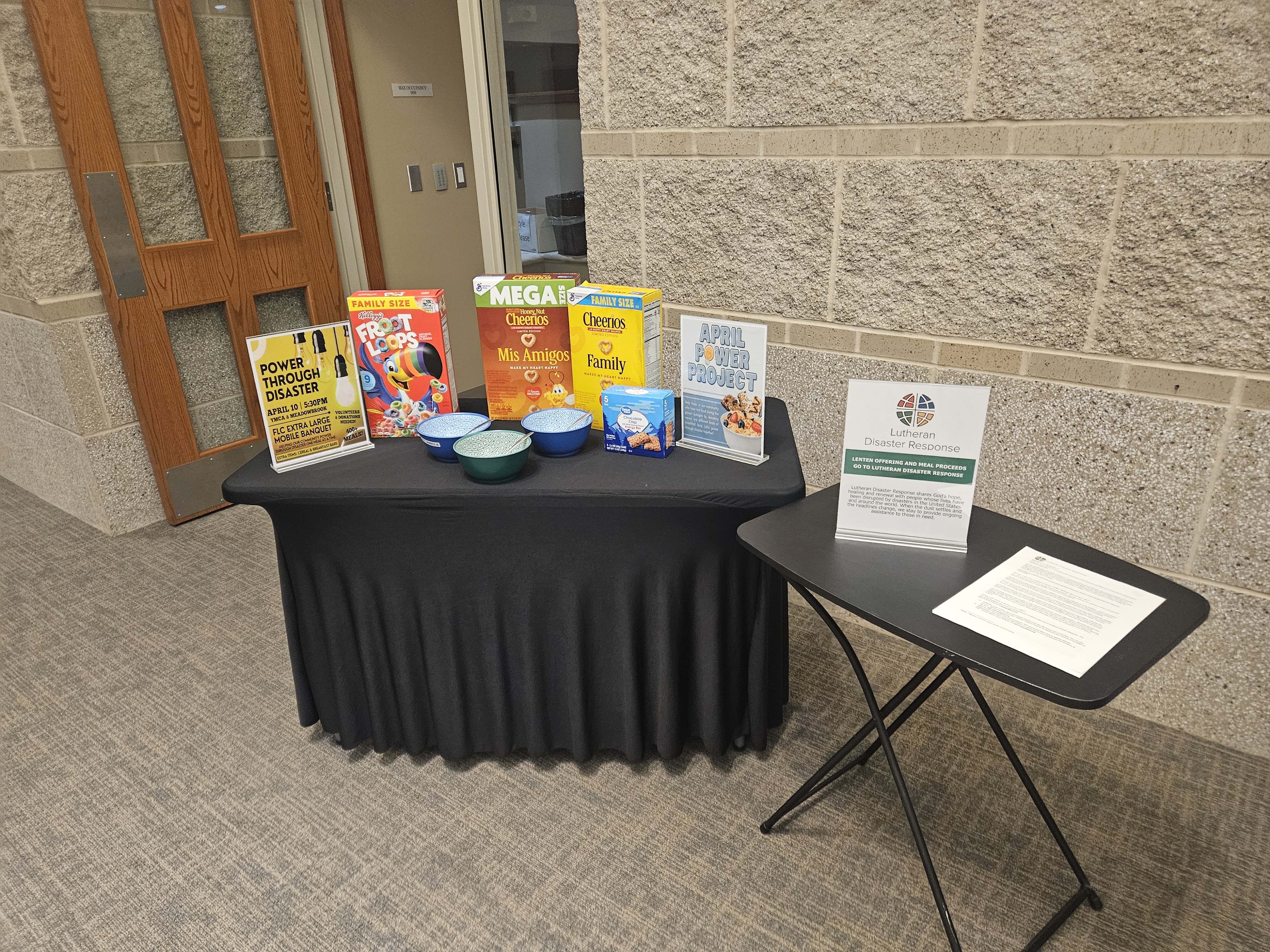
Speaking of feeding, imagine you found yourself on the mountain with Jesus and the disciples and a great crowd of witnesses. You are miles from the nearest store or restaurant. What would you do? How might you respond to Jesus’ test of a question, “Where are we to buy bread for these people to eat?”[8] Would we respond with a mind of lack or scarcity, and declare, “Six months wages would not buy enough bread for each of them to get a little?”[9] Or, would we respond a bit more hopefully and faithfully? Remember the events of the past week and a half. Where many of you and your neighbors like me, were out of power for days on end, and some of you who still are. First Lutheran you have opened the doors to serve your neighbors. You have increased your participation and support for the mobile banquet, planning to deliver twice as many meals on April 10th. You are collecting cereal and power bars to assist families who have had to replace food because of power outages. You like your siblings in Christ in Fremont, found ways to provide meals for the hungry and time to be together. Like your siblings in Christ in Fontanelle, who this past Sunday took the church on the road and instead of worshiping in the sanctuary of a powerless church building, went to Nickerson’s Fire Hall and served a hot breakfast for any and everyone. There was enough and more than enough. Like the story ends, there was even left-over food that people could take home with them.
It’s human nature to notice and ask questions like, “There is a boy here who has five barley loaves and two fish. But what are they among so many people?”[10] But a faithful response might be to say, that with God, that’s more than enough to meet the needs of this day. We know the rest of the story. “Jesus took the loaves, and when he had given thanks, he distributed them to those who were seated; so also the fish, as much as they wanted. When they were satisfied, he told his disciples, ‘Gather up the fragments left over, so that nothing may be lost.’ So they gathered them up, and from the fragments of the five barley loaves, left by those who had eaten, they filled twelve baskets.”[11] What does Jesus say? What does Jesus dream? What does Jesus hope for? This story points to abundance. That there is enough and more than enough. That we are in this together. As signs of God’s gracious love, mercy, and promise. For one and for all.
Where We Fit in All of This as an Offering
First Lutheran, I am preaching to the choir here. You know this. At your heart, you are a faithful community of disciples who respond as generous stewards. You show up. You did so over the past week and a half as you and your neighbors recovered from the blizzard and lived through the power outages. Just as you did so, almost exactly six years ago in 2019. When Fremont for a time became an island. When the Platte and Elkhorn extended over their banks. When what had been a snowy and freezing winter quickly became a melty and rainy flood of biblical proportions. You stepped up as a community center. You opened your doors as a shelter. You met your neighbors where they were at, with all that God entrusted to your care. You lived out what it looks like to be an offering for others. And through you, abundance was made real.
This is the truth too that is behind the work of the whole church and its many serving arms for ministry like Lutheran Disaster Response. Through Lutheran Disaster Response you as God’s people show up with your neighbors near and far and walk with them for the long-haul. Long after the news crews have gone home after the latest disaster- whether it be wildfire, flood, hurricanes, tornadoes, blizzards, what have you… Lutheran Disaster Response is on the ground until all people have what they need and are safely home again in their new normal. I wear a number of hats on the synod staff, one of them is as part of the synod’s Disaster Response Team. There are ways to prepare, and trainings to be had. Those of you attending Synod Assembly this year, there will even be a couple disaster response workshops.
But for all of you, you have learned through trial and error what it looks like to show up and walk with God’s people during times like these. Lutheran Disaster Response helps provide resources- financially and otherwise so that those on the ground, like you, can respond as helpfully and quickly as possible. And in a lot of ways, that reminds me of the truth behind the story of Jesus feeding thousands. By themselves, a few fish and loaves might not seem like much. But when God shows up, and everyone is willing to pitch in and use what God has entrusted them with- their gifts, skills, passions, vocations, ideas, dreams, stories, questions, resources, and their whole selves, there is no limit to what God will do for, through, and with you.
First Lutheran, thank you for all that you do. I do have a challenge for you though. Stay open to Christ’s invitation. Listen for the Spirit. And be willing to go and take the next most faithful step that God might just be inviting. I say that, because your congregation is part of the current cohort of the Nebraska Synod’s Vitality Initiative for Congregations. Through it, you will be pondering and imagining with questions like: Who are we? Who are our neighbors? What might God be to up? And what might God be inviting us to be a part of now and next? I have a hunch that through your congregation’s vitality journey, you’ll come to see even more examples of God providing, and of God’s abundance made real. And you might just come to see and sense offering as something a bit bigger and deeper than you have ever imagined before.
As God’s people, we are an offering. Together, we point to God’s promises and abundance. Together, we embody Jesus’ love for one and for all. Together, we respond not for our own sakes, but for our neighbors. And as we do, God’s kingdom breaks into the world a bit more. And the world sees what all might be possible with our God who brings life, reconciles, sanctifies, who provides the gift of imagination and wonder, and who really makes all things possible. Thank you for being open to God’s call and invitation. Keep responding, serving, and walking as the faithful disciples and generous stewards that you are, knowing that you are not alone, but that God in Christ is with you, for you, and loves you. Always. Amen.
References and Citations:
[1] Deuteronomy 26:2, NRSV.
[2] Psalm 24:1, NRSV.
[3] Deuteronomy 26:5, NRSV.
[4] Deuteronomy 26:8-9, NRSV.
[5] Deuteronomy 26:10.
[6] Deuteronomy 26:11, NRSV.
[7] As described in Deuteronomy 26:11, NRSV.
[8] John 6:5, NRSV.
[9] John 6:7, NRSV.
[10] John 6:9, NRSV.
[11] John 6:11-13, NRSV.
 Timothy Siburg