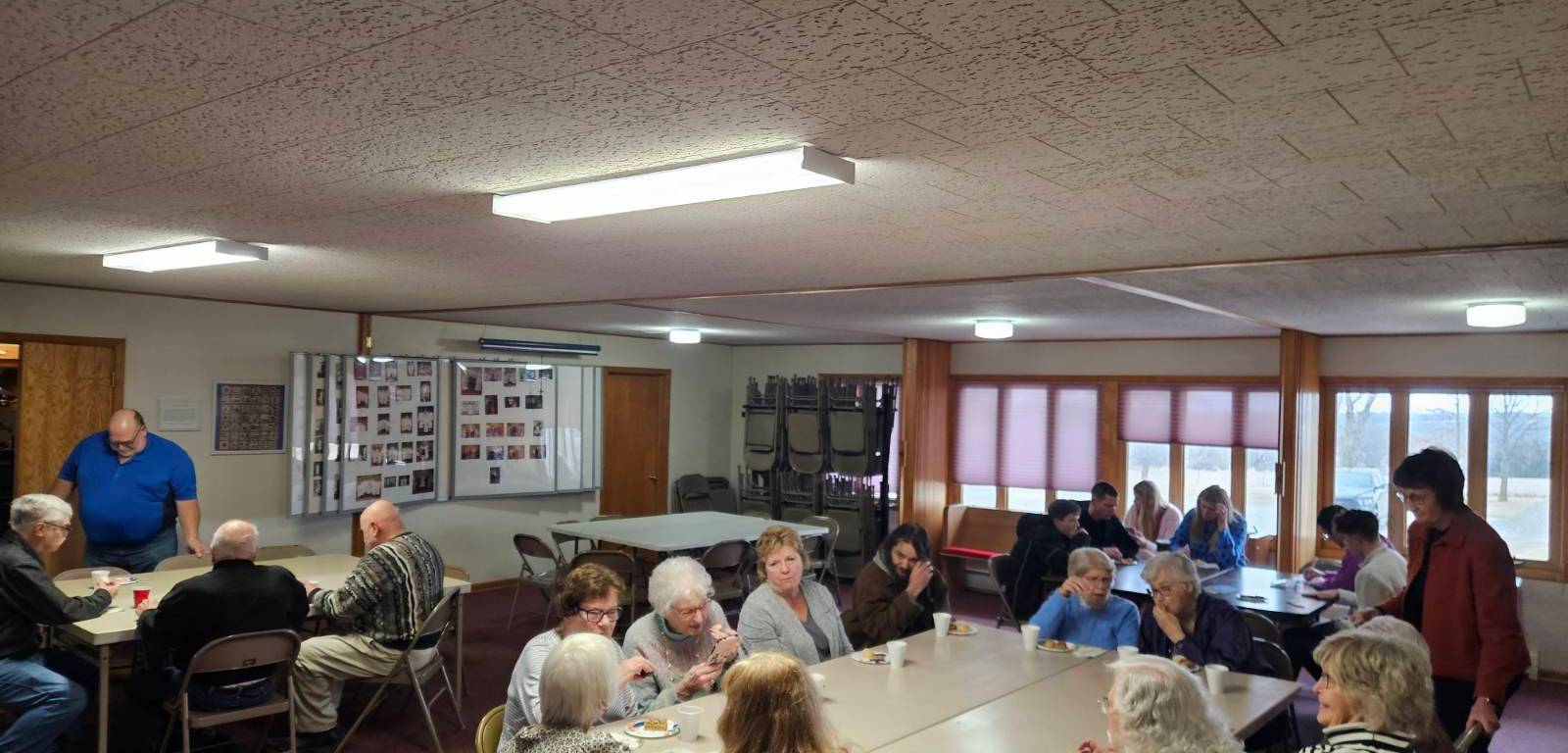
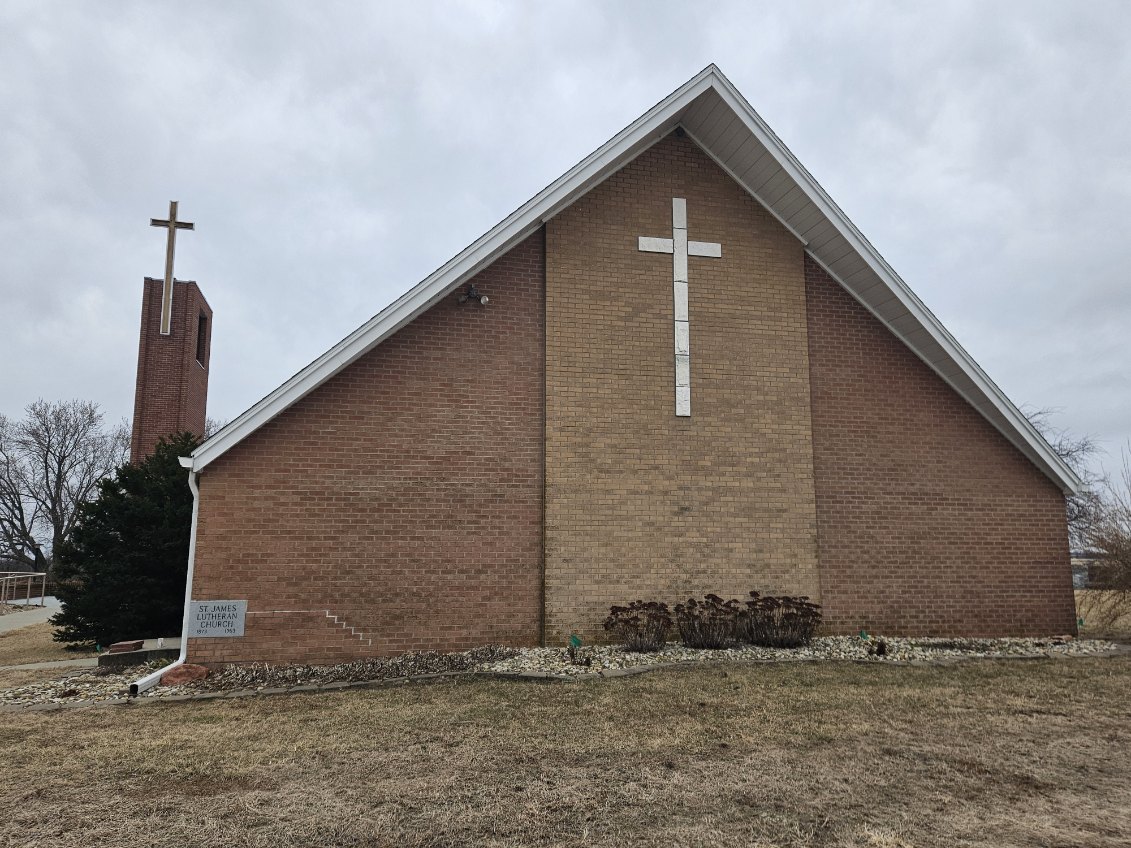
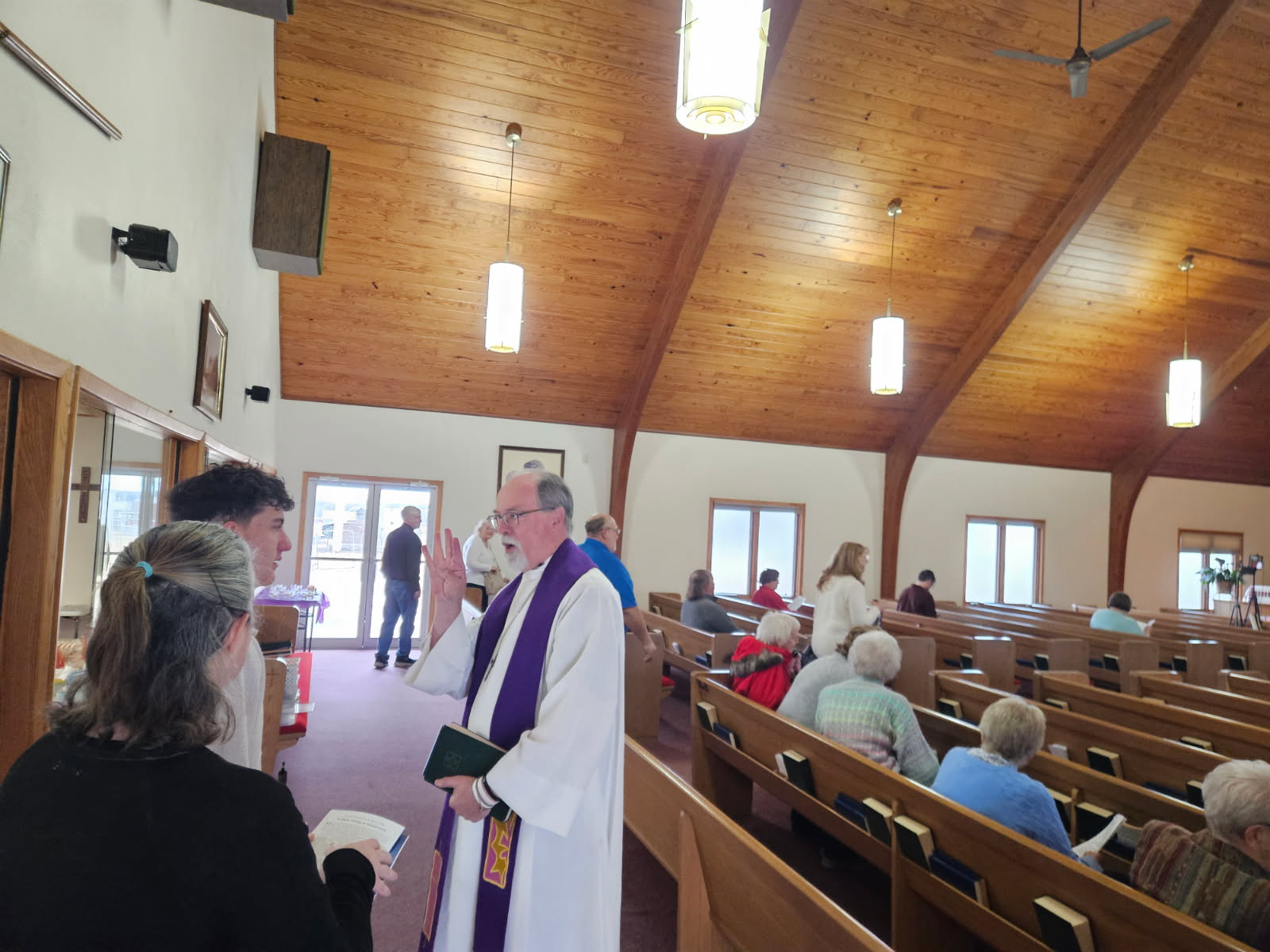
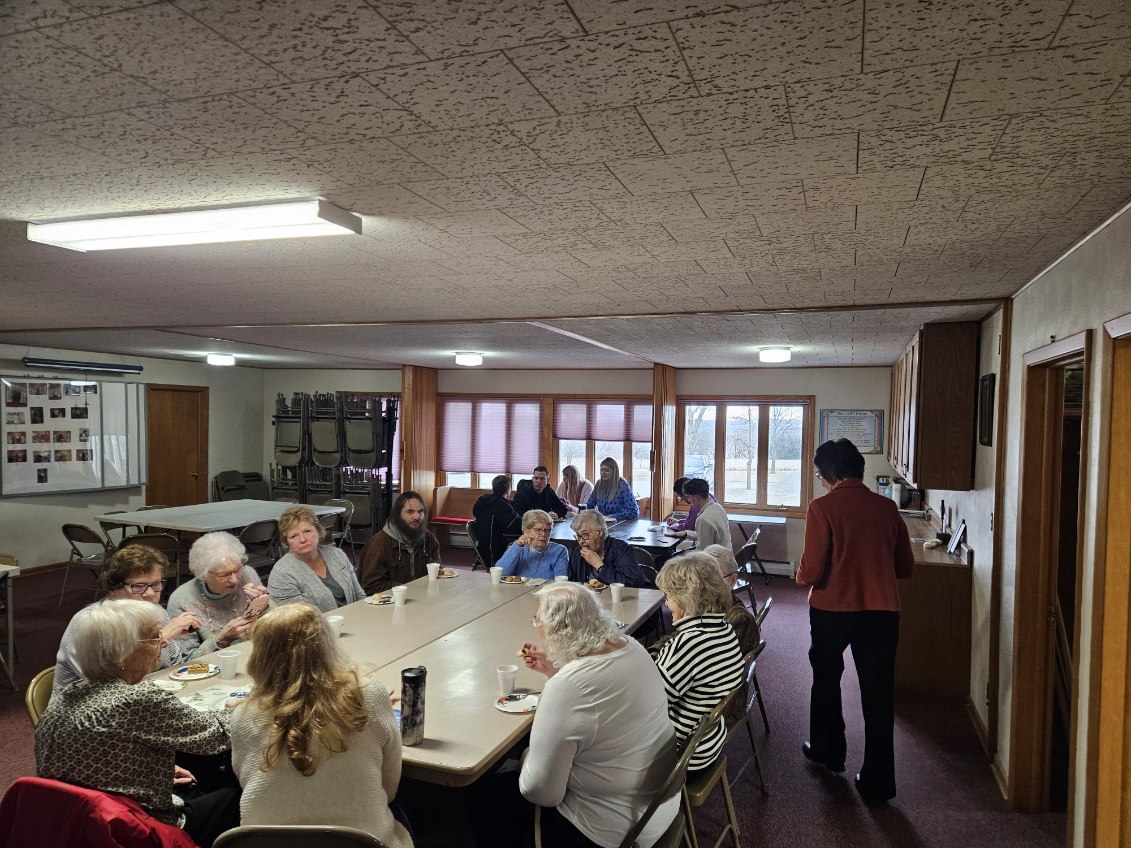
It was a gift to be with God’s people gathered as St. James Lutheran Church in Long Branch, outside of Humboldt, Nebraska on Sunday March 1, 2026. Thank you Pastor Eric Spruth-Janssen for the invitation and to the whole congregation for the warm welcome. In being with the congregation I was invited to come and bring greetings from the Bishop, words of gratitude for the congregation’s participation in the larger church, assist in worship, lead a Children’s Message, and preach. After worship it was fun to join the congregation for some good conversation during the fellowship hour too. It was a brisk morning outside, but the Spirit was on the move inside. What follows is the majority of the manuscript I preached from, based on the appointed readings for the Second Sunday in Lent (Year A), especially: John 3:1-17; Psalm 121; and Genesis 12:1-4. If you would like to watch or listen to worship and/or the sermon and Children’s Sermon you can do that with the video below as shared by the congregation’s livestream via YouTube.
Grace and peace from God in Christ, who is with you, for you, and who loves you. Amen.
Situating Ourselves Today
“I lift up my eyes to the hills- from where will my help come? My help comes from the Lord, who made heaven and earth.”[1] The psalmist sings this familiar refrain, and on a day like this with snow possibly in the forecast, but more so wars and rumors of wars, the psalmist calls us to take a breath. Not to avoid discomfort, hard conversations, big questions and the troubles of the world. But to remind us that in the midst of them, wherever we might find ourselves, God is there with us. Our God who “will keep you from all evil,” who “will keep your life,” and “your going out and your coming in from this time on and forevermore.”[2] So if the news today has you anxious, know that you are not alone. You are not alone in your worries and concerns. You are not alone with your hopes and dreams. You are not alone in prayer for a better day and a better way of peace. You are not alone with your questions. And God meets us where we are at.
The Very Good News of John 3
There is good news for God’s people. And then there are the familiar words from John chapter 3 we also hear again today. This passage is full of good news for God’s beloved people. But it also speaks to the anxiety, angst, and uncertainty of this day that we might find ourselves in. Some people in John’s gospel are beginning to take notice of Jesus. At the very least they notice that God is active and up to something, and as such, they are starting to wonder and even ask questions. Nicodemus does just this when he comes to visit with Jesus.
Nicodemus begins, “Rabbi, we know that you are a teacher who has come from God, for no one can do these signs that you do unless God is with that person.”[3] Credit to Nicodemus for being honest about this. And credit for him not giving up right away when Jesus, at least in John’s telling of the story, gets all deeply philosophical. They exchange some thoughts about being born, and reborn, with Nicodemus asking perfectly logical questions. And then Jesus cuts to the heart of the matter saying, “Very truly, I tell you, no one can enter the kingdom of God without being born of water and Spirit.”[4] Keep in mind this is still very early in John’s version of the Good News of Jesus. At the beginning of John chapter 2, only one chapter earlier, Jesus does his first sign and miracle when he turns the water into wine at the Wedding in Cana, and then he offers an early passion prediction in turning over the tables in the temple on the sabbath. We’re just at the beginning of chapter 3 now, but what is clear here is that Jesus is starting to articulate matters of identity and relationship. Matters of who Jesus is, and who we are as followers of Jesus because of who God is.
What we see and hear in Jesus’ conversation with Nicodemus are core articulations of God’s work and mission. We hear this in John 3:15 about eternal life, and of course in John 3:16 too. There is no more quoted verse in the gospels than John 3:16. And don’t get me wrong, it’s a great verse. We might know it by heart, “For God so loved the world that he gave his only Son, so that everyone who believes in him may not perish but may have eternal life.”[5] It’s beautiful. Though I worry that it has long been misinterpreted at least in Christian circles in this country as a verse of judgment and about our works, rather than about God’s love for us. Honestly, the verse that comes right after 3:16 is even more important.
John 3:17- The Gospel in a Nutshell
The world so desperately needs a church that is grounded in John 3:17. “Indeed, God did not send the Son into the world to condemn the world but in order that the world might be saved through him.”[6] This is the gospel in a nutshell. It’s not about how much you or I believe. That belief quickly becomes a work of our own. Rather, it’s about God’s work and promises. That God’s love leads to sending the Son into the world to save, not to condemn. That God’s love meets us in our humanity. In our joys and sorrows. In our pain and fear. In our hopes and dreams. That God comes and is born. Lives among us. Is crucified, died, buried, resurrected, and ascended for us. Think about it. If we let verse 16 hold sway, it’s easy to see how faith becomes a work of ours where we have to believe enough in order for God’s love to take hold. But the reality is, God is the one doing the work. We can’t earn this. We can’t deserve it. And if it were all up to us, we would never stand a chance. That’s exactly why verse 17 matters. God comes to be with us and meets us where we are at.
Without verse 17, we might get a little preoccupied also with the idea of eternal life as opposed to the life which God entrusts us with now. Theologian and Gospel of John scholar Rev. Dr. Karoline Lewis explains that “Eternal life for the gospel of John is about being in relationship with Jesus,” here and now today and in the life to come, it’s not just an insurance policy for the future.[7] This is Good News, and then some. God in Christ wants to be in relationship with you. And I think that is largely behind Jesus’ reactions and response to Nicodemus. Jesus sees Nicodemus, meets him where he is at, and tries to help him to see anew what God is up to and inviting.
Response as Stewardship
Behind Nicodemus’ questions though is an honest yearning. He’s trying to understand. He knows and deeply believes that God is doing something. But he doesn’t know what that might mean. Does that sound familiar? In this day where the world and the way things are, and the church and the way ministry perhaps is changing, it all can feel like it’s just so much. Like it’s unfamiliar. Uncertain. Now, maybe it’s just me. But I find comfort in being reminded by Jesus about the way the Spirit moves. Jesus says, “The wind blows where it chooses, and you hear the sound of it, but you do not know where it comes from or where it goes. So it is with everyone who is born of the Spirit.”[8] The wind blows where it chooses. Perhaps we know this more than the average person, as we live here in Nebraska. Perhaps you know this better than others, being out here in the country. I too live in a rural setting north of Fremont. And the wind can ebb and flow and come out of seemingly every and any direction at any moment. It’s surreal.
It defies logic. But it’s true. And it’s a perfect metaphor for thinking about how the Holy Spirit moves. We know what lies ahead in the story of Jesus. After his death, resurrection, and ascension, comes Pentecost where the Spirit is truly set loose. There is no way to contain it. God will do what God will do. And we’re invited to witness, to wonder, to pay attention and perhaps even respond.
This is where stewardship comes in. Stewardship is our response. It’s our response to all that God has done, will do, and promises to do. It’s our response to our deep belief that God is at work, for you and for me. Through grace upon grace. Through providing life and love. God alone provides the gift of life, forgiveness, and mercy. Things we could never earn or do ourselves. God provides them as gifts. Pure grace. And for this we get to respond. Do we respond by witnessing and wondering what the Spirit is up to and inviting? Do we respond by just going through the motions, seemingly unchanged? Do we respond gratefully and joyfully? Or are we so moved that we not only say thanks, but we also join in with God in some of God’s on-going work here and now? It’s this sort of discernment which helps us remember that as Children of God, we are both called to be disciples and stewards. We follow and grow where God leads as disciples, and we respond and serve as stewards of God’s love. We do so too as we model what we heard from Genesis in our first lesson, that like our father in the faith before us, Abraham, we too are blessed to be a blessing.[9]
You might be wondering though what do I actually mean when thinking about stewardship. Consider Psalm 24, where the psalmist sings, “The earth is the Lord’s and all that is in it, the world, and those who live in it.”[10] The earth is God’s. And all who are part of the earth, are God’s too. Everything is God’s. You are God’s own. I am God’s own. And all that we have, and all that we are, is God’s also. Everything that makes you the unique person and beloved Child of God that you are, is God’s. Your time, talent, treasure, assets, possessions, and finances of all kinds. Your life, health, body, heart, soul, and mind. Your passions, strengths, vocations, gifts, relationships, ideas, dreams, stories, imaginations, and even your questions. All that is yours, is really God’s. And all of creation and the earth itself that surrounds us, and which God entrusts into our care in the beginning of Genesis, is God’s too. All of this and more, is God’s. And God chooses to entrust some of it into our care.
God does this because God loves you and God wants life to go well for you. God does this, because God does new things, and invites us each to be part of it. God does this too because God wants life to be meaningful. So God invites you to follow and to use what God entrusts to meet your neighbor’s needs in some ways in daily life- here, now, today. Knowing that when we do this, we don’t do it alone. We do it with our God with whom there is always enough, and really more than enough. With our God who can take a few fish and a couple loaves of bread, and feed thousands. With our God who can turn water into wine. With our God who can share a simple commandment to “love one another,” and in so doing, change the world forever. With our God who shows that abundance is real, and the lies, sins and fear of scarcity are not. With our God who comes to be among us as one of us, bearing life and love for the world, and who brings life out of death and shows that the resurrection is real.
What Is Your Response?
Friends, this is Good News. God in Christ loves you. God in Christ is with you. God in Christ is for you. God will go to and through the point of death on a cross, for you and for me, for one and for all. Which begs the stewardship question, how shall we live and respond? It might sound like a big question. But it’s a gift of a question. How shall we live and respond as stewards of God’s love? How will we share God’s love with our siblings in Christ here in worship today? How will we share God’s love with our neighbors near and far beyond these church’s walls?
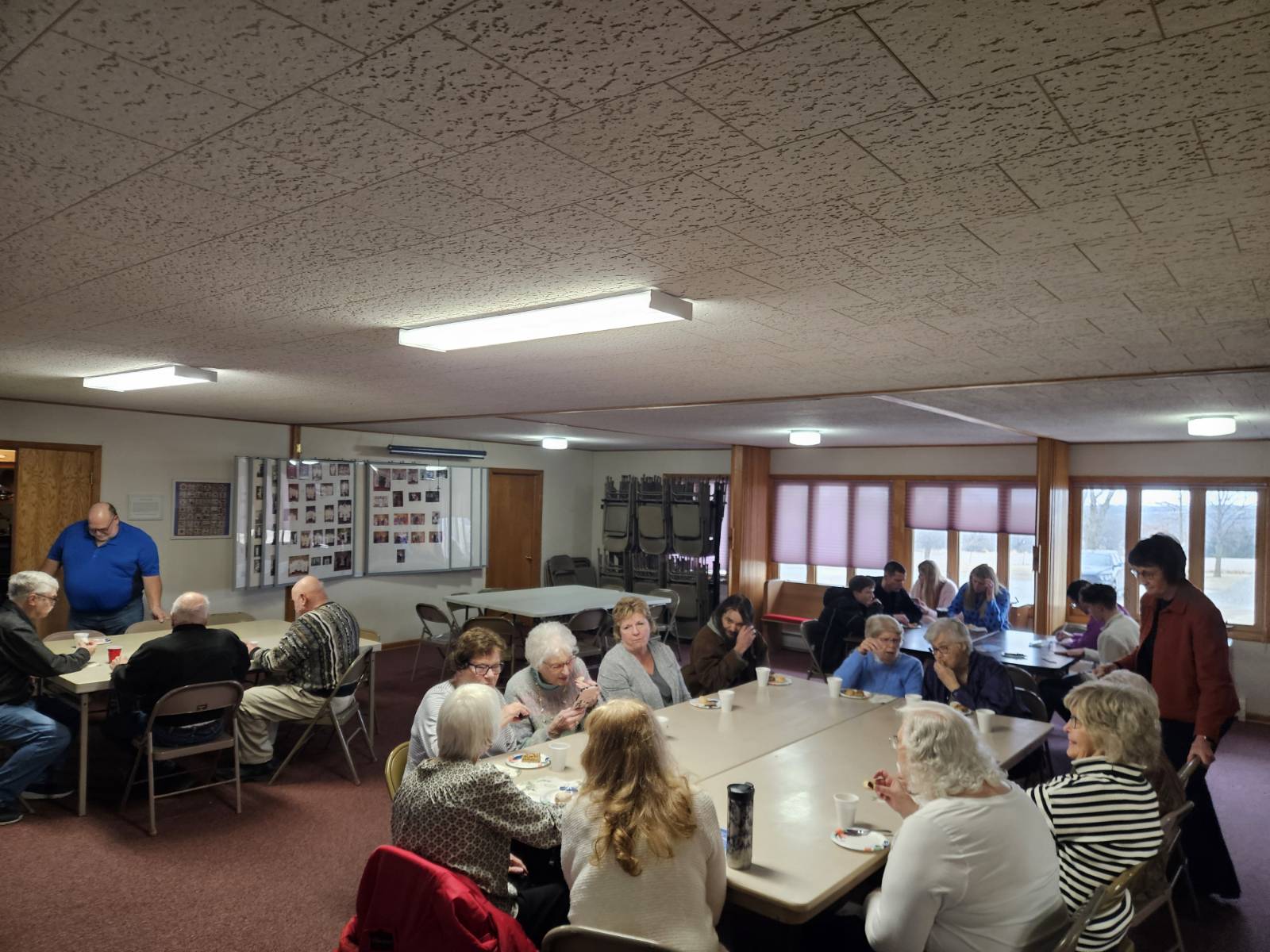
St. James Lutheran, I am asking these questions, but I also believe that I am probably preaching literally to the choir. You respond through everything that you do as a congregation. Through your noisy offerings and your quiet ones too. Through the food and fellowship of a Souper Bowl lunch like you just had last month, and through the story sharing and humor to come in the Easter season and your observance of Holy Humor Sunday in just over a month. Through your partnership and care with Colonial Acres and through the ministry of Mosaic. You respond by being Christ’s hands and feet here in Long Branch and out in the country outside of Humboldt, and through all the ways that you meet your neighbors’ needs locally and globally. And of course through all that you do as part of the Nebraska Synod and ELCA. Thank you for all that you do and for all that you are as stewards of God’s love.
Where Might the Wind of the Spirit Lead Next?
I wonder, where might the wind of the Spirit lead you next? What might God be inviting you to ponder? How might God be calling you to use what God entrusts into your care to meet your neighbors today? In whatever ways you might answer, know that as you are born of water and the Spirit, God is active and up to something in you, with you, through you, and for you. Join in with Nicodemus in asking good questions. Join in with him in wondering and imagining. And follow and respond as God and the Spirit invites. Assured in all of the good news that we heard again from John chapter 3 that indeed, God in Christ is with you, for you, and loves you. Always. Thanks be to God. Amen.
Citations and References:
[1] Psalm 121:1-2, NRSVue.
[2] From Psalm 121:7-8, NRSVue.
[3] John 3:2, NRSVue.
[4] John 3:5, NRSVue.
[5] John 3:16, NRSVue.
[6] John 3:17, NRSVue.
[7] As quoted in this week’s “Working Preacher” podcast and in reference especially to John 17:3. https://www.workingpreacher.org/podcasts/1071-second-sunday-in-lent-march-1-2026
[8] John 3:8, NRSVue.
[9] As alluded to in Genesis 12:2.
[10] Psalm 24:1, NRSVue.
 Timothy Siburg