

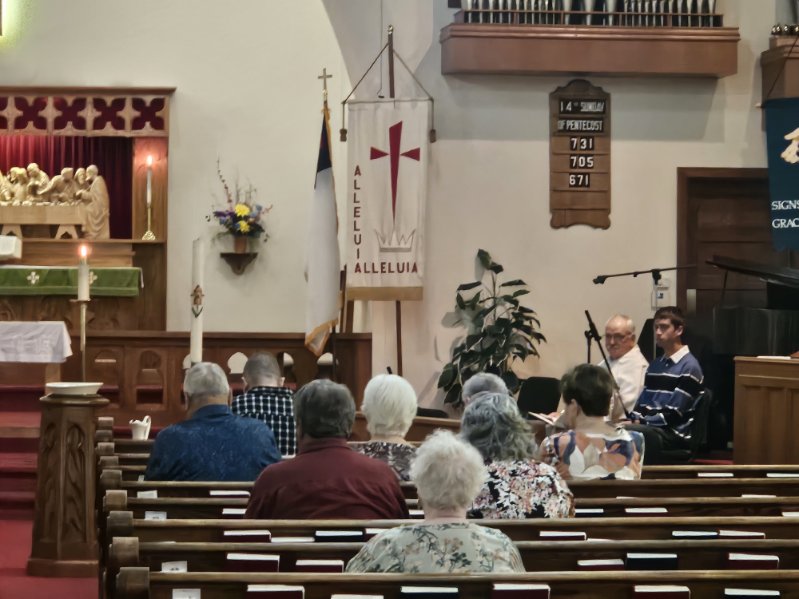
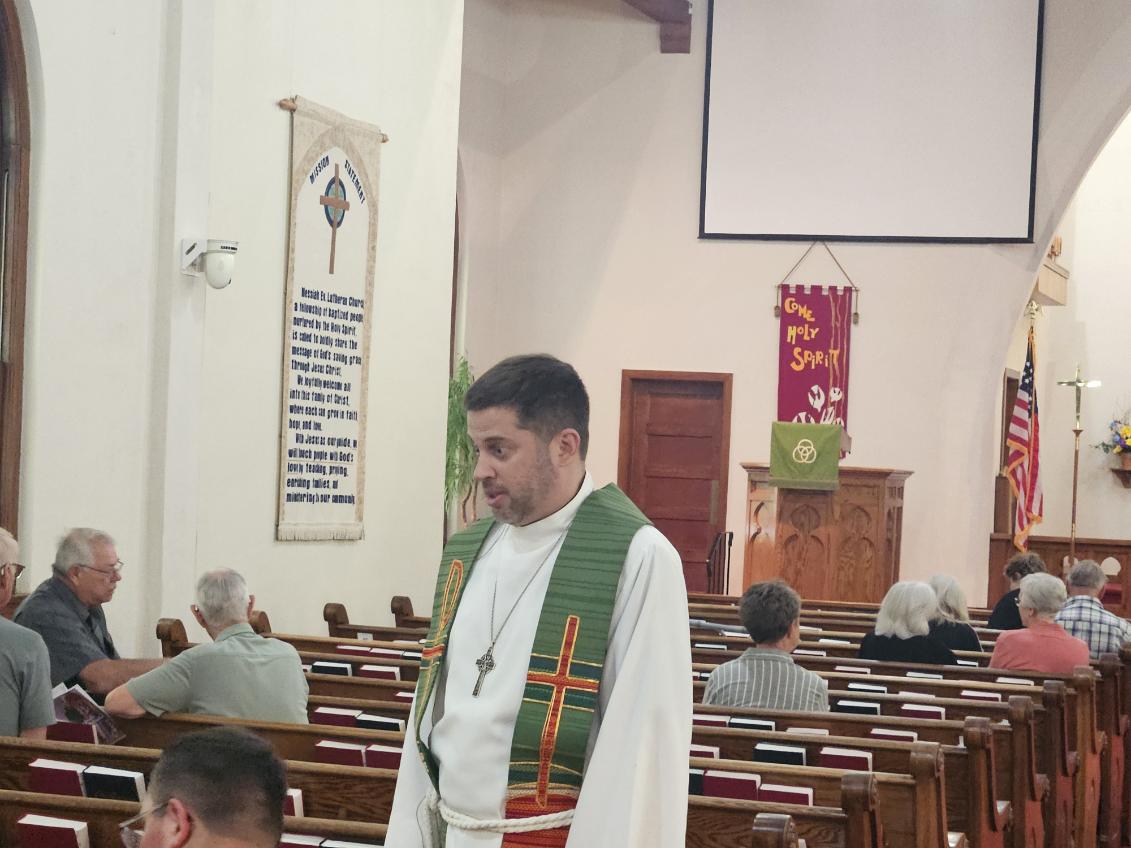
I had the privilege of being with God’s people gathered as Messiah Evangelical Lutheran Church in Grand Island, Nebraska on September 14, 2025. Thank you Pastor Steven Peeler for the invitation and to the whole congregation for the warm welcome. On September 13, the entire Nebraska Synod staff was in nearby Marquette for a Nebraska Synod “On the Road Again” weekend, and out of that synod day of listening, wondering, story sharing, conversation, and worship, many of the synod staff were in area congregations on Sunday morning, September 14. I was the lucky one to be with Messiah, and said an extra thank you for the four Messiah members who were able to attend the event in Marquette. In being with the congregation I was invited to bring greetings and share words of gratitude with the congregation as well as some teaching time about what it means to be a Deacon which I shared during announcements, as well as preach on the lessons appointed by the lectionary (Luke 15:1-10; Exodus 32:7-14; Psalm 51:1-10; and 1 Timothy 1:12-17) for Lectionary 24C, while weaving in themes, learnings and wonderings from the congregation’s continued journey through the Nebraska Synod’s Vitality Initiative. What follows is the majority of the manuscript that I preached from.
Grace and peace from God in Christ, who is with you, for you, and who loves you. Amen.

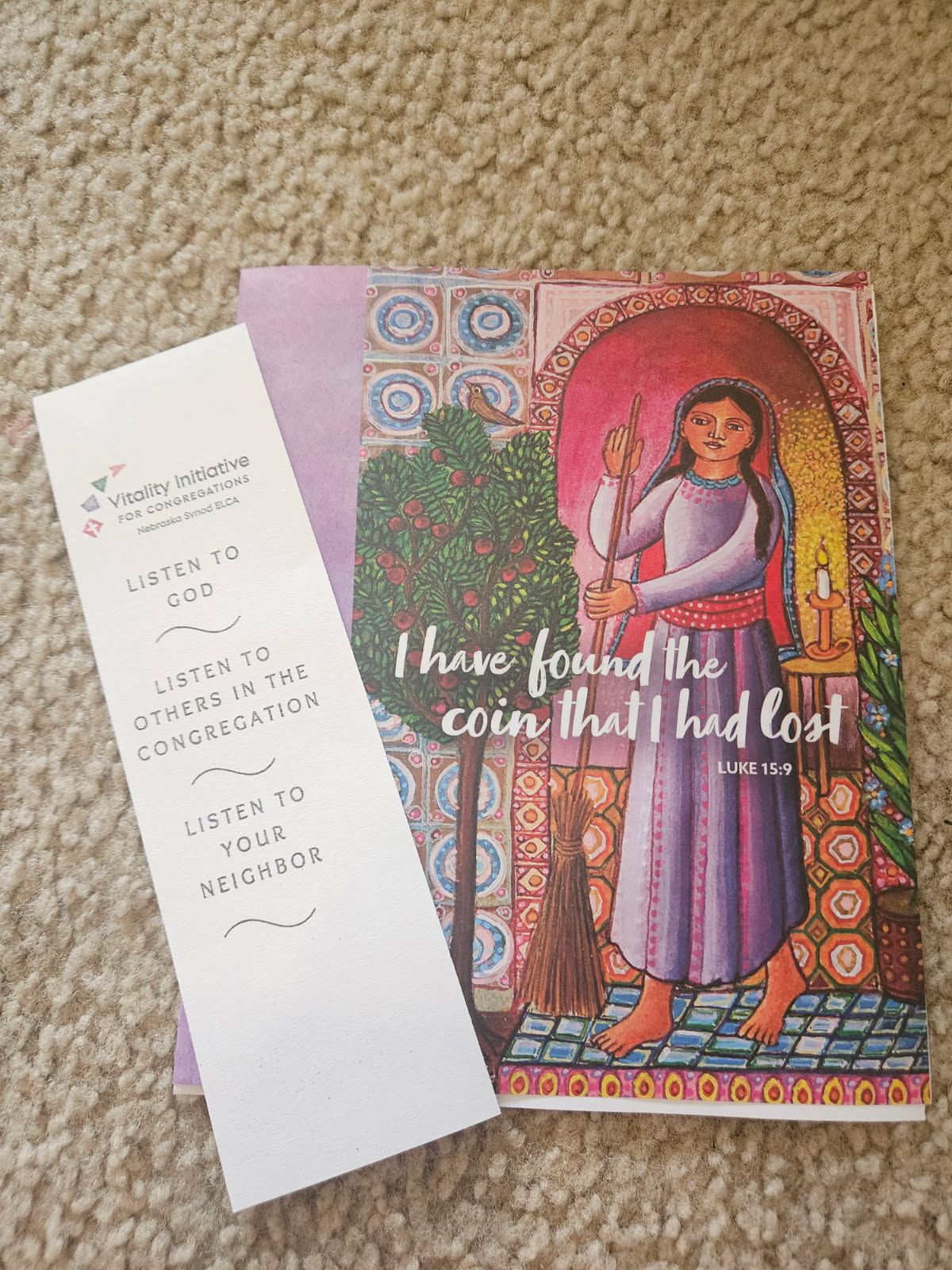
Messiah Lutheran, again it is so good to be with you today. And I know that I am the second member of the synod staff to be with you here in as many weeks. Last week you heard from my colleague and your partner Gretchen Ahrens who is also your coach as your congregation journeys through the Nebraska Synod’s Vitality Initiative. I am going to hopefully build on that focus and theme a bit today. As your congregation joins with other congregations across the synod, together you are asking big questions. God-centered questions. Questions like who are we? Who are our neighbors? What might God be up to? And what might God be inviting?
Over these past few months, your congregation in particular has dug in deep pondering who are you as a congregation? “Who are you? Who… who… who… who…. I just want to know, who are you? Who… who… who… who…?”[1] Okay, so that’s probably not the best version of that song from “The Who?” that you have ever heard. Some of you might know it better because of its use in the TV show CSI. But I start there, because in some ways that song comes to mind when thinking about the Vitality Initiative and how you have spent the past many months remembering, listening, telling stories, and discerning about who you are and whose you are. But the song also comes to mind when thinking about the stories we hear in today’s gospel. There is a sense of something or someone being lost, and then the joy of being found. The joy of being seen and known. And the persistence of the one who is searching. Searching for something they are missing. Searching for meaning and purpose. Searching or seeking a feeling of being known. Searching for the one whom may be off on their own and needing a little help to find their way home.
Rejoice with Me! God’s Word for Us Today in the Gospel
“Rejoice with me.”[2] “Rejoice with me.”[3] We hear these words twice in our gospel story. They are words of response. Joyful response really. Jesus is making a point here and then some. When Jesus witnessed the grumbling of the Pharisees and scribes who were saying, “This fellow welcomes sinners and eats with them,” he does what he always seems to do.[4] Jesus tells a parable. A story. Or in this case, two of them. Two stories we know well about a lost sheep and a lost coin. Two stories where the lost are found. Where there is an invitation to rejoice. Two stories about the abundance of God’s love and welcome for you and for me, for one and for all.
When confronted about who he welcomes and eats with, Jesus makes some truths about God’s work, and the kin-dom of God clear. The lost will be found. The broken will be made whole. The hurting will be healed. To each Child of God, Jesus makes clear that you are beloved, you are named, and you are known. Jesus ends his first parable by saying, “Rejoice!” “Rejoice with me, for I have found my lost sheep.’ Just so, I tell you, there will be more joy in heaven over one sinner who repents than over ninety-nine righteous persons who need no repentance.”[5]
God is up to something. The work of restoring and reconciling. The work of repairing and healing. The work of not just finding the lost and the least but making them whole and bringing them and all of God’s beloved together. So Jesus then tells a story about a woman who lost her coin. Think about how hard it is to find something in your own home. I have a seven- and four-year-old in my house. Our house is never as clean as I want it to be, and I’m always looking for something that’s been misplaced. Given the time and the context of this story, this woman in this parable would have been sweeping her dirt floor house, looking for a coin in the dirt somewhere. Wouldn’t she be joyful if she found it? So Jesus says, “Rejoice!” “Rejoice with me, for I have found the coin that I had lost.’ Just so, I tell you, there is joy in the presence of the angels of God over one sinner who repents.”[6]
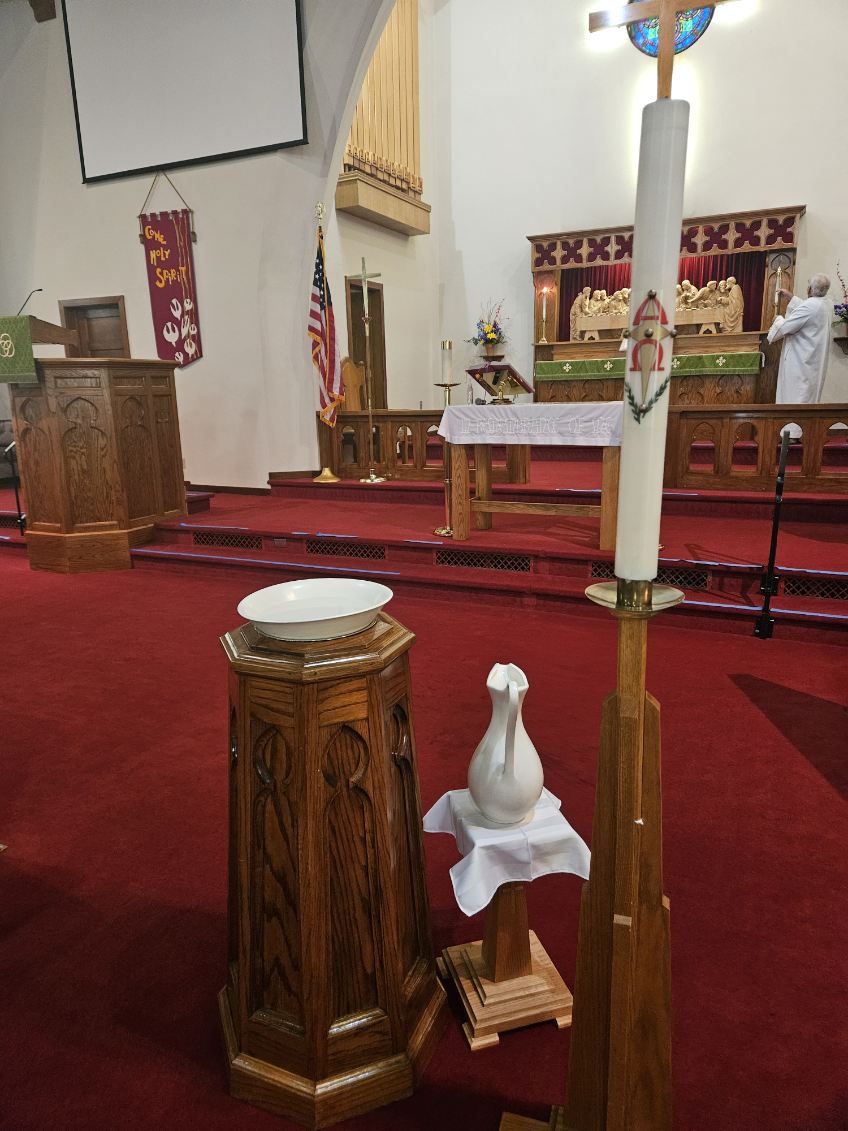
Jesus has come to call us all to repentance. To turn back. To turn toward God. To remember who we are and whose we are. God’s beloved. Those whom God has created, called, and claimed through the Word and waters of baptism once and for all. Those whom God knows by name, even better than we know ourselves. God calls us back to relationship with God and neighbor. To remember the promises and love of God. A promise and love that is abundant, and not scarce. A promise made not because of who we are, but because of who God is.
Reminders of Who God is for us from Scripture this Week
In our first lesson, God’s people have continued to wander through the desert and wilderness and have seemingly forgotten who they are, and whose they are. They have forgotten why they are journeying through the desert and the wilderness as they have made an idol of a golden calf. That could have been the end of the story, but Moses seems to remind God of who God is. Even causing God to change God’s own mind. Moses says, “Remember Abraham, Isaac, and Israel, your servants, how you swore to them by your own self, saying to them, ‘I will multiply your descendants like the stars of heaven, and all this land that I have promised I will give to your descendants, and they shall inherit it forever.”[7] Moses reminds God of God’s own promises. Moses is in deep relationship with God. And shows that talking and listening with God matters. That’s part of what being in relationship with God and neighbor looks like. Conversation. Prayer. Give and take. Discernment. Action. All necessary parts of life as a disciple, and as a congregation wandering in the desert, listening and following as God invites and leads.
The psalmist reminds us of God’s love and mercy, singing, “Have mercy on me, O God, according to your steadfast love; according to your abundant mercy, blot out my transgressions.”[8] And like the old offertory response, “Create in me a clean heart, O God, and put a new and right spirit within me.”[9] And God does all of this because God’s love is abundant and God wants to be in relationship with us. God’s love is so abundant, that as the writer of 1 Timothy reminds, “Christ Jesus came into the world to save…”[10] This work of salvation is God’s work. Not ours. We could never do it, deserve it, or earn it. It’s pure gift and grace. Signs of God’s love made real for you and for me.
God’s Love and Abundance is Real
As disciples and stewards, our work comes in response to this. In the response of remembering and seeing what God has done, will do, and promises to do for us. In the response of rejoicing and giving thanks and praise like the shepherd finding the sheep and the woman finding the coin. In the response of being so moved by what God has done, that we can’t help but want to join in with God in some of God’s on-going work in the world, here and now today. To rejoice at what God alone can do- to restore and reconcile, and to bring life out of death. Hope where there is only despair. Comfort and even dancing where there is mourning and grieving. This is the sort of work that is central to who God is and what God does. It’s the work that is also true in abundance. The abundance where we remember with God there is always room for one more around this table. Where with God, there is always enough for everyone, and where a few fish and loaves can feed thousands.
The lies of this world are strong. Lies that some are welcome and others are not. Lies that some are worth more than others. Lies like that there isn’t enough and that things are scarce. This isn’t to say that everyone has enough and has what they need. There are many who need their daily bread, who struggle to receive it because of systems, structures, human sin and brokenness and greed. But for most of us probably, if we are being honest with ourselves, we have more than enough. But our neighbors need our help. And that’s where our stewardship and discipleship come in. Where we respond, serve, and share. We use all that God entrusts us with and provides us with, to join in with some of God’s work. To meet our neighbors where they are at. To cry with them. To mourn with our neighbors. To be generous with and for our neighbors as God is generous with each of us. And yes, to also rejoice with our neighbors. Because all of this and more is what truly growing into relationship with one another looks like.

Continuing along the Vitality Initiative Journey
God calls us to this work. God is with us in this. And Messiah, you embody this promise and truth in so many ways. Through the way that you have leaned into providing faithful senior ministries by picking up people for church to make sure that anyone who wants to can gather for worship each week, as well as in feeding, caring, and creating space for fellowship and community and visitation. Through the way your congregation partners with other area congregations and groups responding to needs in your larger community. And just last week, remember all that you did as one congregation as part of “God’s Work, Our Hands Sunday,” supporting Hope Harbor women’s and children’s shelter. Multiply that by 220, with all the congregations of your synod serving their neighbors. Multiply that again, by the thousands of congregations who with you are the Evangelical Lutheran Church in America. God’s love was and is made real through you. And then, if service and conversation and weekly bible study with your Episcopalian neighbors weren’t enough, things that you all do so well here, you also ultimately rejoiced with an Organ Concert through “Music with a Mission.” Yes, I am jealous that Gretchen got to be with you last week.
But think about this. As your congregation has pondered in the Vitality Initiative about who are you? You are a beloved community of God’s people who are growing disciples, who want to be in relationship with one another. And that relationship has expectations. You count on one another, because no one person can do any of this work alone. And we don’t. We do it with God who walks with us each step of the way. You are a community of the faithful who are relevant, because God’s love and grace is as needed and relevant as ever. There is so much fear in the world around us, it seems like more than at any point in my lifetime right now, and because of all that, what we all do matters that much more. Your story as a congregation is built on a history of being here in Grand Island, in meeting your neighbors where they are at, and continuing to respond as God calls and invites.
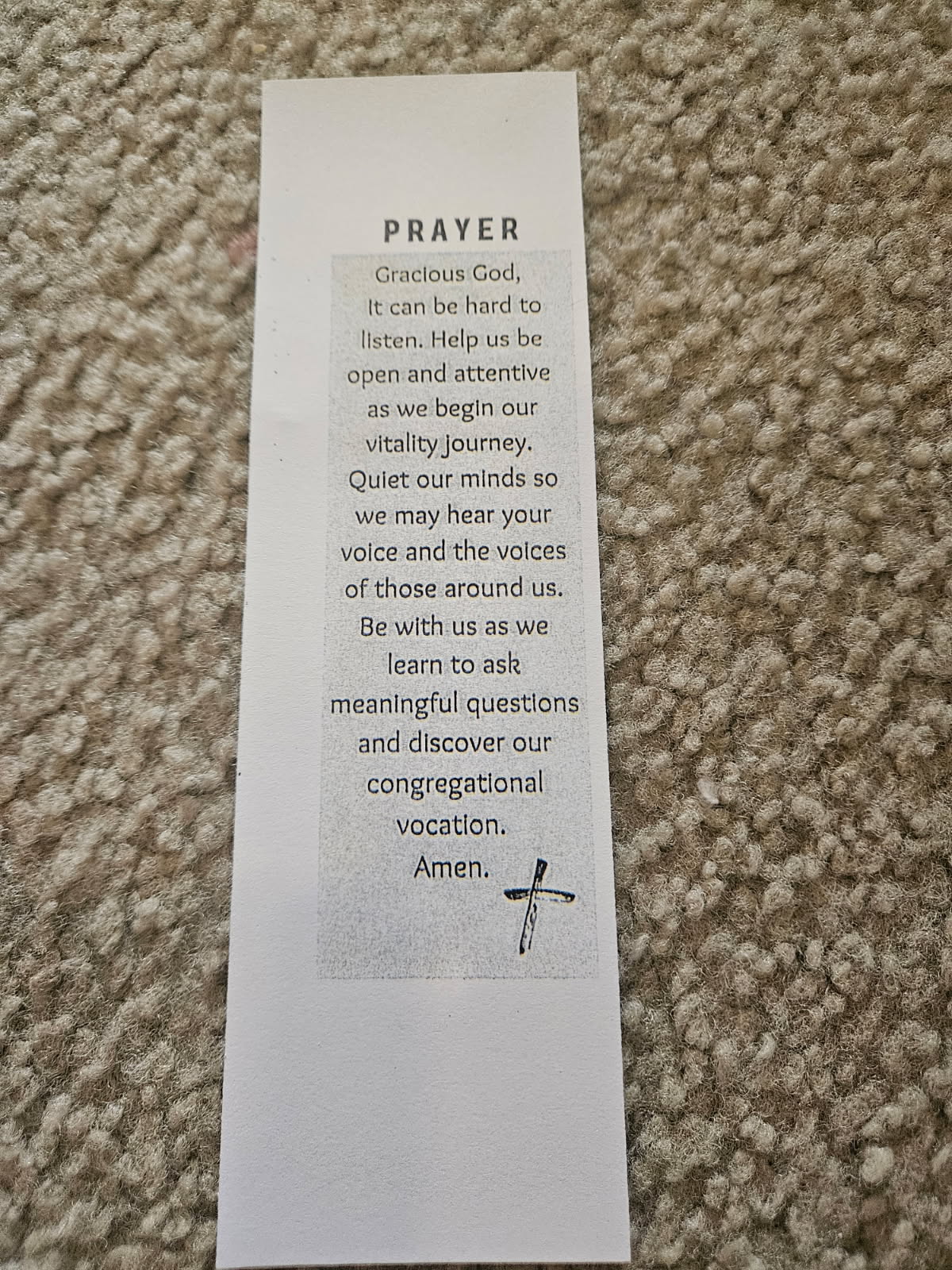
As your congregation continues its vitality journey, it is starting to listen and wonder questions about who your neighbors are now and what their needs are. You’ll ponder what God might be up to and inviting you to be a part of. And all the while, you’ll be discerning what your congregation’s unique vocation might be. You aren’t the church down the street. You aren’t the mega church over there. You are uniquely who you are, Messiah Evangelical Lutheran Church. What might that mean? What might God be inviting you all to be a part of next through partnerships, collaborations, experiments, and deep listening?
I’m excited and grateful to continue to walk with you through the Vitality Initiative. To wonder. To witness. And to respond. Know this: People of God, just as the shepherd went out and found the one sheep that was missing, and just as the woman found the coin, you are beloved, named and known. You matter and make a difference. So keep going. Keep digging in. Keep responding. Keep growing and following Jesus as the disciples that I know that you are. Keep loving and serving as generously as you do as the stewards of God’s love that I know that you are. For God in Christ, our Messiah, is with you, for you, and loves you. Always. And for this we can all say, Thanks be to God. Amen.
Citations and References:
[1] “Who Are You” by “The Who” as first released in 1978.
[2] Luke 15:6, NRSVue.
[3] Luke 15:9, NRSVue.
[4] Luke 15:2, NRSVue.
[5] Luke 15:6-7, NRSVue.
[6] Luke 15:9-10, NRSVue.
[7] Exodus 32:13, NRSVue.
[8] Psalm 51:1, NRSVue.
[9] Psalm 51:10, NRSVue.
[10] 1 Timothy 1:15, NRSVue.
 Timothy Siburg