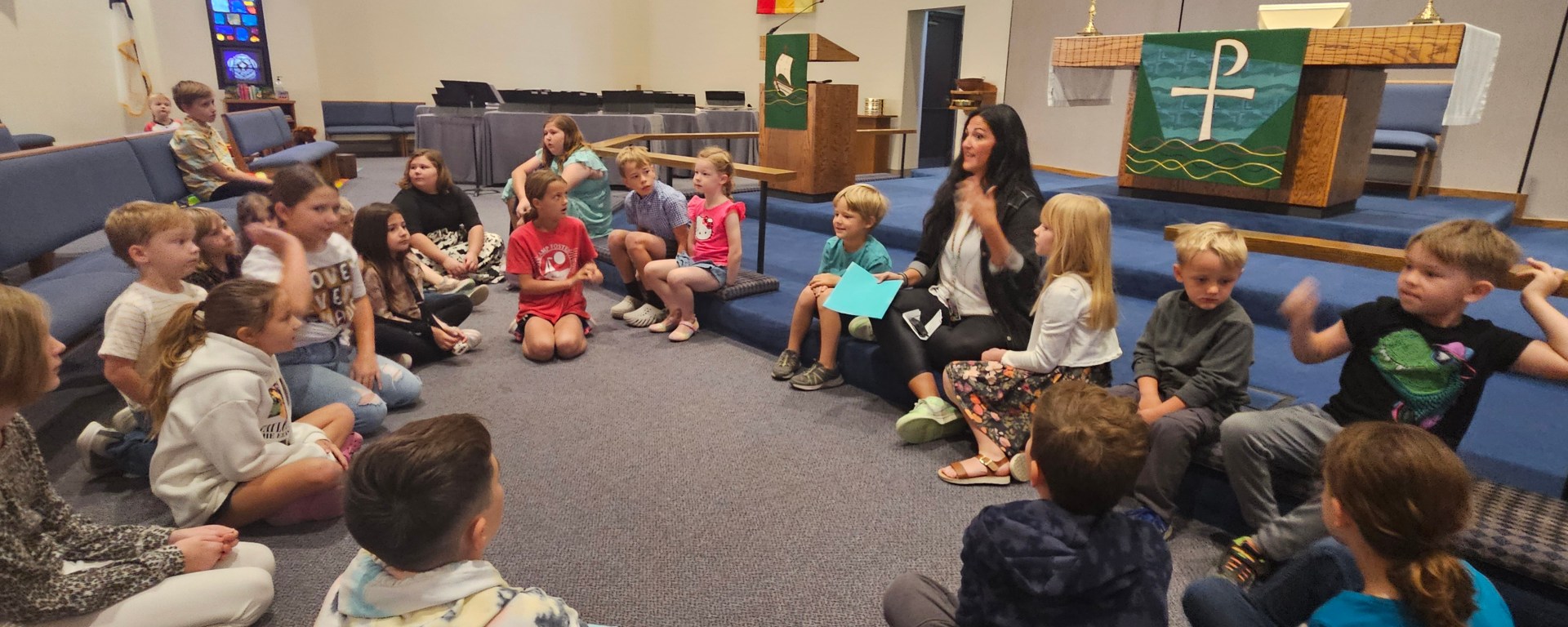

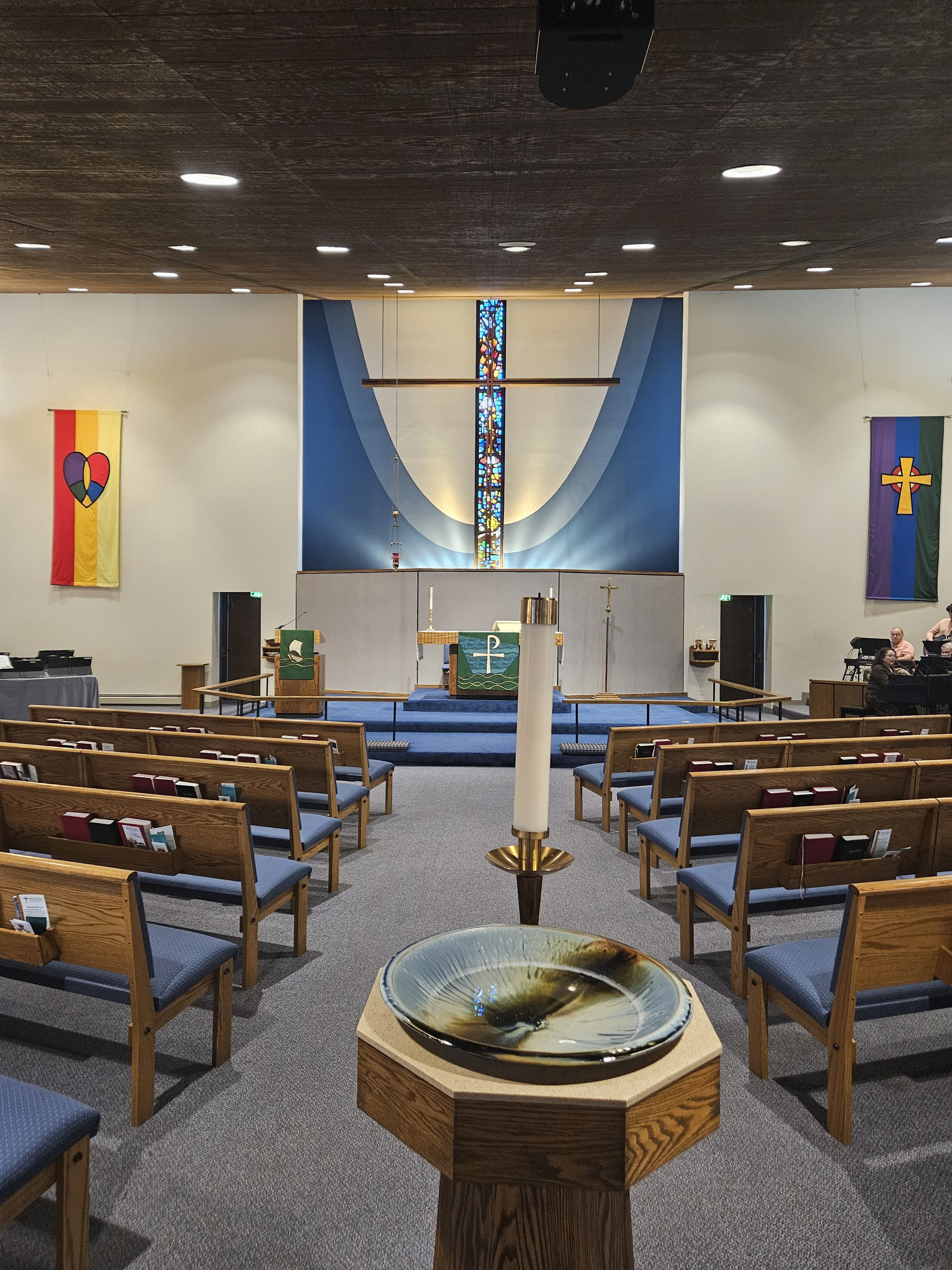
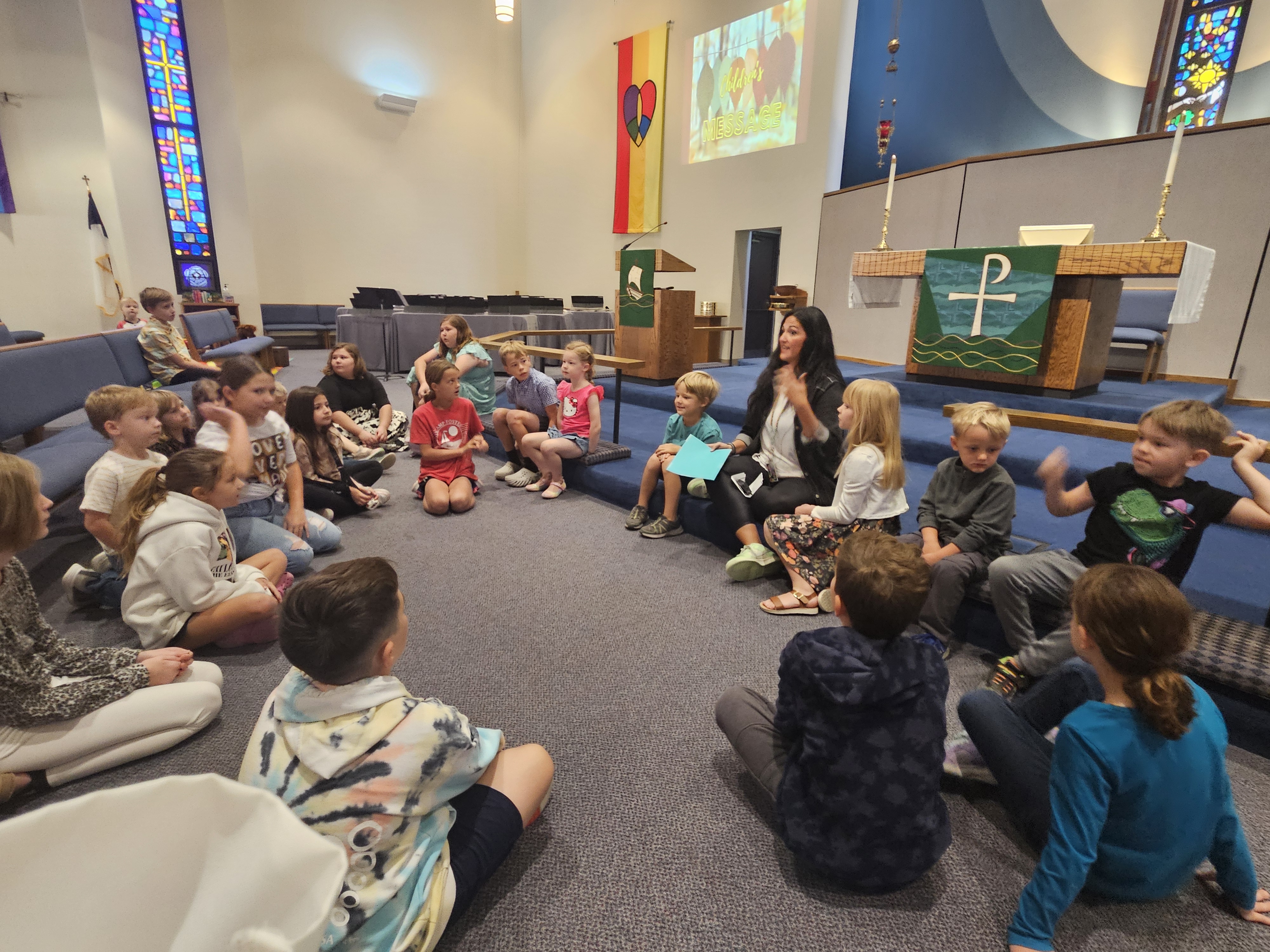
It was a joy to be with God’s people gathered as Holy Cross Lutheran Church in Omaha, Nebraska on Sunday October 13th. Thank you Pastor Heather Grell for the invitation, as well as to the congregation’s stewardship committee and the whole congregation for the warm welcome. In being with the congregation I was invited to preach on stewardship, bring words of greeting from the Bishop and gratitude for all of the ministry that the congregation makes possible, as well as to lead an adult forum conversation after worship about narrative budgets, stewardship, and more. It was a great day. What follows is the majority of the manuscript that I preached from based especially on the appointed texts for the Twenty First Sunday after Pentecost (Lectionary 28B), especially Mark 10:17-31, Amos 5:6-7, 10-15; Hebrews 4:12-16; and with a reference to Psalm 24:1.
Grace and peace from God in Christ, who is with you, for you, and who loves you. Amen.
“But many who are first will be last, and the last will be first.”[1] Hmm… There are some weeks where the Gospel is right there and Jesus is saying, “Hey! We need to talk about this!” This is one of those weeks. Where Jesus talks about money, wealth, and possessions. These are things that Jesus talks about in his ministry more than anything else other than the Kingdom of God or the Kingdom of Heaven. This matters. So we need to pay attention. Take a deep breath. Let’s hear what God might be inviting us to sense, discover, wonder, and imagine about.
Diving into the Gospel
Today’s story picks up right where we left off last week. After the Pharisees came and tried to test and really trap Jesus in his words about divorce.[2] After Jesus welcomed the children, and shared about how one needs to “receive the kingdom of God as a little child.”[3] Now, as Jesus was preparing to be on his way with the disciples, another person has found him. A person obviously well taught in the law, who like the lawyer in the Gospel of Luke asks the same question and Jesus tells the story about a Good Samaritan. In Mark’s version we hear that the man asks, “Good Teacher, what must I do to inherit eternal life?”[4] Instead of telling that story like in Luke, Jesus first responds with some of the commandments, which the man says he has kept. But then, “Jesus looking at him, loved him and said, ‘You lack one thing; go, sell what you own, and give the money to the poor, and you will have treasure in heaven; then come, follow me.’ When he heard this, he was shocked, and went away grieving for he had many possessions.”[5]
What might this mean? The disciples are perplexed about this too. Jesus is making the point that things like this can get in the way.[6] It’s precisely why Jesus talks about money, wealth, and possessions, as much as he does. Not to guilt anyone, necessarily. But out of pastoral care and concern for them. Because he knows that these things, that all things that one has to attend to, care for, and be concerned about, can and do have a habit of getting in the way of one’s relationship with God and neighbor. There’s a reason Jesus tells the disciples elsewhere to travel lightly. There’s a reason Jesus keeps going in the story today. He’s talking both about money, wealth, and possessions and the kingdom of God here. “It is easier for a camel to go through the eye of a needle than for someone who is rich to enter the kingdom of God.”[7] There could be at least two meanings to that. The literal. A camel is huge, and the more things you might have, the more humps or bigger the camel you might need.
The eye of needle is about as small as a passageway as one might imagine. Whether it’s a literal needle, or a gate nicknamed as “the eye of the needle” in the Holy Land. In either case, it’s clear Jesus is trying to get anyone who might be listening, to pay attention because this matters. The disciples are rightfully alarmed at this point. They ask, “Then who can be saved?”[8] No one by their own efforts. That’s where grace comes in. And Jesus offers this word of hope, “For mortals it is impossible, but not for God; for God all things are possible.”[9]
What God will do- for you!
The last word here is not one of sorrow. It’s not one of warning. It’s one of hope. By ourselves, we wouldn’t have a chance. But with God, all things are possible. With God, death doesn’t have the last word. With God, the cross is not a final symbol of power and death. It’s a symbol of hope, life, resurrection, and really new life. We know this. Jesus is hinting today at the transformative change of God. The transformative change that God’s abundant grace can bring about. It’s what God’s love does, and it’s the work of the kingdom breaking in, bit by bit, turning the world on its head. Nothing will ever be the same. The powers, principalities, authorities, and traditions of the world and culture may have some say today. But they won’t have the final word. As Jesus concludes, “many who are first will be last, and the last will be first.”[10] God brings life out of death. Joy out of mourning. Hope out of despair. Where the world says the end is near, God says, “oh really? Watch this.” All of this is what God can and will do. And God will do this for you and for me out of God’s deep, abiding, and abundant love.
So where does that leave us? Grateful. Joyful. Hopeful. What God will do is grace. Pure gift we could never earn or deserve. But in seeing and witnessing this grace made real, this transformative love that changes everything, we can’t help but be swept up by the Spirit and moved to respond. To join in with God in some way, shape, or form, here and now. To be a part of God’s work in the world today. And this joyful and grateful response is what it looks like to live the good life. Not the Nebraska slogan. But the good life of being a disciple and steward. Grateful and joyful for all that God has done, will do, and promises to do for you and for me. Hopeful, that we might join in and be changed in the process as bearers of God’s love too.

Jesus’ (and Amos’) focus on the Now
As Jesus responds to the man who asks about eternal life, he might also be making the point that one’s own focus on “eternal life,” might be a misplacement of one’s value and importance. God has the eternal figured out already. That’s God’s work. On this side of the Resurrection, we know that the promises are true. We know the meaning of Easter. But we also know that we’re here in the present. October 2024. A time of unimaginable storms in some parts of the country. A time where the year started off where Nebraska was no longer in drought because of all the spring rains, and now we’re in the driest fall I have ever seen. Where there is war and rumor of war around the globe. Where there is famine for many. We are also living in a time where it might feel harder than ever to talk to one’s neighbors in some places. We’re here in the now and not yet. We’re here together. So perhaps it’s no surprise then that Jesus doesn’t spend much time for the man asking about eternal life on what that might look like, but instead spends his time on the commandments and concerns particularly related to how we are called to be in relationship with one another. Ending even with the point of selling his possessions to care for the poor and those in need.

Jesus is focused on the now. He knows as the writer of Hebrews reminds that, “the word of God is living and active.”[11] Jesus is focused on the hungry. Whether it be thousands out in the countryside coming to hear him, and feeding them with the help of a few loaves and a couple fish, or a woman just grasping for crumbs. He’s focused on healing the sick- whether it be those at the gate just crying for mercy from leprosy, or the child of a soldier deathly sick in her bed. Jesus is focused on showing love and attention to those society might otherwise ignore, like a woman at a well or a short tax collector who climbed a tree. He’s focused on the neighbor in need and how we are called and created to not just be neighbor to them, but to be in relationship with them, much like the prophet Amos describes today in our first lesson.[12] To care for the one lying in the gate and the poor who might otherwise be trampled upon. As Amos proclaims, “Speak good and not evil, that you may live; and so the Lord, the God of hosts, will be with you, just as you have said. Hate evil and love good, and establish justice in the gate…”[13] This is our call and our work. To care for the those with us. To live the good life together. A good life which is all about relationships as we continue to grow as disciples and stewards.
Stewardship is Our Response
Stewardship is our response. It’s our response to God’s love and gifts for us. It’s our response too, to our neighbor in need. We have the gift and opportunity to take hold of the abundant life that really is life, that God alone provides. To live out the life and identity we all share as a disciple and steward. But rest assured, this good life, won’t always be easy. It will have its fill of challenges, and it’s costly. There’s a cross at its center after all, and we know the rest of the story. But we also know, because of this that this life as disciples is deeply meaningful and full of purpose. It’s a life of service grounded in love and lived out in response to the promises of our God who comes near.

This is what stewardship looks like. Where we recall the words of the psalmist at the beginning of Psalm 24, “The earth is the Lord’s and all that is in it, the world, and those who live in it.”[14] The earth is God’s. And all who are part of the earth, are God’s too. Everything is God’s. You are God’s. I am God’s. And all that we have, and all that we are, is God’s. Everything that makes you the unique person and Child of God that you are, is God’s. Your time, talent, treasure, assets, possessions, and finances of all kinds. Your lives, health, bodies, hearts, souls, and minds. Your passions, strengths, vocations, gifts, relationships, ideas, dreams, stories, imaginations, and even your questions. All that is yours, is really God’s.
And all of creation that surrounds us, and which God entrusts into our care in the beginning of Genesis, is God’s too. All of this and more, is God’s. And God chooses to entrust some of it into our care. God does this because God wants life to go well for God’s people. Because God wants to be in relationship with us. And because God hopes that we might live lives of deep meaning and purpose, in part through caring for our neighbors with all that God entrusts.
God does this and so much more, for you. God will go to and through the point of death on a cross to bring life for you. God will make the impossible, possible for you. God does as only God can do, bringing life, hope, and salvation. And this is Good News. Good News which we are entrusted with. News which then leads us to respond as stewards and disciples. News which calls us to bear love and be in relationship with our neighbors just as Jesus reminds the one with many possessions today. News which calls us to keep growing as God’s beloved children, disciples, and stewards. To ask the questions on our hearts and minds. And to lean in with hope, wonder and imagination as we follow wherever Jesus might be leading. All of this is our work that we share together as stewards of God’s love.
What Might God be Up to and Inviting?
Holy Cross, I know you understand this. You live it out. Through your gifts of music. Through being a Reconciling in Christ congregation. Through meeting your neighbors here in the Omaha metro where they are in so many ways- like through Trunk or Treat, young adult care packages, your congregation’s food pantry, and the Red Cross blood drive you’re hosting next week. And through your emphasis on discipleship and stewardship. It’s my joy to be with you today to help you launch your congregation’s focus this year on stewardship. This week in particular you will notice some stories on your congregation’s Facebook page. We’ll hear a stewardship story in a few moments in worship. And have time for more conversation about this after worship too. A big part of stewardship is telling the story- connecting God’s story with our story. Connecting the story of our neighbors in need, and how we are part of God’s work of meeting our neighbors where they are at. And then responding. Through saying thank you, and for inviting more neighbors and each other to share our unique gifts together to continue to respond faithfully with hope and love.

Holy Cross, you do so much. Thank you for all that you do and make possible. But I do wonder and have a question for you today. Don’t worry, it’s not “What must you do to inherit eternal life?” Jesus already answered that. And you’re doing the good work in response as signs of God’s love made real today. But my question is this. What might God be up to and inviting? What might God be up to here, among, in, through, and for you? What might God be inviting your congregation to be a part of next?
Those are questions I leave with you. Knowing that you will faithfully continue to discern them together. Knowing that you are already living out your lives as disciples and stewards of Jesus’ love here in Omaha. So keep following and keep going. Keep serving. Keep growing. Keep responding. And keep living the good life of faith together. And knowing most of all, that you’re doing all that you do with our God who makes all things possible, and who is with you, for you, and who loves you. Always. Thanks be to God. Amen.
Citations and References:
[1] Mark 10:31, NRSV.
[2] Mark 10:1-12.
[3] Mark 10:15, NRSV.
[4] Mark 10:17, NRSV.
[5] Mark 10:21-22, NRSV.
[6] Mark 10:23-27.
[7] Mark 10:25, NRSV.
[8] Mark 10:26, NRSV.
[9] Mark 10:27, NRSV.
[10] Mark 10:31, NRSV.
[11] Hebrews 4:12, NRSV.
[12] Particularly described in Amos 5:10-11, NRSV.
[13] Amos 5:14-15, NRSV.
[14] Psalm 24:1, NRSV.
 Timothy Siburg