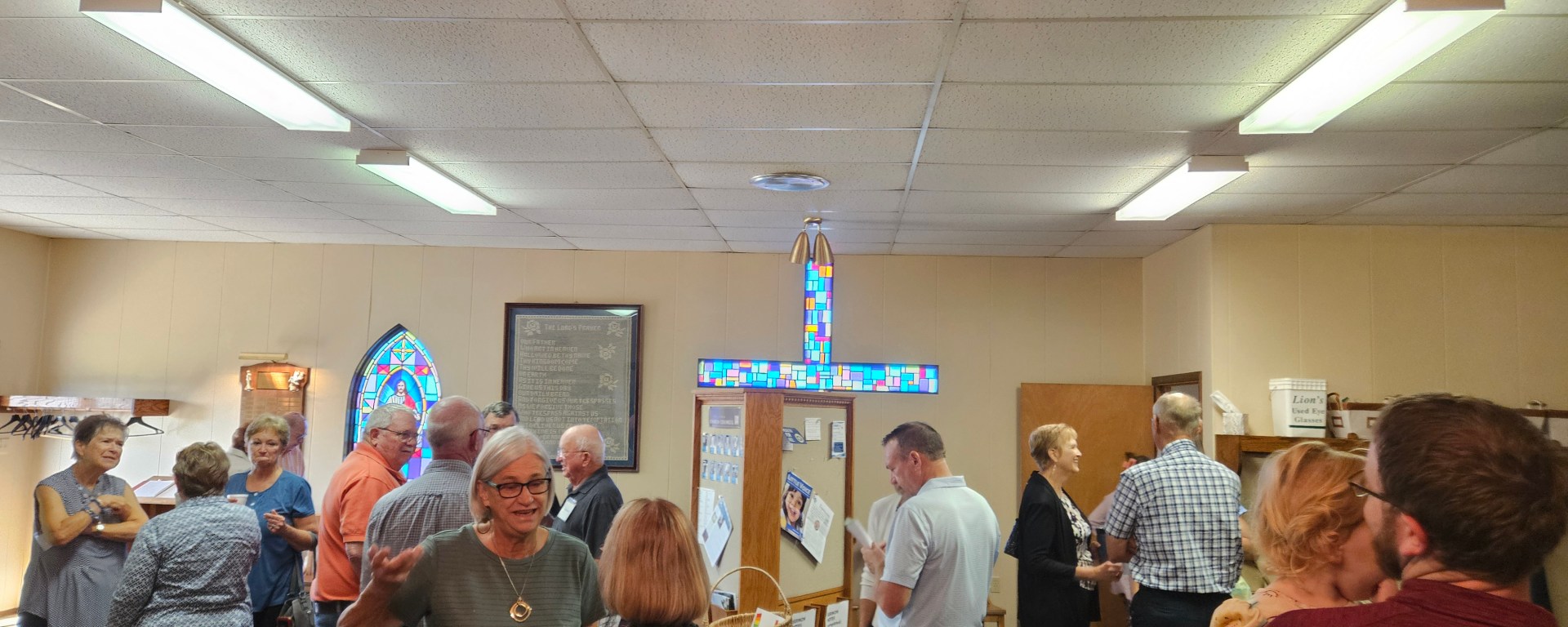
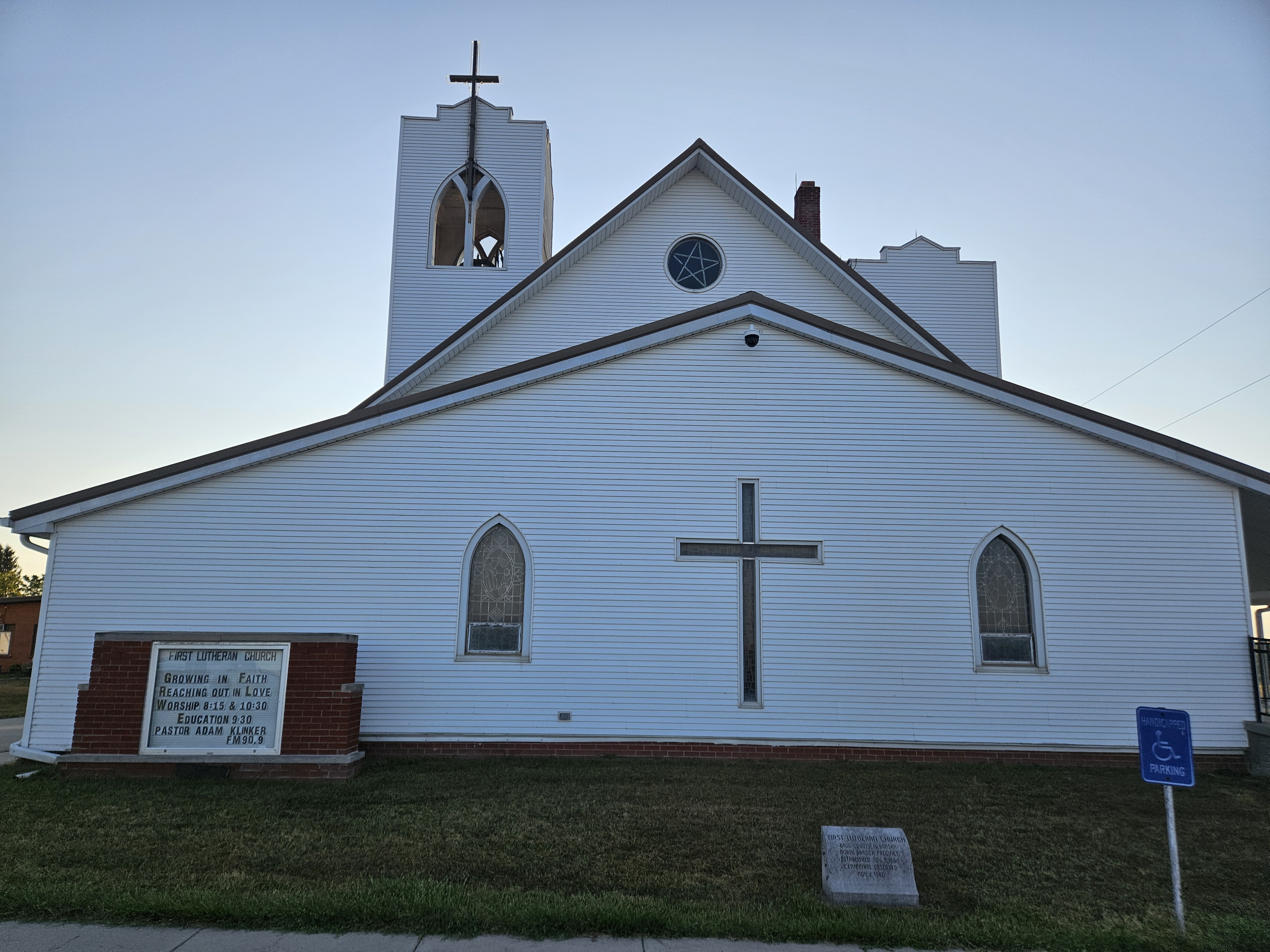
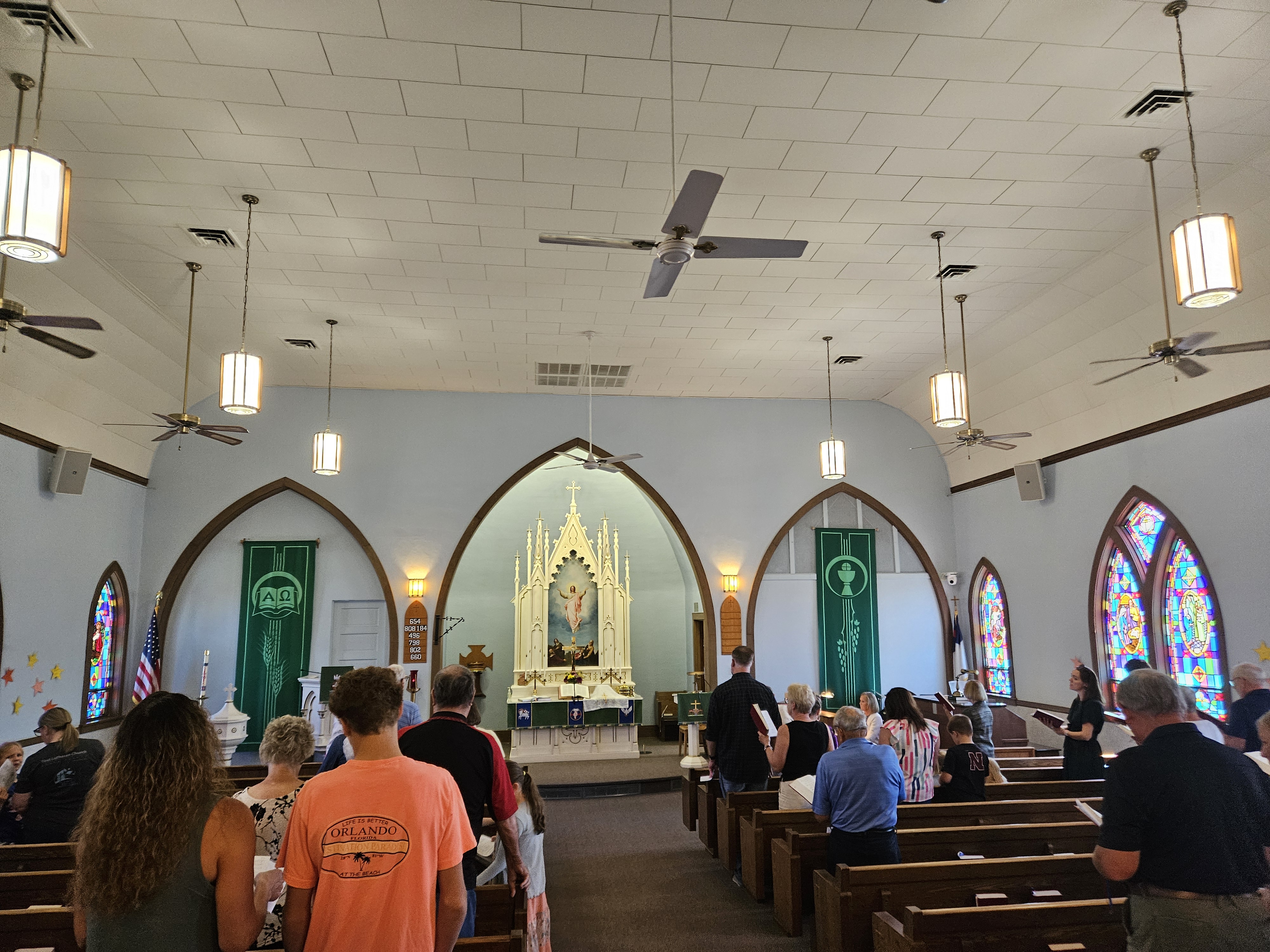
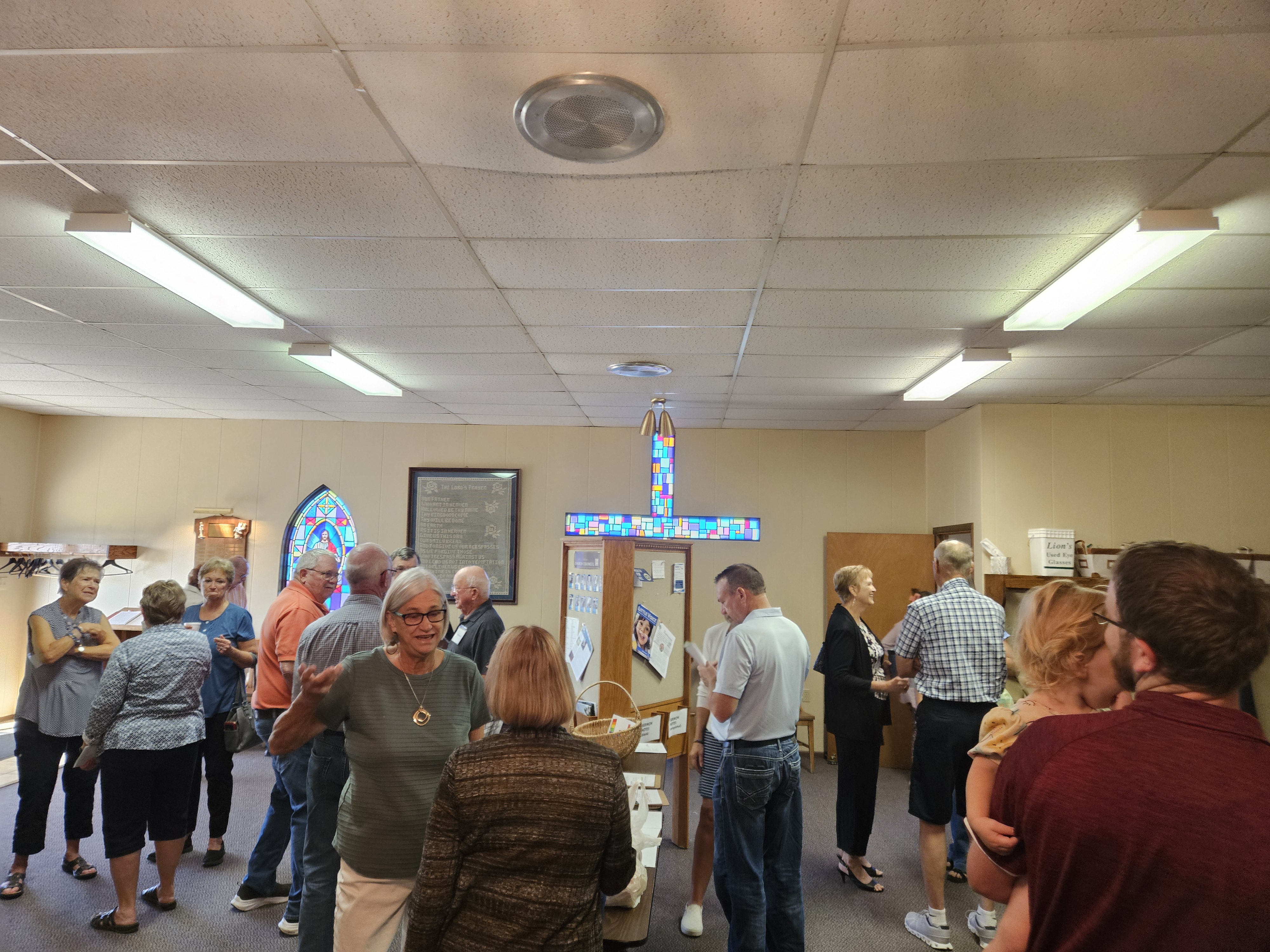
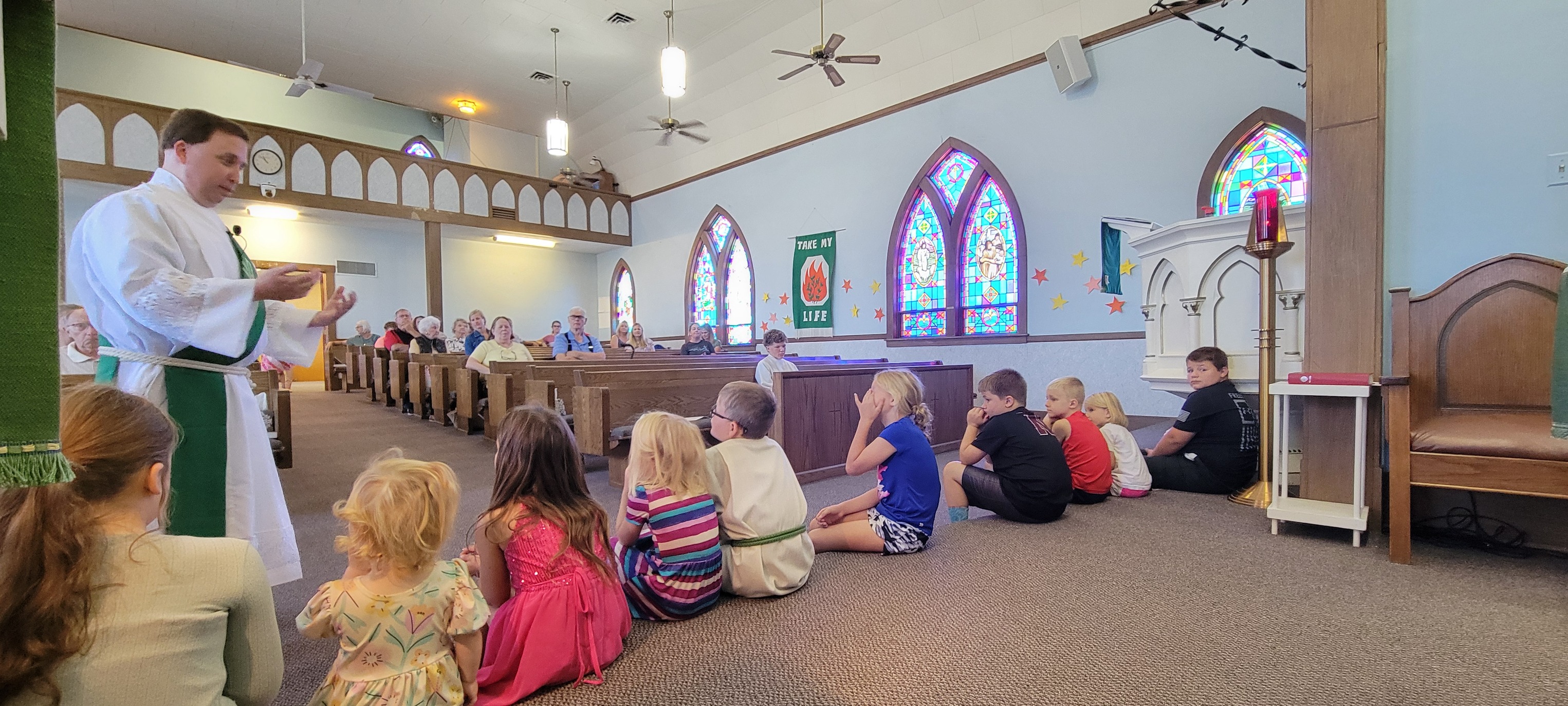
I had the privilege of being with God’s people gathered as First Lutheran in Avoca and North Branch, Nebraska on Sunday September 15, 2024. Thank you Pastor Adam Klinker for the invitation and to the whole congregation for the warm welcome. In being with the congregation, I was invited to preach on stewardship at both services and lead the Children’s Sermon time too, to share a word of greeting and gratitude from the Bishop and on behalf of the whole synod, and to be present for a conversation time during the Sunday School hour. It was a great visit that touched on both stewardship and mission, but also the congregation’s continued discernment and learning through its participation in the Nebraska Synod’s Vitality Initiative for Congregations. What follows is the majority of the manuscript that I preached from, based primarily on the Gospel of Mark 8:27-38, the appointed gospel lesson for the Seventeenth Sunday after Pentecost (Lectionary 24B).
Grace and peace from God in Christ, who is with you, for you, and who loves you. Amen.
Questions from a Kid to their Dad
Have you ever been asked a question from a child? A grandchild? A neighbor? From someone who might be a bit younger than yourself? Sometimes these questions might be ridiculous. But sometimes, they are all about a deep desire to learn more. To wonder. To imagine. To try and grasp and understand. My favorite question to get from my 6- and 3-year-old daughters right now is, “Daddy, do you know what I’m thinking about?” Of course I have no idea. But I play along. “No. Are you thinking about this? Are you thinking about that?” Eventually after a few more tries, I turn the question on its head and ask, “Okay. What are you thinking about?” Sometimes the answer might be unicorns and rainbows. But other times, like this past week, it might be as the oldest says, “what would Jesus think of that person loving their neighbor?” Yes, that question hits me right here. And I start there, because behind the question is a desire to learn. And that hope for learning and growth might just be behind Jesus’ questions for the disciples.
Situating Ourselves in the Story
Jesus asks the disciples, “Who do people say that I am?”[1] He asks this question because he’s been journeying with the disciples for a while now and they have seen somethings. The Gospel of Mark is not all that long, so by late in chapter 8, we have already heard stories of Jesus feeding thousands.[2] We have heard his teaching turn popular understanding on its head. We have witnessed his healing acts of restoration, reconciliation, and salvation. God has come near. So it seems as good a time as any for Jesus to check in with his disciples. To see how it’s going. To hear what they are observing. But most of all, to check-in and see how they might be growing as disciples themselves.
As they walk along then to the villages of Caesarea Philippi, he takes the chance to ask a question. “Who do people say that I am?”[3] They answered with a few of the things they had heard. “John the Baptist. Elijah. One of the prophets.”[4] For people just trying to make sense of all that God might be up to and might be doing, those are all very reasonable first attempt answers. But the disciples might know better, since they kind of have a first-row seat to it all. So Jesus turns the question to them. “But who do you say that I am?”[5] Peter takes one for the team and answers, “You are the Messiah.”[6] And then Jesus ordered the disciples not to tell anyone. Well friends, I think perhaps we have taken that message to heart as Lutherans. We’re not very good about talking about who God is, are we? We might be “Evangelical,” but perhaps we’re more comfortable serving and helping, then connecting the dots with the why- of why we do what we do. Perhaps we take Jesus at his word here, and perhaps not so much in his last words in the Gospel of Matthew for example where we’re sent out with the Great Commission.
Regardless, the story isn’t done for today. Jesus unpacks and teaches a bit more about what this all might mean. He describes the suffering and rejection the Son of Man will face. He describes a scenario of the Messiah dying and rising again. It’s a passion prediction, that turns the popular conceptions and hopes of what the Son of Man might be around. Peter can’t stand this. Perhaps he’s hoping that Christ is the King and will be triumphant in all ways that we might imagine human kings and powers acting like. When Peter confronts Jesus, Jesus retorts, “Get behind me, Satan! For you are setting your mind not on divine things but on human things.”[7] Things like power, prestige, and privilege. Like gold and wealth and authority. Like ruling, instead of leading and serving with compassion, grace, and love.
This is a teaching moment for Jesus. And he takes it. He says, “If any want to become my followers, let them deny themselves and take up their cross and follow me.”[8] The disciples haven’t quite grasped what Jesus is up to yet. The Mission of God has not become clear to them. But Jesus keeps going, saying, “For those who want to save their life will lose it, and those who lose their life for my sake, and for the sake of the gospel, will save it.”[9] Jesus makes clear here, that this is life and death. God has come near to bring life. To bring abundant life. Life that is grounded in the very core of who God is. A God of love. A God of relationship. A God who is for you, and for all of God’s beloved children.
Questions, Questions, Questions
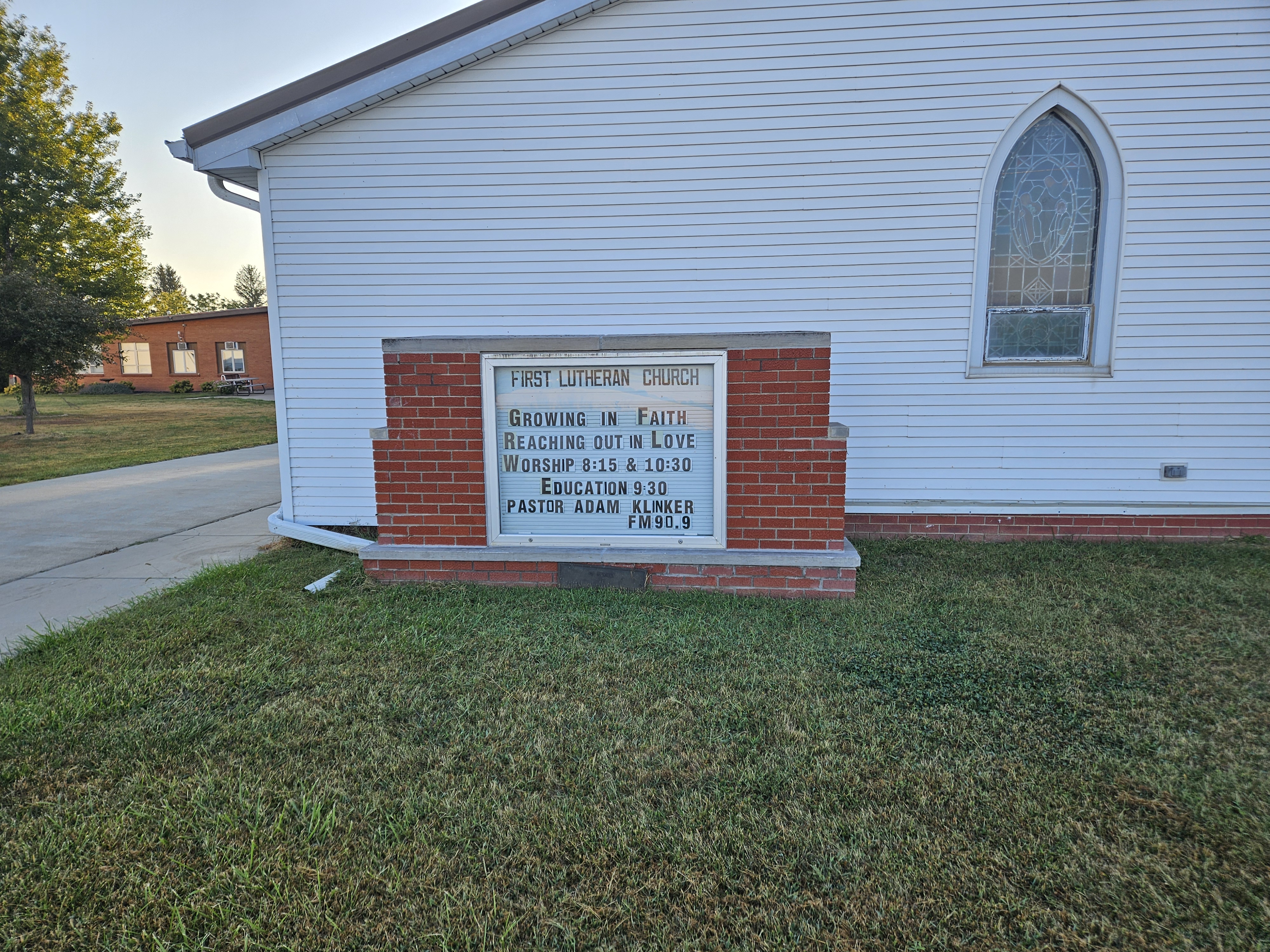
As I drove in this morning, I noticed your church sign outside reading, “Growing in Faith. Reaching out in Love.” This reminds me that in the Nebraska Synod this year, we are gathering and growing as disciples grounded in a shared theme of Cultivating Love. One of the ways we do this is through cultivating connections. We show love through moving from connections to building relationships. We do this with each other. And we do this with our neighbors near and far as we meet each other where we are at. Part of meeting and growing to know another, is through learning and asking questions. Questions like Jesus asks. Questions like, “Who do you say that I am?”[10] It’s an open-ended question. Jesus is hoping that the disciples are growing. But perhaps he asks the question as an open-ended one, in the wisdom that such open-ended questions provide room for reflection, wondering, and imagination. They help create the space for one to articulate and explain their rationale for why they do what they do. And they also call for a response.
A response to the question of “Who do you say that I am?” A response that could be followed up with another question. Depending on how you answer that question, “Who then, are you?” You are a beloved Child of God. You are a Disciple. You are a Steward. You are part of your larger community of North Branch, Avoca, Otoe, Syracuse, or wherever you might call home. And you are part of this faith community. This is a start to your answer.
An Answer as a Response as Disciples and Stewards
Your answer to the questions, “Who do you say that I am? And who then, are you?” Are the start to your response as disciples and stewards. They are the beginning of your response for all that God has done, will do, and promises to do, for you. For when being so moved by the Good News or witnessing God’s love made real, we can’t help but come and see that the Lord is good. We can’t help but to come near and to follow as Jesus calls. We can’t help but to take up our cross as Jesus commands. To die to our old selves, and to live more fully to the selves who God in Christ calls us to be.
This isn’t about martyrdom. Jesus dies once and for all, and beats death once and for all. But this is about choosing to follow. About choosing to respond. To take hold of the abundant life that really is life, that God alone provides. But to know that this life as a disciple won’t always be easy. It’s full of challenges. There’s a cross at its center after all. We know the rest of the story. We know what lies ahead, better than the disciples where we find them today. But we also know, because of this that this life as disciples is deeply meaningful and full of purpose. It’s a life of service grounded in love and lived out in response to the promises of our God who comes near.
In a few moments we’ll sing together the hymn, “Lord Jesus, You Shall Be My Song.”[11] The hymn tells the story of discipleship through song. Hear these words from the last two verses: “As long as I live, Jesus, make me your servant, to carry your cross and to share all your burdens and tears. For you saved me by giving your body and blood. As long as I live, Jesus, make me your servant. I fear in the dark and the doubt of my journey; but courage will come with the sound of your steps by my side. And with all of the family you saved by your love, we’ll sing to your dawn at the end of our journey.”[12]
What Stewardship has to do with it?
We sing as we respond with joy, hope, and gratitude. And our response is our stewardship. We respond as we follow and commit to this life together as God’s beloved people. We respond as we live out the promises made between God and us in baptism. And as we do this, we remember we are God’s own, and all that God has done, will do, and promises to do for us. Where we live our lives changed, because we know that grace is a gift that God gives, which we could never earn or deserve. So instead we respond with joy and gratitude, ready to dig in, to come alongside our neighbor, and meet them where they are at as signs of God’s gracious love.
This is what stewardship looks like. Where we recall the words of the psalmist in Psalm 24, “The earth is the Lord’s and all that is in it, the world, and those who live in it.”[13] The earth is God’s. And all who are part of the earth, are God’s too. Everything is God’s. You are God’s. I am God’s. And all that we have, and all that we are, is God’s. Everything that makes you the unique person and Child of God that you are, is God’s. Your time, talent, treasure, assets, and finances of all kinds. Your lives, health, bodies, hearts, souls, and minds. Your passions, strengths, vocations, gifts, relationships, ideas, dreams, stories, and even your questions. All that is yours, is really God’s. And all of creation that surrounds us, and which God entrusts into our care in the beginning of Genesis, is God’s too. All of this and more, is God’s. And God chooses to entrust some of it into our care. God does this because God wants life to go well for God’s people. Because God wants to be in relationship with us. And because God hopes that we might live lives of deep meaning and purpose, in part through caring for our neighbors with all that God entrusts.
God does this and so much more, for you. God will go to and through the point of death on a cross to bring life for you. God does as only God can do, bringing life, hope, and salvation. And this is Good News. Good News which we are entrusted with. News which then leads us to respond as stewards and disciples. News which, on this side of the resurrection at least, means we are to share with hope and joy and not hoard or hide for ourselves. No. Jesus’ order to “not tell anyone,” no longer applies friends.[14] You’re not off the hook for that.
What Might God be Inviting Now?
Thankfully, I think you know that. First Lutheran you ask questions. You welcome questions. You wonder. You show up. You are faithful disciples and generous stewards. I mean I just heard that you raised nearly $30,000 this year through your work at the Cass County Fair. And now you are getting the chance to listen, dream, and wonder about what God might be inviting you to do with that. It’s a question that every congregation ought to keep central. What might God be inviting now? It’s a question that your congregation is beginning to ponder too as part of the Vitality Initiative for Congregations. It’s a question that comes from a vulnerable place. Where we admit we don’t have all the answers. But that by asking the questions we too remember that we are disciples and followers, and thankfully, we are not God. So we have the chance then to imagine, wonder, listen, and witness. To respond to Jesus’ questions faithfully and honestly. And to meet our neighbors where they are at.
As we do this, we answer Jesus’ question about who we say that he is. And we begin to answer the question of who we are, and whose we are. We respond. When Jesus invites us to come to this table and see that the Lord is good, we respond and come. When Jesus invites us to play in these waters and to remember God’s promises for us and with us, we come. We come with one another and are connected in our shared identity as beautiful and unique Children of God. We come and are sent out into our lives as disciples and stewards. We do all this as we follow Jesus and show up as God’s people each day. To ponder and imagine the questions. To respond to whatever needs and possibilities God and our neighbors might be inviting. What might God be inviting now? I’m not completely sure. But I do know that God is inviting you to keep following and wondering. To keep asking questions. To keep serving. And to keep doing what you do as God’s people here in Avoca and North Branch. Doing all that you do, and knowing you do it, never alone but with God who is with you, for you, and who loves you. Always. Thanks be to God. Amen.
Citations and References:
[1] Mark 8:27, NRSV.
[2] Mark 8:1-10, NRSV.
[3] Mark 8:27, NRSV.
[4] Mark 8:28.
[5] Mark 8:29, NRSV.
[6] Mark 8:29, NRSV.
[7] Mark 8:33, NRSV.
[8] Mark 8:34, NRSV.
[9] Mark 8:35, NRSV.
[10] Mark 8:29, NRSV.
[11] Les Petites Soeurs de Jesus and L’Arche Community, tr. Stephen Somerville, “Lord Jesus, You Shall Be My Song,” as found as hymn #808 in Evangelical Lutheran Worship, (Minneapolis, MN: Augsburg Fortress, 2006).
[12] “Lord Jesus, You Shall Be My Song,” in Evangelical Lutheran Worship, #808.
[13] Psalm 24:1, NRSV.
[14] Mark 8:30, NRSV.
 Timothy Siburg