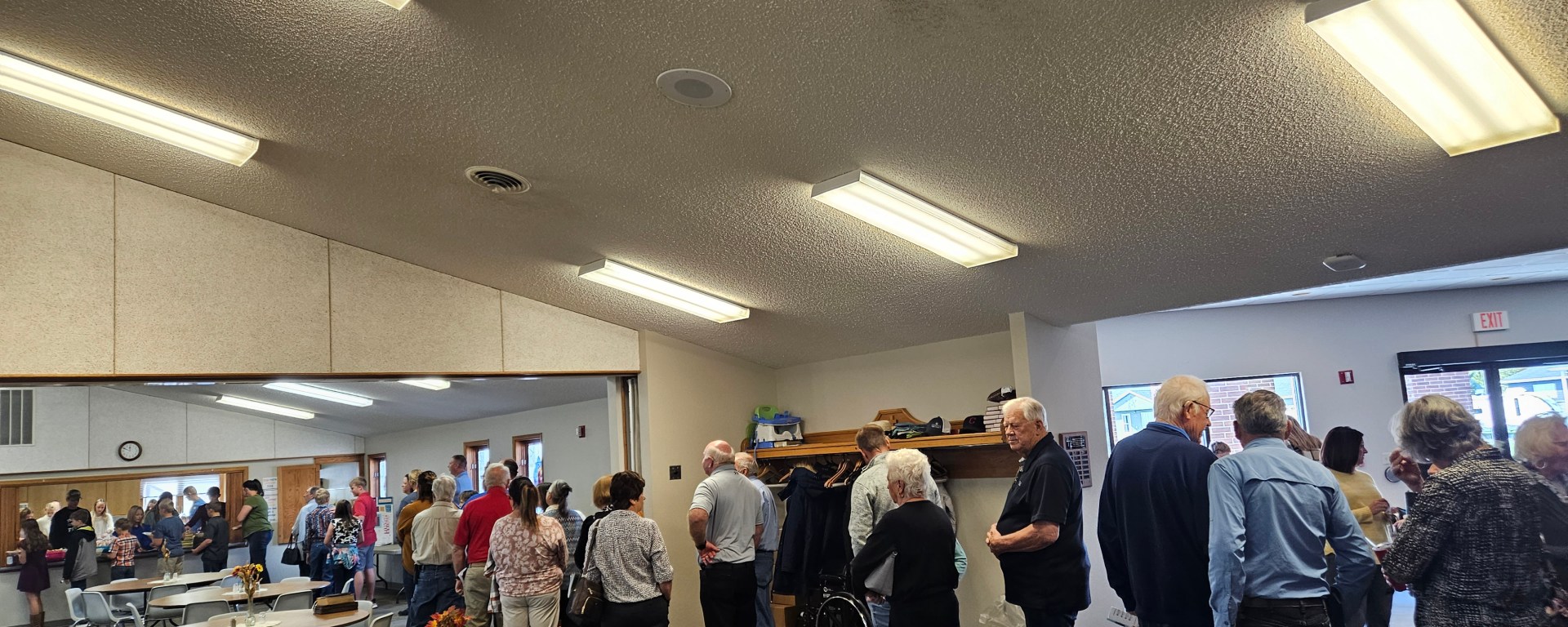

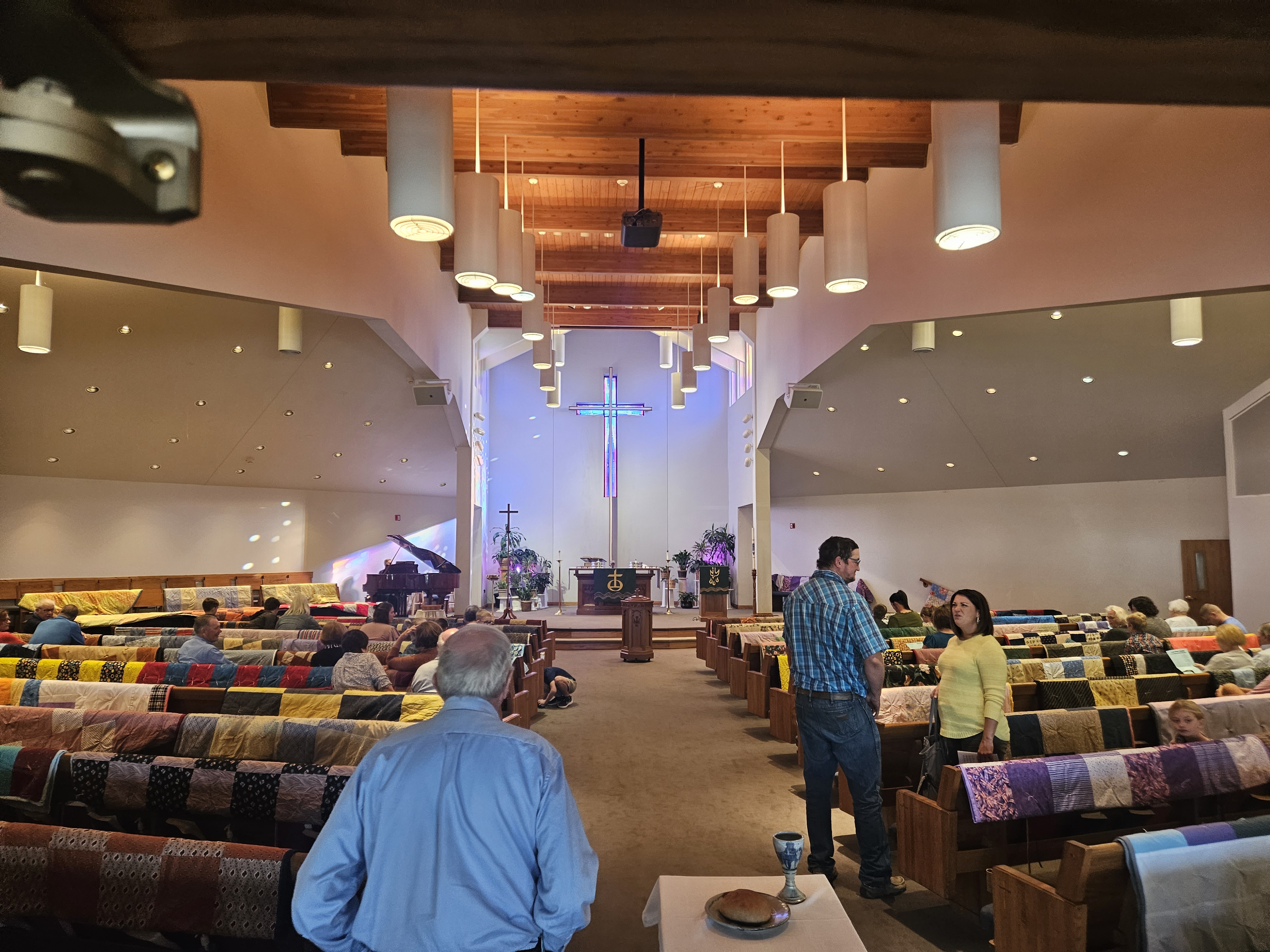
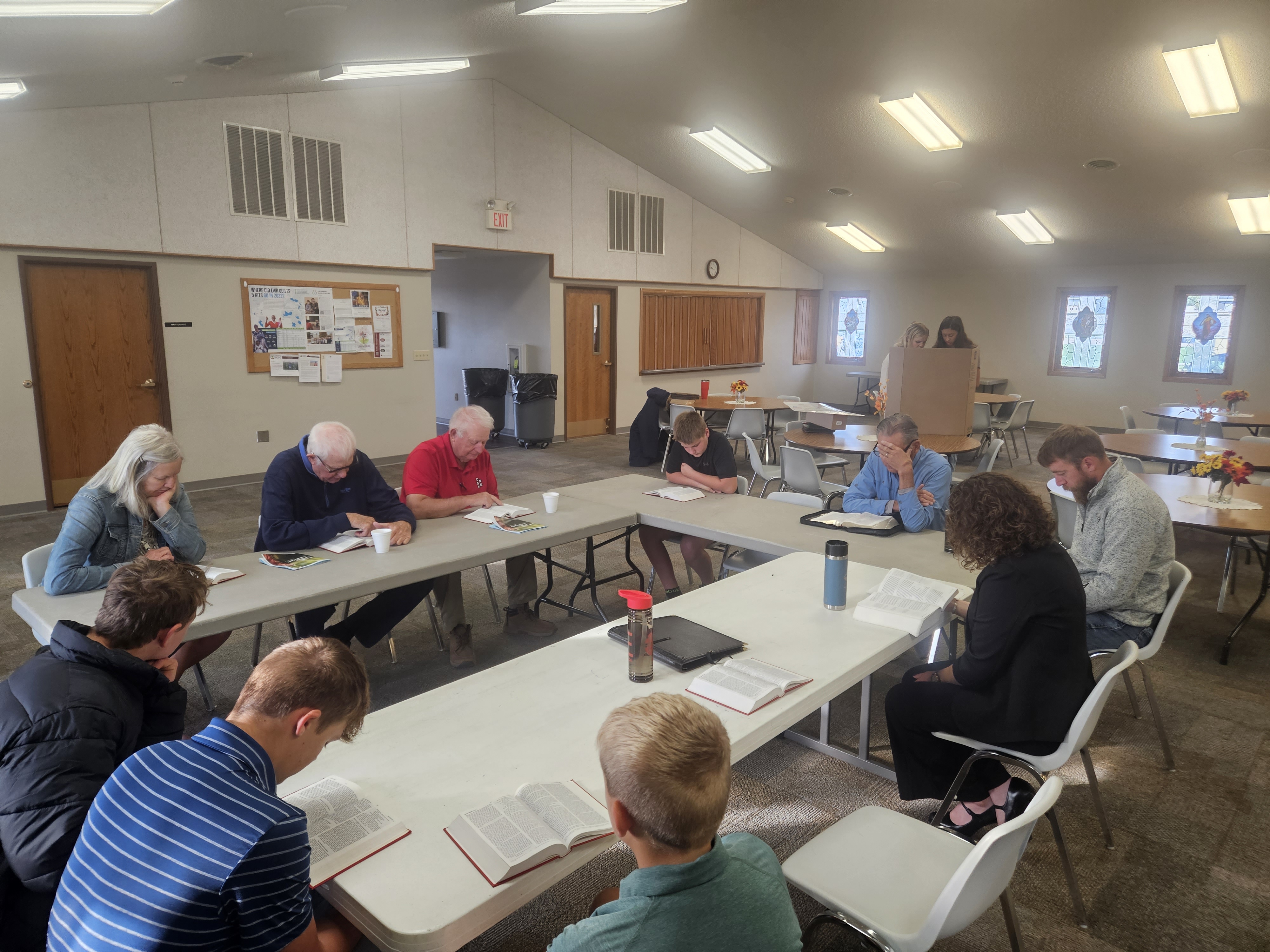
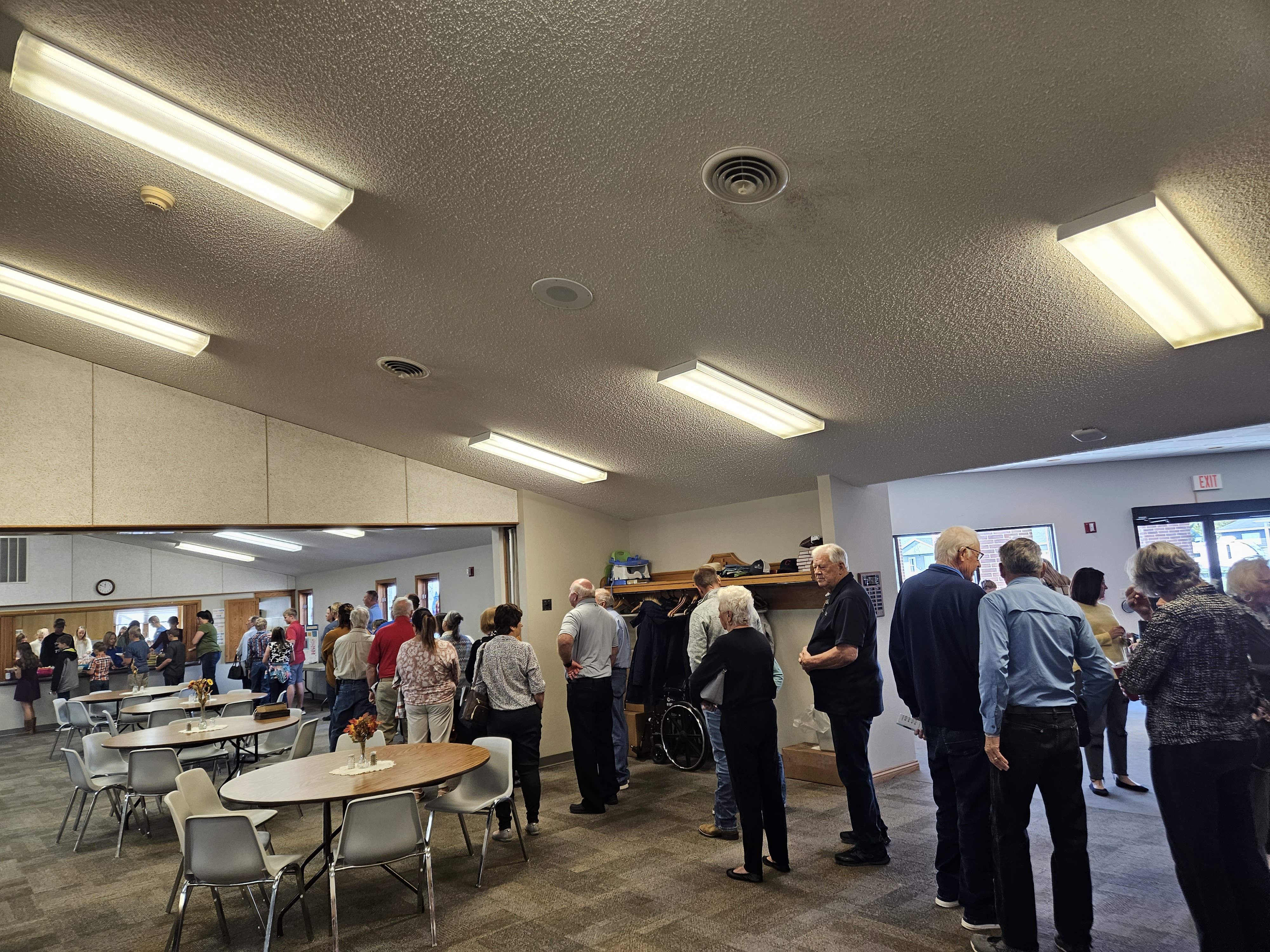
I had the joy of being with God’s people gathered as Trinity Lutheran Church in Hildreth, Nebraska on Sunday October 22, 2023. I was invited to preach on stewardship and mission as part of the congregation’s Mission Sunday and to be present for conversation during Bible Study as well as during a Harvest Luncheon fundraiser after worship, and to bring greetings from the Bishop as well as some words about what a deacon is and gratitude for mission share as part of the announcements. It was a beautiful day. What follows is the majority of the manuscript that I preached from based on the appointed readings for the 21st Sunday after Pentecost (Lectionary 29A), especially Matthew 22:15-22; Isaiah 45:1-7; Psalm 96:1-9 [10-13]; and 1 Thessalonians 1:1-10.
Grace and peace from God in Christ, who is with you, for you, and who loves you. Amen.
Have you ever been asked a question that made you roll your eyes? You know the kind of question that tests your patience. A question like you might hear from kids in the back seat when out for a drive. “Are we there yet?” Maybe it’s just me, the silly young dad, who hears that question from my five and three-year old’s. Or maybe you have older kids or teenagers, which begin with, “What if….” I’m thinking about these questions because we hear questions quite a bit in the gospel story this week.
God’s Word for Us Today
Jesus is asked by those who are trying to trap him in his words, “Is it lawful to pay taxes to the emperor or not?”[1] We’ll get to that question in a moment. But let’s set the stage. We’re amid the events of Holy Week now in the Gospel of Matthew. Jesus entered the Holy City with the events we know of as Palm Sunday at the beginning of chapter 21, and here we are about halfway through chapter 22. Jesus has already turned over the tables in the temple.[2] And since then, he’s been teaching in the temple and been continually questioned by those in authority attempting to trap him in his words and hoping to arrest him.[3] Last week we heard Jesus’ parable about the wedding feast.[4] And this week’s story picks up immediately following that with the Pharisees wanting to trap him.
So, here we are with this question. “Is it lawful to pay taxes to the emperor or not?”[5] It’s a different kind of question than “Are we there yet?” Or “what if?” But I’m thinking about questions today because they are a central part of the life of being a disciple and a steward. When asked genuinely, they are a means for learning and growing. Of trying to make sense and understand. Of showing interest in another and in maybe trying to make sense out of why things are the way they are. Of wondering what God might be up to and inviting us as God’s people into and to be a part of next.
In this story today there are a couple questions. The question not asked genuinely at all, but meant to trap Jesus, “Is it lawful to pay taxes to the emperor or not?”[6] And Jesus’ rebuttal, “Why are you putting me to the test, you hypocrites?”[7] Jesus knows the answer to that question. It’s rhetorical. He knows that they are trying to trap him, and he knows what ultimately lies ahead in the days of that Holy Week yet to come. But Jesus engages with them here because there is some learning that can come from this discussion.
He turns the question back on those questioning him by pointing to the denarius coin that they have brought with them. He asks, “Whose head is this, and whose title?”[8] Whether they know it or not, Jesus is going to help these questioners learn something in this story. He’s going to help them connect the dots. To connect the dots between the now and not yet. To connect the dots between earthly and heavenly authority. To connect the dots in perspective of one’s larger faith and daily life together. So, when the Pharisees identify the emperor on the coin, Jesus says, “Give therefore to the emperor the things that are the emperors, and to God the things that are God’s.”[9] This answer amazes those who first heard it, and disciples like you and I ever since have been left to wonder about it and live into it.
God’s Mission Made Real
Jesus’ answer to this question is profound, but it also points to something. In these last few days before being handed over on that late Maundy Thursday night, Jesus is teaching, being present, and sharing any and all of the important pieces of wisdom he can impart. Wisdom about life, death, relationships, vocations, and how we are called and equipped to be present ourselves in this world. When he acknowledges the authority and importance of the emperor and God, he is not saying there’s separation. He’s calling for intentionality to be present in, and with both. To live in the now and not yet. To simultaneously be a Child of God and a citizen of the here and now wherever we might find ourselves.
There’s tension here. But such is the life of a disciple. We live and follow as disciples knowing that we live in the hope and promise of abundant life in Christ, but also in knowing that this life together won’t always be easy because there is a cross at its center. And as such as God’s people, we are called to live in that tension. To live in the now and the not yet. To pay attention to our local community and show up and be present in it. To be engaged in the world we live in, and not just be solely focused on the kingdom of God or kingdom of heaven that is to come. That means we’re called to be citizens who care about the earthly- those in need, those in authority, and creation itself- all of those things that we lift up in prayer in worship each week. And the things with which good governance cares for through the work of justice and peace, and yes, even through things like taxes. But the call and identity that we have also is to be more than just citizens, to be Children of God who follow God’s call and invitation received through baptism to live out lives of care and compassion through our various vocations.
Jesus through this answer is pointing to a truth about God’s mission. God is active and up to something. God isn’t sitting off on the sidelines somewhere or in the heavens, absent. God is present. God is working with, through, for, and in all of creation and God’s people like you and me. And this matters. It matters that we show up in our daily lives. It matters that we see our neighbors in need and respond accordingly. It matters that we use what God entrusts and work for justice and peace. It matters that we share the Good News that God in Christ is indeed with and for us, and God loves us. Always. No questions asked. No conditions. That the grace of God is pure gift we could never earn or deserve, but that God provides over and over again.
Because that is precisely who God is as God is at work and wanting to be in relationship with all of God’s beloved people, and likewise God hopes that we are in relationship with God and one another.
Stewardship in Action
So what might this mean for us? What might this mean today for you as the people of God gathered as Trinity Lutheran here in Hildreth? Good questions to ponder. In the spirit of questions, I ask them in part because as a synod together, the 230 congregations in Nebraska, are going through this ministry year in the theme of “Go And,” living out the conclusion of the Gospel of Matthew where Jesus gives the Great Commission and sends us all as disciples and stewards out into the world. Never alone. Always together. Always with the Triune God and the breath and movement of the Holy Spirit.
In October, the synod has particularly been invited to lean into a focus of “Go and Ask.” To ask the questions that might be on our hearts and minds. To ask others what they are imagining and wondering. To ask the God questions of what might God be up to? And what might God be inviting next? And to think about “what does this mean?” A very Lutheran question in the spirit of the Reformation which we’ll celebrate next week.
These questions though in my mind, have everything to do with stewardship. Now Trinity, I know you know what stewardship is. It’s part of your DNA and story here. The great generosity you have long embodied. For the stories of the “Big Fat Fall Festival” that I have heard for years since I moved to Nebraska seven and a half years ago. For the way you have raised up and supported new ministry leaders for so long. The way you came together as congregations in the past to continue to be faithful stewards for the present and future. So, at the risk of preaching to the choir, I’m going to just do it.
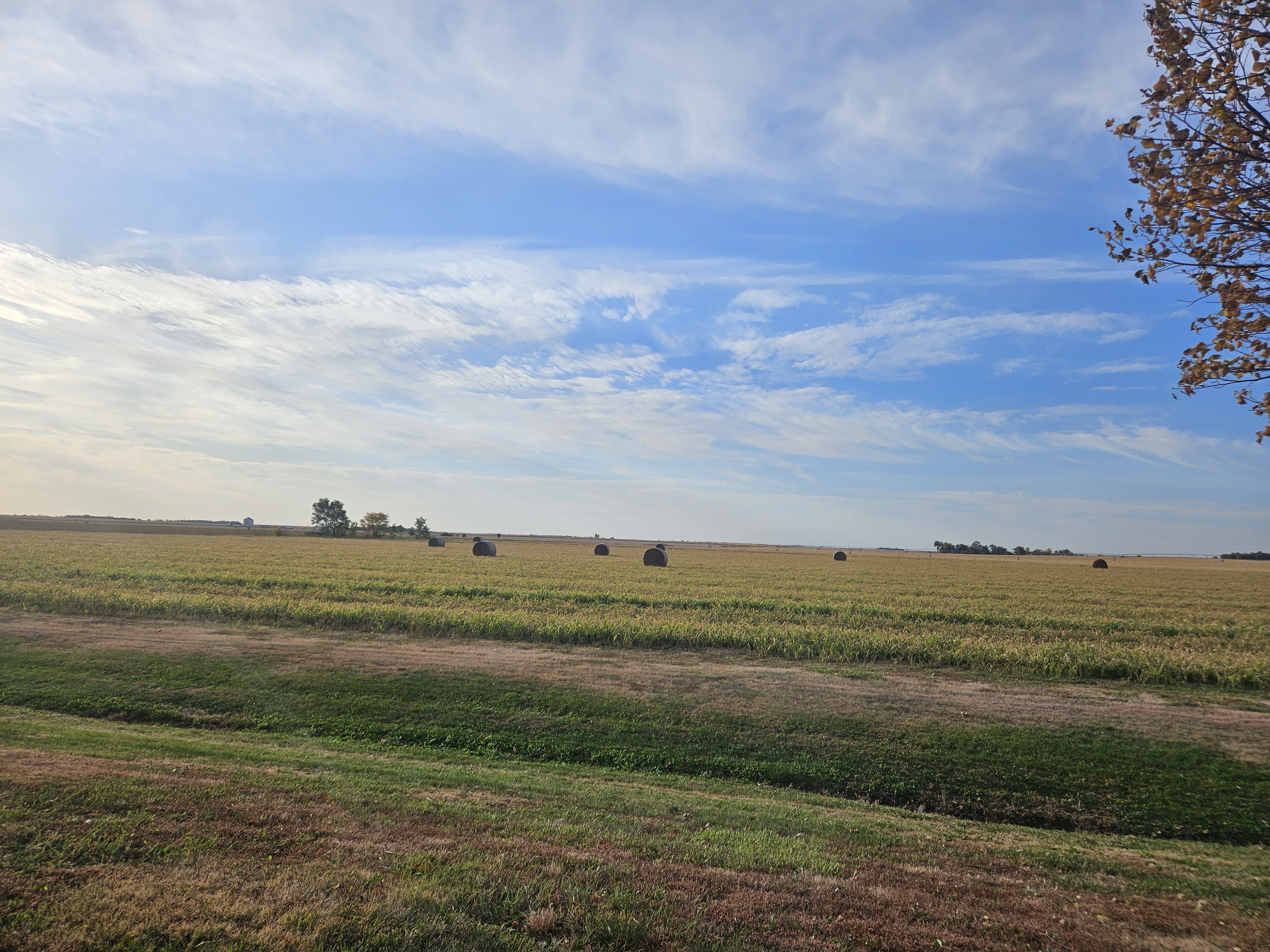
What is stewardship? For me, stewardship starts with an understanding from the psalmist who writes at the beginning of Psalm 24, “The earth is the Lord’s and all that is in it. The world and those who live in it.”[10] If all that is, is God’s then you are God’s, and I am God’s. And all that we have and all that we are, are God’s too. Think about it. This means, that everything that makes you the unique individual Child of God that you are, is God’s. Your mind, body, soul, heart, strength, health, and well-being. Your finances, assets, and treasure of all kinds, even our dollar bills and coins with pictures of presidents on them like the coin in today’s story. Your time and talents. But also your passions, ideas, dreams, questions, and deepest wonderings. Your vocations and relationships too. And all of creation that is entrusted into our care back at the beginning of Genesis, the creation so many of you are caring for through the harvest now. All of this and more are who we are, they point to who God is, and are God’s too. When we remember this, life takes on a deeper meaning. Doesn’t it?
All of this and more God entrusts into our care. Why does God do this? Because God wants life to go well for us so that we might live deeply meaningful and abundant lives. But also because God wants to be in relationship with us, and for us to be in relationship with God and neighbor. So, God entrusts to us so that life might go well, but also so that the lives of our neighbors might go well too in part through each of us. This is stewardship in action. It’s God’s mission in action, individually through each of us, and collectively as the church and Body of Christ together.
Our Joyful and Grateful Response
Remembering the events of the week that is to come in the gospel story, we remember that God in Christ will go to and through the very point of death on a cross and the grave itself out of God’s deep love for one and all. God does what only God can do. And that’s a gift. One we can’t earn or ever deserve. But we can and do respond to it through the way we live our lives. Through the way we can’t help but say our thanks and praise to God. To like the psalmist, “sing to the Lord a new song, sing to the Lord all the earth.”[11] And because we are so moved in gratitude and joy for all that God has done, will do, and promises to do for us, we also respond by being so swept up in our thanks and gratitude that we can’t help but join in with God in some of God’s on-going work here and now.
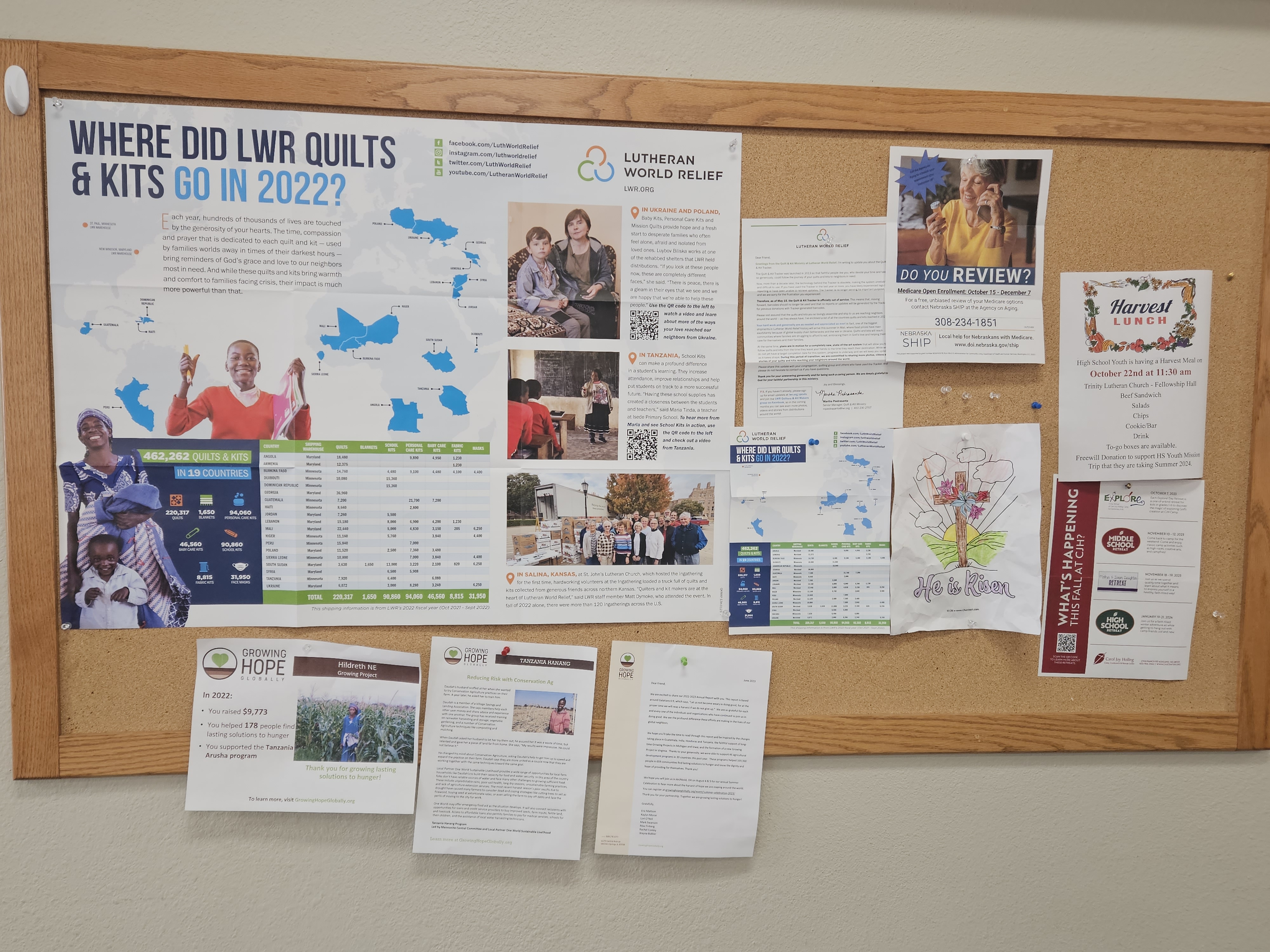
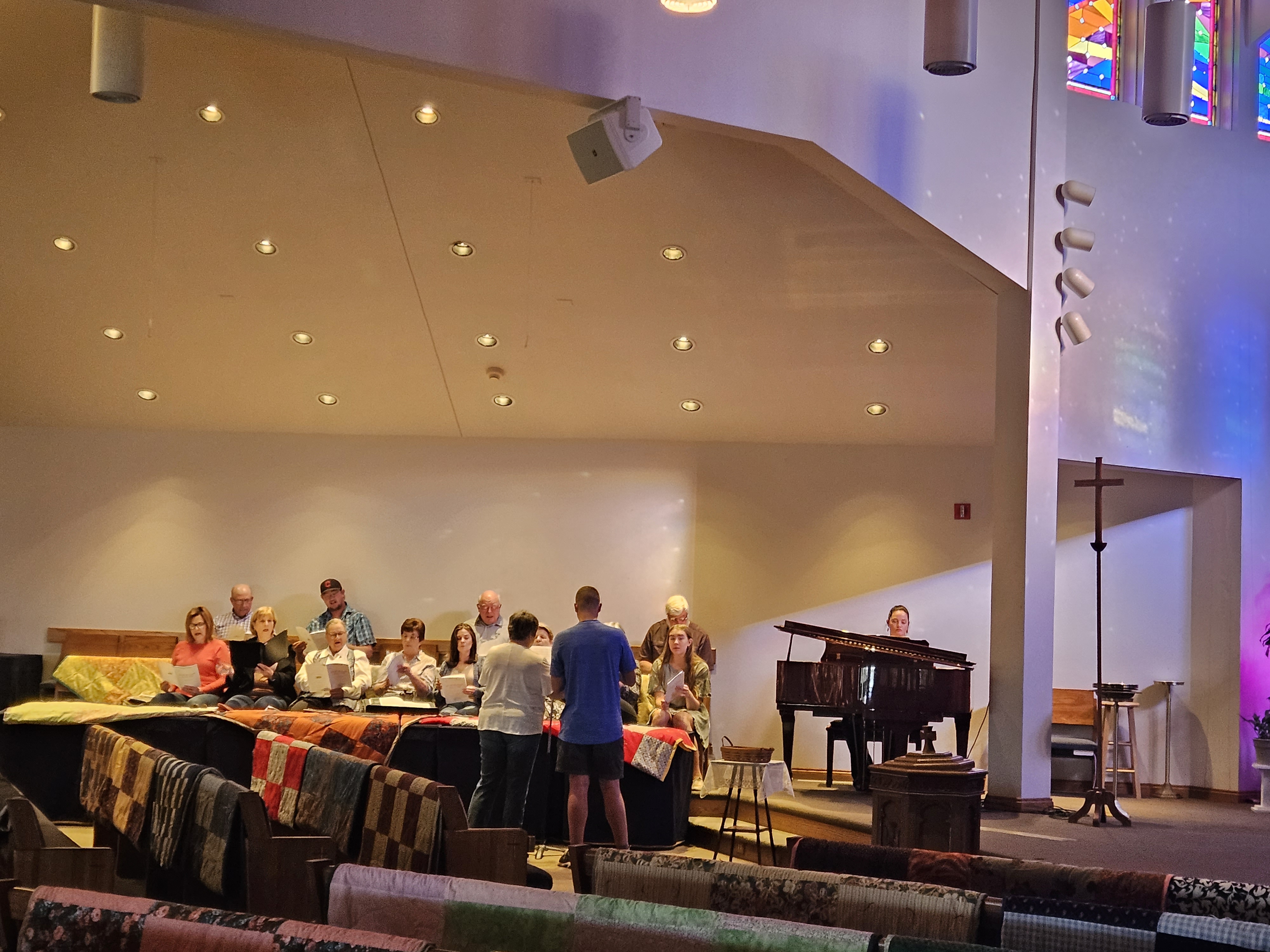
The work of seeing our neighbors. The work of meeting our neighbors where they are at. The work of combatting hunger and growing hope globally. The work and ministry of praying for all in need and caring for those among your community who might be grieving or in need of healing and compassion today. The work of sewing, preparing, and quilting 105 quilts that your congregation has prepared for those in need around the world. The work of stepping up as part of the whole church in the various ways you do. The work of sending youth and young adults this past summer to Denver as part of the Nebraska Synod Journey, a week of service and learning together with God’s people.
The ministry of the Sunday School youth preparing and practicing telling the story the story of the Good News of Christ’s birth through word and song as I heard when walking in your Sunday School hallway this morning. The work like is happening today, of helping raise money through today’s luncheon for youth and young adults to go to the ELCA Youth Gathering next summer in New Orleans. The work of stewarding time, to show up and be present. To volunteer by stepping up and being a mentor or chaperone to help make that trip happen. One of those needs I invite you today to deeply pray about is to step up and be one of at least three adult leaders needed to accompany the 15+ youth or young adults who deeply want to go to New Orleans with their siblings in Christ next summer. Might God be calling you to share your gifts and time in this way?
Invitation to Step Up and See What Might Be Next?
Trinity, like I said, I know I’m preaching to the choir, and I am so grateful to be able to do that today. To say thank you for all the ways that you have and that you do step up as God’s people. For the ways you have in the past, and the many and various ways you might be now and will do so in the future. Paul’s words are perfect for me to just steal and share with you. “We always give thanks to God for all of you, and mention you in our prayers, constantly…”[12] Thank you for doing all that you do and for all that you have done.
Now I wonder what it is that God might be inviting you to be a part of next? To give to God what is God’s, and what is the emperor’s, to the emperor? The ways and methods that we serve through in life may change as life changes, and because needs in our world and communities may change. But the act of serving, and the identity of being a steward and disciple does not. As God is present and moving in, with, for, and through you, God is always up to something. Bringing about life and hope through questions, new ideas, dreams, and possibilities. Lean into them. Be open to the Spirit’s movement. Wonder, experiment, and live with deep hope. For God is with you, for you, and loves you. Always. Thanks be to God. Amen.
References and Citations:
[1] Matthew 22:17, NRSV.
[2] Matthew 21:12, NRSV.
[3] Matthew 21:46, NRSV.
[4] Matthew 22:1-14.
[5] Matthew 22:17, NRSV.
[6] Matthew 22:17. NRSV.
[7] Matthew 22:18, NRSV.
[8] Matthew 22:20, NRSV.
[9] Matthew 22:21, NRSV.
[10] Psalm 24:1, NRSV.
[11] Psalm 96:1, NRSV.
[12] 1 Thessalonians 1:2, NRSV.
 Timothy Siburg