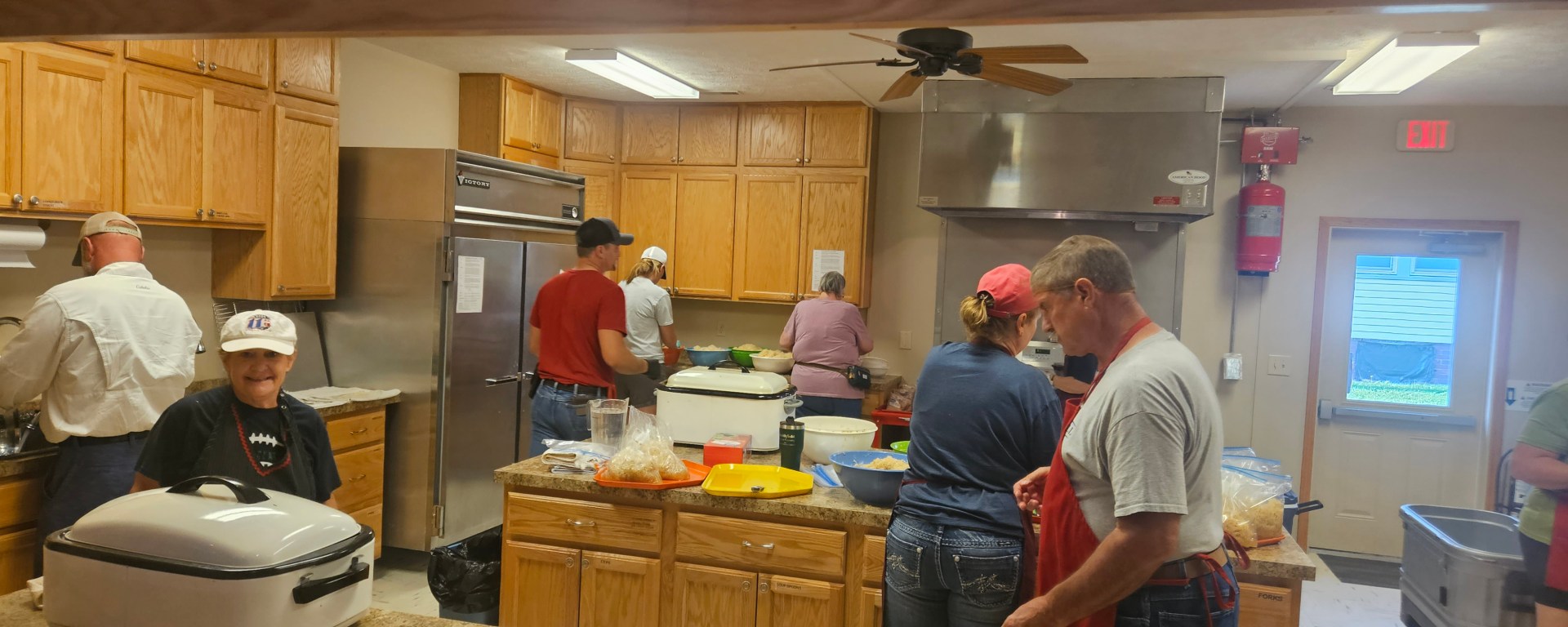

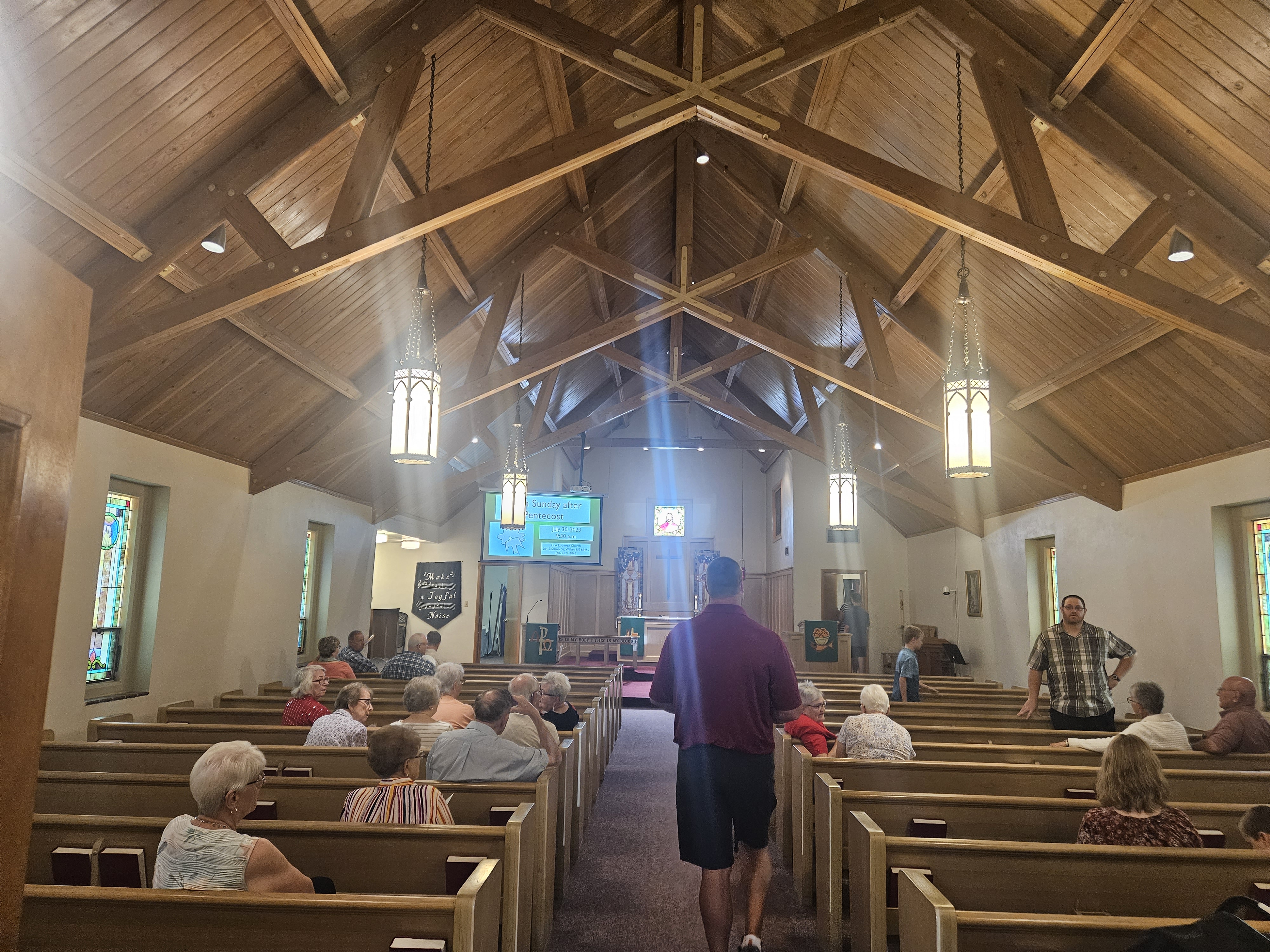
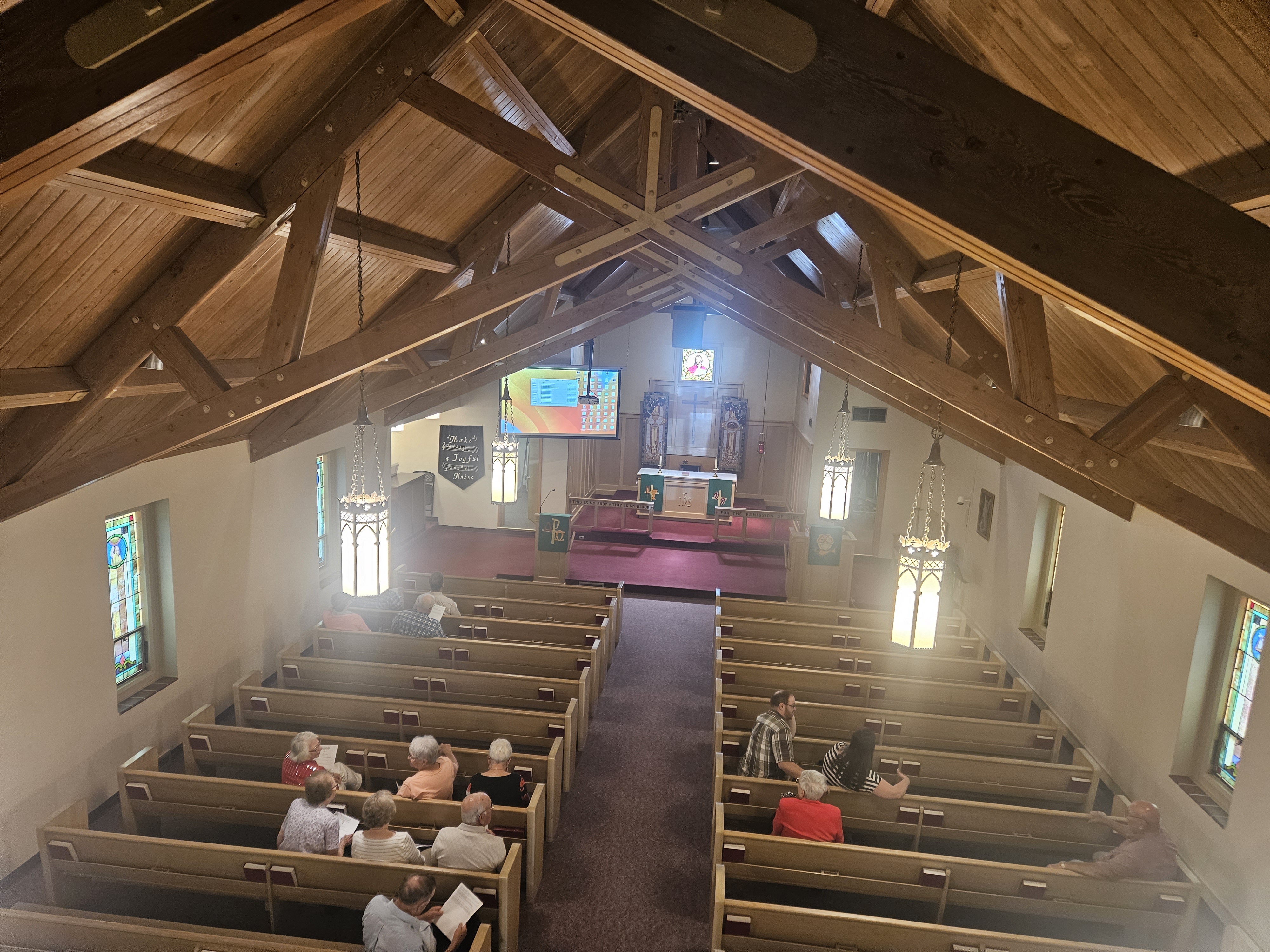
I had the privilege to be with the good people of Trinity Lutheran in DeWitt and First Lutheran in Wilber on Sunday July 30th, 2023, thanks to the invitation from Pastor Travis Panning. The two congregations gathered together in Wilber for worship, and it was a joy to be with them to lead worship, share gratitude for being part of the church together and to bring the word. What follows is the majority of the manuscript that I preached from. The sermon was based off the appointed passages from the Narrative Lectionary’s summer series, which included Proverbs 8:1-11, 22-36; and John 8:56-58. Not included in the manuscript were words of greeting that I shared at the beginning of worship, and words of gratitude for being part of the church together and mission share as shared during the offering time in worship.
Grace and peace from God in Christ, who is with you, for you, and who loves you. Amen.
Based on our reading from Proverbs today, I want to start with a question. What is “The Good Life?” What does “The Good Life” mean? Think about that for a bit, and I’ll come back to it.
But to set the stage, First Lutheran, I have been with you a couple times before over the years. Trinity Lutheran, I think this is my first time with you in worship. If I haven’t met you before, it’s great to meet you and be with you this day. I have been on synod staff as your partner in ministry for a little over seven years now. But in thinking about today’s story, I need to begin with a confession. I am not a native Nebraskan. I did not grow up here. I did not grow up chanting, “Go Big Red,” or joining in the religion that is Husker Football in the fall. I didn’t have my first Runza until 2016. But I have come to love Nebraska. There’s something about this place, state, and people. And I was clued into that before moving here upon accepting the call to serve in Nebraska.
You see, the last congregation I was a part of before Nebraska had a few Nebraskan transplants in it, and when they heard about my wife’s and my calls to Nebraska they said, “You will love it there. It’s the Good Life.” I didn’t really think much about it at the time. A little later I thought, “The Good Life,” that’s kind of presumptuous isn’t it? But I have come to see what I think that means. It’s about living life and breathing deeply. Of knowing who your neighbors are, and making the most of each day that God provides. Of trying to do the best you can for your family, friends, and neighbors. And being grateful.
For me at least, it has been “The Good Life.” To walk alongside all of you and your siblings in Christ across the whole state. To see my wife grow as a pastor serving Salem Lutheran in Fontanelle north o Fremont, while I grow as a deacon. To see our family grow, as we have since welcomed our two daughters into the world and in a couple weeks will watch as our oldest starts kindergarten. But yes, I could see why this is called by many the Good Life. Though, I do wonder if 80% humidity and heat indexes pushing 115-120 degrees are really all that good? But I digress. I start here though, because the book of Proverbs really has a goal to help people lean into and grab hold of “the good life.”
What is Proverbs?
Today we find ourselves amid a short summer series in the Narrative Lectionary which takes us through a brief sampling of the books of Proverbs, Ecclesiastes, and the Song of Solomon. Finding ourselves in Proverbs, it probably would help to offer a little bit of an overview of the book. One scholar writes that the purpose of Proverbs “is to transmit insights whereby one might learn to cope with life. Its emphasis is on teachings gathered from tradition of the elders and from experience. In contrast to many other books of the Hebrew Bible, major themes such as the covenants of David are absent and temple worship and sacrifice are rarely mentioned.”[1] As it’s a collection of sayings, it likely has multiple authors, having been collected over time, so its authorship is “essentially anonymous,”[2] and “scholars generally agree that Proverbs in its present form dates to about the fourth century BCE.”[3]

Though the book is a collection of sayings of wisdom, that’s not to say that God is absent in it. One theologian writes that, “Proverbs does have a theological accent. It emphasizes ‘fear of the Lord’ as the essential foundation for true wisdom.”[4] In that sense it builds on the theme we especially hear Psalms. As it’s a book of wisdom, it is trying to extend an invitation to life for all who might read it, and arguably an invitation to the ‘good life.’ This “good life” according to Proverbs, “builds on the foundation of Israel’s religion. Israel’s wisdom aims to help people develop a balanced life with proper relations to self, others, society, and God.”[5] It’s really a book which invites one into relationship with self, God, and neighbor, and perhaps even more so, into the life and practice of being a disciple. As another scholar notes, “Proverbs invites the reader to intellectual discipline as a life-giving synthesis of keen observation and reflection, ethical concern, and piety.”[6] So that’s where we find ourselves.
God’s Word for Us Today
Our reading begins, “Does not wisdom call, and does not understanding raise her voice?”[7] Wisdom is something to be desired. But why? Because with it comes life. We hear from Wisdom directly, “To you, O people, I call, and my cry is to all that live.”[8] To all who might listen, Wisdom pleads, “learn prudence; acquire intelligence; take my instruction and knowledge.”[9] And Wisdom reasons, “wisdom is better than jewels and all that you may desire cannot compare with her.”[10] This matters. Proverbs argues that Wisdom is something both of God, and something essential to strive for, so that life might go well for God’s beloved people.
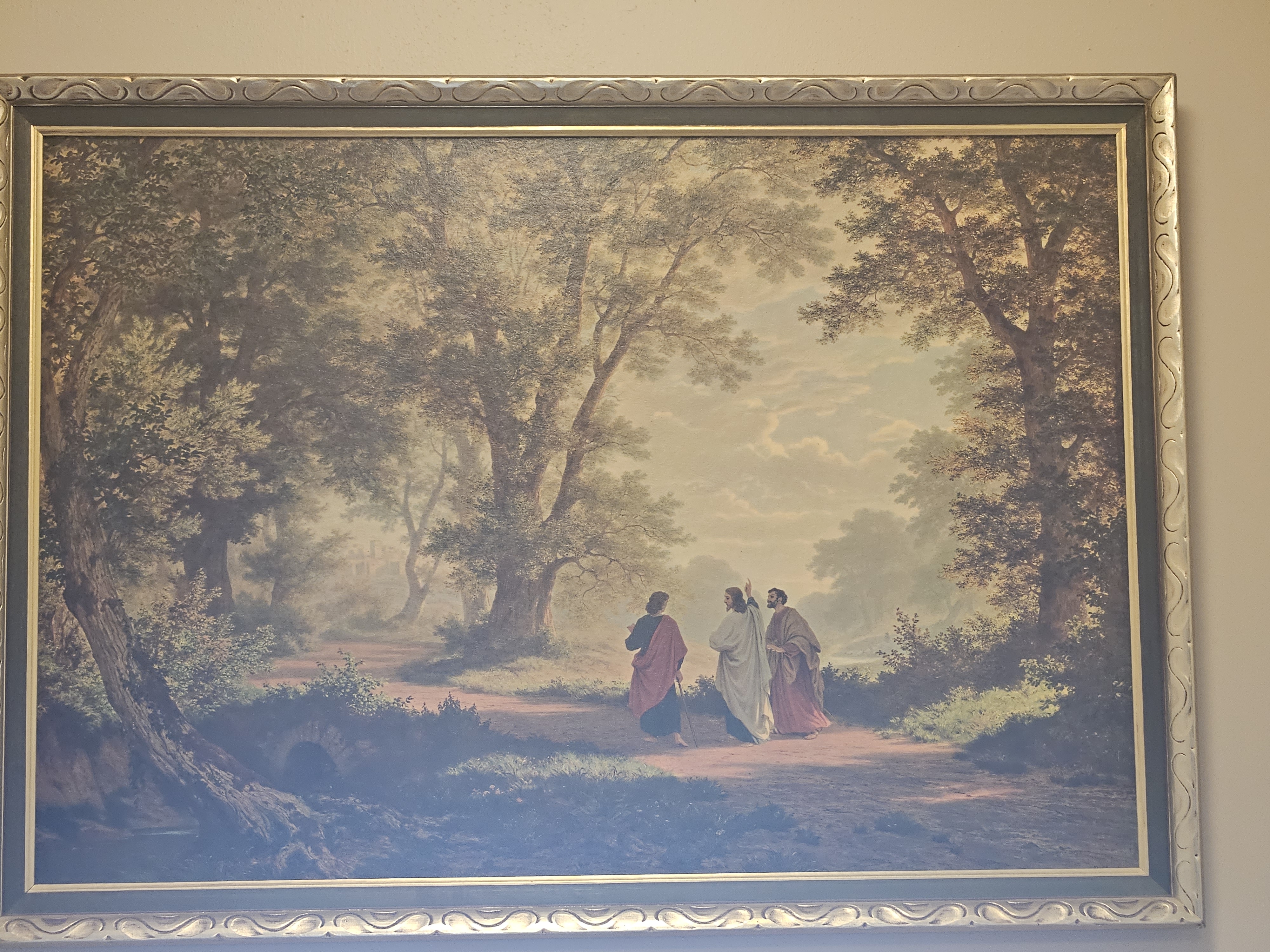
In today’s passage, we also hear that Wisdom is not something new, but rather it was present at the very beginning of creation. We hear from Wisdom that, “The Lord created me at the beginning of his work, the first of his acts of long ago. Ages ago I was set up, at the first, before the beginning of the earth.”[11] This brings us back to the very beginning of Genesis, and the claim is made here that God has created wisdom and is God’s own. Wisdom has been a part of the on-going acts of creation, and active and up to something as part of God’s work in the world ever since. Wisdom has been a witness to God’s work and presence and has also been a participant with God. For instance, we hear the proclamation that, “When God established the heavens, I was there,” again recalling the acts of creation and Genesis themselves.[12] This is a theme similar to what we hear from the Gospel of John this week too. Where Jesus says,
“Very truly I tell you, before Abraham was, I am.”[13] It’s one of Jesus’ “I am,” statements, but it’s also a statement that starts to point to how from the very beginning of creation, the Word was with God and the Word was God.[14] Wisdom has been a part of God’s work and continues to be, as we read, “then I was beside God, like a master worker; and I was daily God’s delight, rejoicing before God always, rejoicing in God’s inhabited world and delighting in humanity.”[15]
Having been reminded about who Wisdom is, and what Wisdom has seen and been a part of, we are then invited into relationship through discipleship. We’re invited to hear, lean in, respond, and grow. Wisdom calls, “And now, my children, listen to me: happy are those who keep my ways. Hear instruction and be wise, and do not neglect it. Happy is the one who listens to me.”[16] The happiness here isn’t like the fleeting moments of happiness in daily life that we all might experience. No, think of it more like the deep joy that we all long for in life. The joy of a life-long friendship, or deeply meaningful work, of loving relationships with family and friends, of being able to look at one’s life and deep down be grateful for all that is. This happiness that Wisdom is depicting, really is the joy of being in relationship with God and neighbor, of choosing the life that really is life. Of grabbing hold of the abundant life that God provides which we know most deeply through the gift, promise, grace, love, and life of Jesus. That’s what we really might hear as Wisdom declares, “For whoever finds me, finds life.”[17] Which to take a step further, is life in God, the real “Good Life.”
Proverbs For Us Today
Some might describe Proverbs as the ancient world’s “self-help” book of sayings. But it’s more than that. It’s a book in the canon which helps us see what the life of being in relationship with God and neighbor might look like. It invites us into more intentionality as disciples and stewards. And calls us to join in with God and respond with joy and gratitude for all that God has done, will do, and continues to do through living the good, full, and abundant life which God provides.

I wonder what this might look like for us? How might Wisdom be calling you today? What might Wisdom be inviting among your two congregations gathered here together today? These are big questions, with perhaps not so easy answers. But they point to the promise that our Triune God is present with us now and always. That God is active and up to something. That God’s promises are on-going and true. And that God’s love is real and for you, for me, and for all of God’s beloved children and creation.
In thinking about these questions I have the words of a newer hymn in the ELW in mind. If you want to join me, I invite you to open to hymn number 518. The first verse says, “Wisdom calls throughout the city, knows our hunger and in pity gives her loving invitation to the banquet of salvation. We eat the bread of teaching, drink wine of wisdom, are given here a taste of the kingdom. Together joined the greatest and the least, we all are one at Wisdom’s holy feast.”[18]

That message is really what is at the heart of God’s Word for us today. God is inviting and wants us all to be in relationship. To come and find a place at the table which always has room for one more. To join in with God and neighbor, to bear love and welcome. No questions asked. And that is simply what Wisdom looks like. In all honesty, it’s what Nebraska might get wrong. You might recall that phrase that was developed by a PR firm for the state a few years ago. “Nebraska, it’s not for everyone.” Though that might be true, if it’s true, then it points to how Nebraska really isn’t the Good Life. Because how can it be the Good Life when it’s just for some people, and not everyone? The real Good Life that we know and see and live in as part of God’s kingdom is the Good Life precisely because in it, there is a place for everyone. It is for everyone. So what might that mean for us as God’s people today? What might that mean for you as Trinity Lutheran in DeWitt and First Lutheran here in Wilber?
Go And…
The Nebraska Synod committed during synod assembly to “Go and…” throughout the year-ahead.[19] That means we committed as 235 congregations and 90,000 disciples to “Go and…” as God’s people together. To “Go and…” pray, listen, share your story, serve with neighbors, ask, and be honest; to go and be present, rest, have the conversation, be intentional, tell the story, and to go and be the church. All the while, being led and called to “Go and love.”

Each month in this year, we are leaning into one of these particular focus areas. In July we have leaned into “Go and Listen,” so on these last two days of the month, I invite you to “Go and listen.” To go and listen for what Wisdom might be saying and inviting. And then, as we move into August, to go and “share your story.” The story of who you are. The story of why you are here, as part of the people of God gathered in this community. The story of what God has done for you, and how you have witnessed and sensed God’s love, grace, and presence, and perhaps even sensed Wisdom’s call and invitation.
But I might add one thing to this. In thinking about these words from Proverbs, I think I would invite you to lean in and “Go and…” but also to lean in and “Go and…Live the Good Life.” To take the message of this book and story to heart, and live life to the fullest through growing and tending relationships, serving God and neighbor, and walking with one another as signs of God’s abundant and abiding love. Because that’s what the Good Life is. It’s a life of deep meaning and relationship as disciples and stewards, where we’re not alone, but very much together. It’s a life that’s not always easy and it has its ups and downs- it’s a life which has the cross at its center, after all. But it’s a life of deep joy- grounded in the promise of the resurrection. That God does and will bring life even out of death, and that God will do all that God does, out of deep love for you and for me. That’s the Good Life, friends. That’s the Good Life which God is reminding us of today. Fully lean into it. Grab a hold of it. And share it. Widely. Abundantly. Because that is exactly what Wisdom calls us to do, and what God in Christ provides as God is with us, for us, and loves us. Always. Thanks be to God. Amen.
Citations and References:
[1] Harold C. Washington, in The New Oxford Annotated Bible, Michael D. Coogan, ed., (New York, NY: Oxford University Press, 2001), 904 Hebrew Bible.
[2] Ibid.
[3] John S. Kerr, in The Lutheran Study Bible, (Minneapolis, MN: Augsburg Fortress, 2009), 1011.
[4] Ibid.
[5] Ibid.
[6] Harold C. Washington, in The New Oxford Annotated Bible, 905 Hebrew Bible.
[7] Proverbs 8:1, NRSV.
[8] Proverbs 8:4, NRSV.
[9] Proverbs 8:5 & 8:10, NRSV.
[10] Proverbs 8:11, NRSV.
[11] Proverbs 8:22-23, NRSV.
[12] Proverbs 8:27, NRSV.
[13] John 8:58, NRSV.
[14] Recalling in John, the beginning of the Gospel itself in John 1.
[15] Proverbs 8:30-31, NRSV.
[16] Proverbs 8:32-34, NRSV.
[17] Proverbs 8:35, NRSV.
[18] Omer Westendorf & Jerry Ray Brubaker, “We Eat the Bread of Teaching,” © 1998 World Library Publications; as found in Evangelical Lutheran Worship, (Minneaplis, MN: Augsburg Fortress, 2006), 518.
[19] https://nebraskasynod.org/go-and/
 Timothy Siburg